


Views: 0 Author: Site Editor Publish Time: 2026-06-27 Origin: Site


Architectural facades demand flawless aesthetics and precise structural tolerances continuously. This makes curtain wall fabrication a uniquely unforgiving manufacturing process. Even minor imperfections visible on an exterior building envelope lead to immediate panel rejection. Builders expect pristine surfaces on every single installation phase. Standard steel punching setups often fail when applied to softer materials. Adhesion risks and specific architectural extrusion profiles present severe operational hurdles. Aluminum behaves completely differently under shear stress compared to mild steel. Incorrect tooling drives up scrap rates and slows production significantly. This guide provides fabrication managers and procurement teams with an evidence-based framework for evaluating tooling options. You will learn how to select press components to minimize scrap and reduce downtime. We will explore strategies to ensure reliable production at scale for your next major facade project. Optimizing these variables keeps your shop profitable and competitive.
Clearance is Critical: Aluminum requires specific die clearance ratios (typically 15–20% of material thickness) to prevent edge roll and excessive burring.
Galling Mitigation is Non-Negotiable: Without proper tool coatings and lubrication strategies, aluminum adheres to punches, degrading edge quality and destroying tooling.
Application Dictates Tooling: Thick panel punching requires heavy-duty assemblies to handle stripping force, while thin sheet punching prioritizes flatness and distortion prevention.
Supplier Validation: Tooling procurement should be based on verifiable tolerance guarantees, custom engineering capabilities, and proven lifespan data, not just unit cost.
Improper tooling selection in architectural projects raises operational stakes considerably. Choosing the wrong punch setup directly impacts project viability. Aluminum Curtain Wall Panel Punching requires exact precision to avoid costly rework. Fabricators face strict quality standards from global architectural bodies. Failing to meet these standards results in severe project delays.
Poor edge quality ruins aesthetic panels instantly. Surface scratching from harsh stripping mechanisms damages expensive coatings. Dimpling around punched holes destroys high-value anodized surfaces. These defects lead to massive scrap rates. Facade elements remain highly visible to the public eye. Architects accept zero cosmetic flaws on exterior building envelopes. Scrapped panels mean wasted raw materials and lost machine time.
Hidden downtime expenses compound quickly on the shop floor. Frequent tool sharpening drains maintenance resources. Operators waste valuable hours clearing jammed slugs from the machine bed. Manual deburring operations add labor expenses you cannot recover. Every minute spent fixing tooling issues stops panel output entirely. Consistent production relies on tools performing predictably across thousands of hits.
Micro-fractures weaken the load-bearing capabilities of exterior panels. Deformation around mounting holes compromises structural safety drastically. Exterior curtain walls face high wind loads daily. Connection points must remain pristine to ensure long-term stability. Failing to maintain structural integrity risks catastrophic facade failures. Quality control teams will reject panels exhibiting localized stress fractures around punched zones.
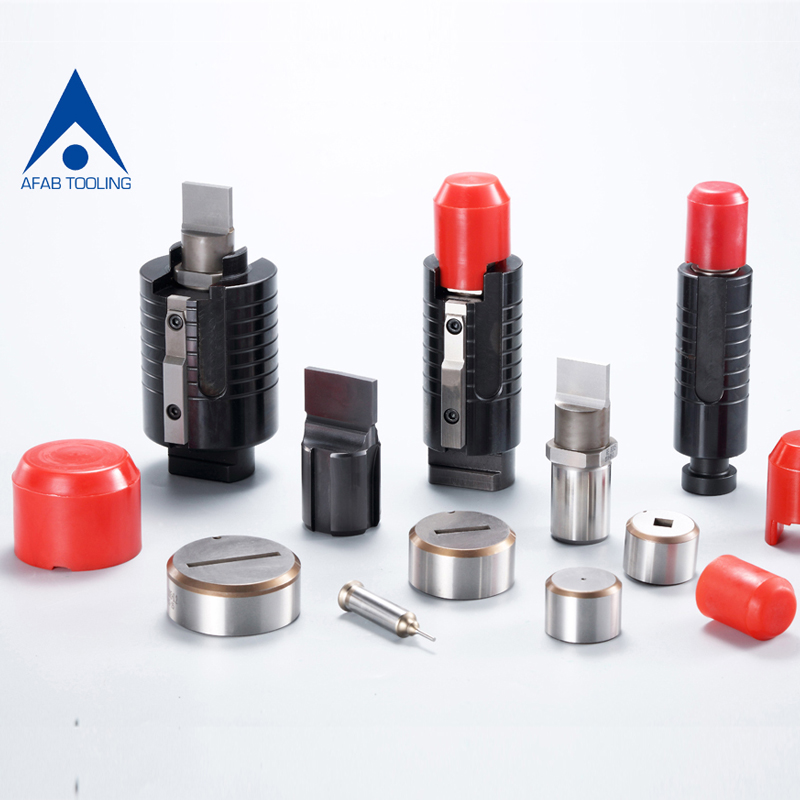
Different facade designs demand specific tooling approaches. Selecting the right category ensures optimal machine performance. Facility managers must match the tool architecture to the specific material grade being processed.
Standard baseline tooling works well for light-gauge applications. Heavy-duty alternatives handle higher tonnage seamlessly. Thick architectural grades demand robust systems to prevent premature failure. Heavy-duty assemblies utilize larger springs and thicker punch bodies. This extra mass absorbs the intense shock generated during the punching cycle.
You must upgrade to fully guided tooling systems for extreme precision. Fully guided setups support the punch tip closely throughout the stroke. They reduce punch deflection during heavy impacts. This prevents uneven die wear and maintains tight dimensional accuracy over time. Unguided tools often deflect laterally when piercing thicker aluminum sheets.
Facade features require specific geometric shapes regularly. Ventilation louvers need dedicated louver forming tools to ensure proper airflow. Drainage weep holes require precise oblong punches to function correctly. Complex fastener cutouts demand custom profiles manufactured to exact client specifications.
Cluster punches offer high returns for high-volume perforating jobs. Hitting multiple holes simultaneously speeds up production remarkably. Single-hit operations slow down production for heavily perforated designs. Using a cluster tool reduces the total number of press strokes needed. This extends machine life and accelerates panel delivery schedules significantly.
Curtain wall mullions and transoms feature complex hollow geometries. Standard sheet metal tools cannot process these shapes safely. The punch needs to penetrate the outer wall without crushing the inner structures.
Custom horn dies support the internal cavity effectively. Specialized support structures prevent extrusion crushing during the downward cycle. The punch cycle exerts immense pressure on unsupported walls. Without internal support, the extrusion collapses inward instantly. Dedicated custom assemblies protect the structural profile integrity completely. Mandrel setups slide into the extrusion before the press cycles.
Optimizing aluminum sheet punching requires precise technical evaluation. You must analyze clearance ratios, material grades, and stripping mechanics thoroughly. Relying on guesswork leads to disastrous production runs.
Aluminum shear strength requires distinct mathematical calculations. Tighter clearance ratios apply compared to mild steel equivalents. Proper clearance ensures a clean fracture through the material profile. The punch must shear exactly one-third of the material before clean fracture occurs.
Incorrect clearance causes immediate slug pulling. Accelerated tool wear and jagged edges result from bad calculations. A clearance configured too tight increases stripping friction drastically. A clearance configured too loose causes excessive edge rollover. Excessive rollover ruins the aesthetic crispness required for high-end curtain walls.
Standard Die Clearance Guidelines for Architectural Aluminum | |||
Material Type | Thickness Range | Recommended Clearance (% of thickness) | Primary Edge Defect Risk |
|---|---|---|---|
Soft Aluminum (e.g., 3003) | 0.040" - 0.125" | 15% - 18% | Heavy burring |
Hard Aluminum (e.g., 5052) | 0.040" - 0.125" | 18% - 20% | Micro-fractures |
Architectural Extrusions (6063-T6) | Variable (0.125"+) | 20% - 22% (Application Specific) | Wall collapse |
Premium powdered metallurgy outlasts standard high-speed steel significantly. Production volume dictates the right material choice for your shop. High-volume jobs demand tougher tool steel to resist edge chipping. Powdered metals provide a uniform carbide distribution. This uniform structure prevents microscopic edge flaking during continuous operation.
Specialized PVD coatings prevent aluminum welding effectively. Localized hardening keeps the punch flank clean and smooth. Galling destroys edge quality fast. Material transfer builds up on the punch tip rapidly. Anti-galling treatments act as a crucial barrier against this adhesion. Titanium Carbonitride (TiCN) coatings offer excellent lubricity for sticky architectural alloys.
Sticky aluminum demands strong stripping mechanisms. The punch must pull cleanly from the material after piercing. Mechanical springs often leave heavy witness marks on the sheet surface. These witness marks show up clearly after the panel receives its final coating.
Urethane strippers prevent sheet marking effectively. They eliminate distortion on cosmetically critical surfaces entirely. These soft-touch solutions apply even downward pressure. They hold the material flat while the punch retracts smoothly. Choosing the correct urethane durometer ensures adequate stripping force without damaging the panel finish.
Fabrication shops encounter unique daily hurdles when running large facade batches. Recognizing these realities helps you adapt your processes proactively. Engineering teams must bridge the gap between theoretical designs and shop floor capabilities.
Best Practice: Always test new tool configurations on scrap materials before running full production batches. Measure the pierced hole diameter to confirm die clearance accuracy.
Common Mistake: Applying high-viscosity stamping oil to panels meant for immediate powder coating. This ruins finish adhesion and requires extensive chemical cleaning.
Thick vs. Thin Aluminum Dynamics
Thin panels warp easily during processing. They require exact stripping pressure to remain perfectly flat. Thick panels generate high shock loads upon impact. Robust punch head designs absorb this intense energy safely. Understanding these dynamic differences prevents catastrophic tooling failure. Operators must adjust machine stroke speeds based on panel gauge.
Chart: Tooling Dynamics Comparison | ||
Processing Parameter | Thin Panels (< 0.080") | Thick Panels (> 0.125") |
|---|---|---|
Primary Failure Risk | Warping and localized distortion | High shock loads and tool breakage |
Optimal Stripping Solution | Urethane soft-touch pads | Heavy-duty mechanical springs |
Tooling Design Focus | Flatness maintenance | Impact absorption and rigidity |
Punch Tip Geometry | Flat or whisper shear | Rooftop or inverted shear |
Lubrication vs. Finishing Conflicts
Heavy punching lubricants extend tool life tremendously. However, clean panels are strictly necessary before powder coating. This creates ongoing operational friction on the shop floor. Washing panels manually adds severe bottlenecks to the production line.
Minimum quantity lubrication (MQL) offers an excellent compromise. MQL applies a micro-mist directly to the cutting edge. Dry-lube compatibility keeps panels ready for anodizing immediately. These advanced lubrication strategies reduce post-punching wash cycles. They keep the work environment much cleaner as well.
Slug Retention Issues
Slug pulling poses a major risk during fabrication. The punch creates a vacuum as it retracts upward. This vacuum pulls the waste material back onto the die face. The next machine stroke then crushes the slug into the panel.
Mechanical solutions prevent machine damage effectively. Rooftop shear punches break the suction naturally by altering the cut angle. Slug-hugger dies grip the waste material securely inside the die cavity. These mechanisms ensure slugs fall away from the active work zone safely.
Evaluating vendors demands a rigorous approach. You need partners capable of solving complex architectural challenges. Select suppliers who understand the specific demands of the facade industry.
Technical Consultation: Vendors must provide precise empirical data. Ask for recommended clearances specific to your alloys. Request documented coating performance metrics for architectural applications. Do not accept generic steel guidelines for aluminum processing.
Custom Engineering Lead Times: Rapid-prototyping is essential for tight project schedules. Proprietary architectural extrusion profiles require fast custom shapes. Assess how quickly the vendor can deliver specialized horn dies. Delays in custom tooling will halt your entire fabrication timeline.
Tolerances and QA Backing: Internal quality control metrics matter greatly. Look for strict concentricity guarantees on all round tools. Demand exact dimensional tolerances for complex geometric shapes. Request sample inspection reports generated from coordinate measuring machines (CMM).
Post-Sale Support: Localized sharpening services keep you running smoothly. Replacement part inventory prevents prolonged machine delays. Accessible technical troubleshooting support solves unexpected production issues rapidly. A good partner helps operators optimize parameters on the machine.
Successful aluminum curtain wall panel punching requires intense attention to detail. Managing material adhesion relies entirely on precise tooling specifications. Edge quality depends on proper die clearance calculations and premium anti-galling coatings. Taking shortcuts on setup inevitably leads to rejected panels.
View punch press tooling as an integrated system investment. Treat punches and dies as critical assets, not generic consumables. Protecting project margins means avoiding scrap and eliminating hidden downtime. Quality tooling pays for itself by maintaining continuous, uninterrupted production cycles.
Request an engineering review of your current panel designs today. Order test tooling to validate edge quality firsthand. Evaluate stripping performance on your own shop floor before committing to a massive project run. Engage your tooling partner early in the design phase to guarantee success.
A: Typically ranges from 15% to 20% of the material thickness, depending on the specific aluminum alloy (e.g., 3003 vs. 5052) and temper, but must be mathematically verified per application to ensure clean shear and minimal rollover.
A: Utilize tools with premium anti-friction coatings, ensure proper die clearance, apply appropriate lubrication, and maintain sharp cutting edges to minimize the heat and friction that cause material transfer.
A: Not recommended for high-quality architectural finishes. Steel and aluminum require different clearances. Using steel-calibrated clearance on aluminum results in poor edge quality, and cross-contamination can cause galvanic corrosion issues on the aluminum surface.
A: Extrusions require custom-engineered tooling, often featuring internal support mandrels or horn dies, to support the hollow cavities of the extrusion and prevent crushing or deformation during the punch stroke.


