


Views: 0 Author: Site Editor Publish Time: 2026-06-23 Origin: Site


Fabricating decorative aluminum curtain walls demands absolute precision in every manufacturing step. You must constantly balance complex architectural aesthetic demands against high-volume manufacturing efficiency. Producing large 2mm to 3mm veneers without surface defects remains incredibly difficult. Standard fabrication methods often compromise sheet integrity right at the machine level. They lead to severe panel warping or ugly, unacceptable edge burrs. Fabrication engineers, production managers, and procurement teams face these frustrating production bottlenecks daily. Selecting the correct equipment modifications determines your final project success. This article explores how modern tooling choices directly impact panel flatness, edge quality, and overall tool lifespan. We will guide you through crucial die clearances, specialized tool selection, and vendor evaluation criteria. You will learn how to eliminate secondary operations and maximize overall project profitability. Let us dive directly into optimizing your architectural punching operations.
Material-Specific Clearances: Proper die clearances are critical for 3mm aluminum to prevent galling and edge burrs.
Tooling Selection: Utilizing specialized turret punch tooling (like cluster and forming tools) significantly reduces hits per sheet, minimizing sheet distortion.
Surface Protection: Premium tooling coatings and optimized stripping mechanisms are mandatory to protect visible architectural finishes.
Vendor Evaluation: Shortlisting criteria should prioritize custom design engineering, physical prototyping, and rapid lead times.
Decorative facades often require high-density perforations or intricate geometric patterns. Standard machinery setups struggle under these intense design requirements. Relying on basic approaches leads to excessive machine time and destroyed production schedules. Increased tool wear ruins part consistency across long fabrication runs. Furthermore, unacceptable panel warping renders large aluminum sheets entirely useless for building exteriors. You need a dedicated, engineered strategy to overcome these physical limitations. Selecting optimized Punch Press Tooling solves many of these foundational manufacturing problems immediately.
A successful equipment deployment must deliver specific, measurable outcomes on the shop floor. We evaluate operational success using these strict production criteria:
Zero visible surface marring or scratches across the entire panel. This remains absolutely critical for pre-painted or anodized aluminum finishes.
Maintained sheet flatness across incredibly large surface areas. You must control distortion strictly on massive 4x8 or 5x10 architectural panels.
Consistent, clean hole dimensions. Operations must achieve this geometric accuracy without relying on secondary deburring steps.
Sub-optimal equipment introduces severe financial risks into your manufacturing ecosystem. Increased scrap rates destroy project margins faster than any other factor. Delayed architectural approvals halt entire construction timelines, causing massive operational headaches. Manual rework demands expensive, unnecessary labor hours from your skilled workforce. You simply cannot afford these operational compromises in high-stakes facade manufacturing. Every single rejected panel multiplies your baseline production costs exponentially. True quality control must begin during the actual machine punch cycle, not during final inspection.
Modern architectural designs push standard sheet metal equipment to its absolute mechanical limits. Utilizing specialized turret punch tooling significantly improves your output quality and speed. Let us examine three primary tooling categories essential for processing decorative curtain wall patterns.
Cluster Punches for High-Density Perforation: Grouping multiple shapes into a single tool dramatically reduces total hit counts. Instead of striking one hole per cycle, you can punch twenty simultaneously. This specific approach significantly increases sheet stability during high-speed operations. It reduces machine cycle time by massive margins. Less mechanical vibration means less material fatigue and vastly improved panel flatness.
Forming Tools for Architectural Depth: Louvers, embossments, and extrusions add striking visual depth to flat facades. Forming operations require incredibly precise stroke control from the machine. They often dictate specific turret station placements to prevent sheet interference. Operators must manage clearance heights carefully to avoid devastating sheet collisions. Proper forming assemblies turn flat metal into dynamic, structural architectural elements seamlessly.
Specialty Shapes vs. Standard Nibbling: Complex contours often tempt operators to use basic nibbling techniques. Extensive nibbling causes immense long-term machine wear and turret misalignment. It always produces remarkably poor edge quality requiring intensive grinding. Custom-shaped dies stamp the exact architectural shape in a single, clean hit. They eliminate jagged edges completely and preserve the protective aluminum cladding.
Custom dies save countless hours of manual secondary grinding. Your edge quality ultimately defines the final architectural finish. Investing in the right category transforms your operational efficiency.
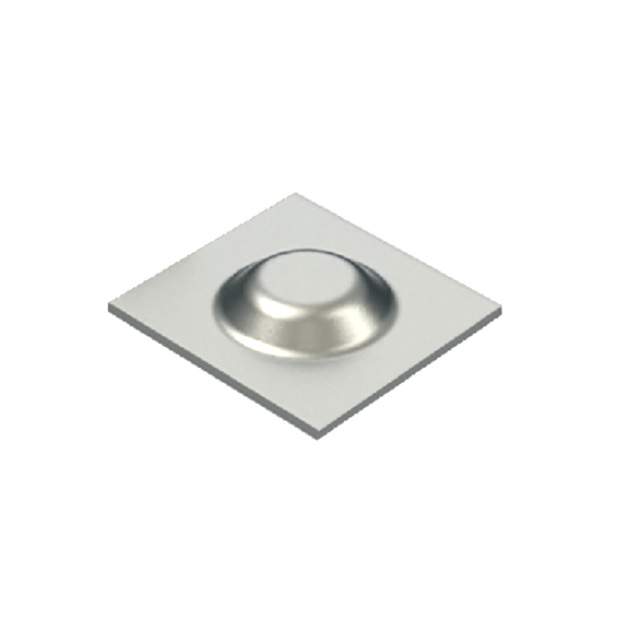
Aluminum behaves very differently from mild or stainless steel during the shearing process. You must adjust your engineering specifications accordingly to guarantee success. A 3mm architectural aluminum veneer requires highly specific tolerances to cut cleanly without smearing.
Die clearance rules dictate your absolute punching success. Aluminum generally requires different clearance percentages compared to harder metals. Industry standards suggest setting clearances between 15% and 20% of the material thickness. This crucial mathematical ratio prevents catastrophic tool failure and ensures edge quality.
Clearance Condition | Physical Effect on Material | Impact on Tooling Equipment |
|---|---|---|
Insufficient Clearance | Severe galling and material smearing along the cut | Rapid wear, overheating, potential punch tip breakage |
Optimal Clearance (15-20%) | Clean shear, minimal burr, perfectly flat edges | Maximum lifespan, stable operating temperatures |
Excessive Clearance | Massive rollover, dangerous sharp burrs on the bottom | Slug pulling, unstable stripping cycles, ruined dies |
Anti-galling coatings remain absolutely essential for continuous aluminum processing. Cold welding poses a constant, daily threat to your production schedule. Aluminum naturally adheres to bare steel punch tips under high pressure. Specialized physical vapor deposition coatings, like TiCN or TiAlN, prevent this disastrous adhesion. Polished punch tips also reduce surface friction significantly during the stripping phase. Automated tool lubrication systems create a vital protective barrier between hits. These engineered treatments keep your automated operation running smoothly without constant intervention.
Stripper plate design requires equal engineering attention. Standard steel strippers easily scratch delicate, pre-finished aluminum surfaces during clamping. You must implement urethane pads or specialized non-marking stripper plates immediately. They prevent sheet scratching and ensure a clean material release after every single hit. Protecting the visible architectural finish eliminates costly cosmetic rejections completely.
Processing large architectural panels introduces unique manufacturing hazards to your shop floor. You must actively control physical material distortion and protect your equipment operators. Neglecting these areas invites ruined parts and severe workplace injuries.
Dense perforation sequences cause aluminum to stretch unpredictably across its surface. We call this frustrating phenomenon "oil canning." The material loses its structural integrity and bulges out of specification. Alternating your punch sequences distributes the kinetic stress evenly across the panel. You should always use fully guided tools for these demanding applications. Fully guided setups keep the punch tip perfectly aligned during high-impact strikes. Implementing active sheet flattening techniques keeps the material structurally sound and perfectly flat.
Production Risk Factor | Technical Solution Strategy | Expected Manufacturing Outcome |
|---|---|---|
Thermal Heat Accumulation | Randomized punch sequencing | Prevents localized thermal expansion and warping |
Lateral Tool Stress | Fully guided punch assemblies | Maintains perfect punch-to-die alignment constantly |
Material Stretching (Oil Canning) | Active flattening mechanisms | Preserves strict architectural flatness tolerances easily |
Equipment and operator safety demand strict compliance at all times. High-speed operations move massive metal sheets rapidly across the machine table. You must integrate safety light curtains around the entire processing zone. Automated material handling systems protect operators during large-format panel processing. Vacuum lifters remove the severe physical strain of manual sheet loading. Keeping workers safe ensures uninterrupted production and maintains high shop morale.
Tool maintenance protocols prevent catastrophic manufacturing failures. You need a highly realistic view of daily maintenance requirements. Operators must perform frequent, light sharpening rather than infrequent, heavy grinding. Waiting for severe tool degradation ruins the precision die permanently. Regular maintenance guarantees consistent hole quality across thousands of hits. It prevents unexpected machine downtime and keeps your delivery schedule intact.
Your vendor functions as a critical manufacturing partner for your facility. You cannot treat them as a simple commodity supplier of metal parts. Fabricators must evaluate potential partners using strict, uncompromising technical criteria.
Engineering and application support separates excellent vendors from average ones immediately. You must evaluate their ability to review complex CAD files thoroughly. They should recommend optimal tool paths actively to prevent material failure. Expert clustering strategies prevent severe part distortion before the machine ever runs. A great partner solves complex geometric problems before physical production begins.
Prototyping and proof of concept eliminate expensive, irreversible mistakes. You must demand physical test runs from your chosen supplier. Run these specific tests on the exact 3mm aluminum grade you plan to use. Do this before committing to high-cost custom die sets. Physical proof guarantees the theoretical design works flawlessly in reality.
Assess the vendor's capacity for rapid lead times and inventory management. You need quick replenishment of perishable components to survive. Punches, dies, and strippers wear out predictably over time. Fast replacement prevents disastrous line down-time and missed delivery dates.
Demand comprehensive CAD analysis for complex architectural patterns.
Insist on physical prototyping for entirely custom tooling shapes.
Verify emergency replacement stock for all perishable items.
Review their proprietary anti-galling coating options for aluminum.
Take immediate action to improve your current operations today. Audit your baseline scrap rates carefully to identify hidden waste. Consult directly with a qualified tooling engineer regarding your bottlenecks. Request a custom application review for your most difficult architectural parts.
Precision punch press tooling drives final quality and profit margin in decorative facade manufacturing. It is never just a simple consumable item on an expense sheet. Selecting specialized equipment determines your ultimate production success and market reputation.
Upgrading from standard setups requires higher initial capital expenditure upfront. However, specialized tools lower your per-unit costs drastically over the project lifespan. They eliminate expensive, time-consuming secondary processing entirely. Your machine throughput increases significantly while your overall scrap rates plummet.
Evaluate your current floor operations today. Request a formal technical consultation immediately to discover hidden efficiencies. Submit your most complex panel drawing for a comprehensive engineering audit. Optimized fabrication guarantees a superior architectural finish every single time.
A: Aluminum typically requires a die clearance between 15% and 20% of the material thickness. For 3mm aluminum, this translates to roughly 0.45mm to 0.60mm total clearance. Harder aluminum alloys might require slightly larger clearances. Proper clearance prevents severe galling, minimizes edge rollover, and eliminates dangerous burrs. Always consult your tooling manufacturer's exact specifications based on your specific alloy grade.
A: Preventing aluminum adhesion requires a multi-layered approach. First, utilize specialized anti-galling coatings like TiCN or TiAlN on your punch tips. Second, ensure the punch tips feature a highly polished finish to reduce surface friction. Third, implement an automated sheet or tool lubrication system. Finally, perform frequent, light sharpening to remove micro-abrasions where aluminum begins to stick.
A: Custom cluster tools prove far more cost-effective for medium to high-volume production runs. While custom tools require higher initial capital, they drastically reduce machine cycle times. Standard nibbling increases machine wear, causes severe sheet distortion, and produces jagged edges requiring manual deburring. For large curtain wall projects, custom tools pay for themselves quickly by eliminating secondary finishing operations entirely.
A: Processing large decorative panels requires specific machine modifications. You must install brush tables to prevent scratching delicate aluminum undersides. Non-marking urethane clamps secure the sheet without damaging the visible edge. Safety light curtains must surround the operating perimeter to protect workers from rapid sheet movement. Finally, automated vacuum loading systems prevent operator injury when handling massive, heavy panels.


