


Views: 0 Author: Site Editor Publish Time: 2026-04-21 Origin: Site


In sheet metal fabrication, punching efficiency is never determined by the machine alone. Even the most advanced turret punch press cannot deliver consistent productivity, edge quality, and cost control without the right tooling. This is why Thick Turret Tooling plays such a central role in modern manufacturing. When properly selected and maintained, it helps improve punching speed, reduce downtime, extend service life, and ensure stable part quality across long production runs.
Many manufacturers focus heavily on machine tonnage, programming, and automation, yet overlook one of the most practical ways to improve output: better tooling management. In reality, poor tooling choice can lead to burrs, slug pulling, excessive wear, machine vibration, misalignment problems, poor hole quality, and frequent interruptions. On the other hand, well-matched and well-maintained Thick Turret Tooling supports smoother operation, cleaner cuts, more reliable forming, and lower total production cost.
Choosing the right tooling is not simply a matter of picking a standard punch and die. It involves understanding the material being processed, the sheet thickness, the hole or form geometry, the expected production volume, and the maintenance capability of the factory. Once the correct tooling is in use, regular sharpening, inspection, cleaning, and storage become just as important as the initial selection.
This article explains how to choose and maintain Thick Turret Tooling for maximum punching efficiency, covering everything from tooling type and material selection to preventive maintenance and long-term performance improvement.
Punching efficiency is usually measured in terms of speed, stability, accuracy, uptime, and cost per part. All of these factors are directly influenced by tooling. If the tooling is not suitable for the job, production efficiency drops quickly, even when the machine itself is in good condition.
Thick Turret Tooling affects how cleanly the material is sheared, how smoothly the sheet is stripped, how much burr is generated, how often tools need to be changed, and how long production can continue without interruption. A well-designed and properly maintained tool reduces resistance during punching, minimizes damage to the sheet, and helps maintain consistent dimensions from the first part to the last.
Tooling also affects secondary costs. Poor tooling performance increases scrap, causes more frequent rework, shortens sharpening intervals, and may even accelerate wear on the machine. By contrast, good tooling management improves both process quality and cost efficiency.
For factories producing electrical cabinets, machinery parts, speaker grilles, ventilation panels, transportation components, and industrial enclosures, the difference between average tooling and optimized Thick Turret Tooling can have a major impact on delivery speed and profitability.
Before choosing tooling, it is important to understand what Thick Turret Tooling includes and how it works in a punching system.
A standard tooling assembly usually consists of the punch, die, stripper, guide components, springs, and other supporting elements. These parts work together during each hit. The punch enters the material, the die provides the corresponding cutting clearance, the stripper holds and releases the sheet properly, and the guide structure keeps the tool aligned during movement.
The performance of the whole system depends on the condition and compatibility of all these components. Even when the punch itself is high quality, a worn die, poor stripper action, or misaligned guide can reduce efficiency and damage part quality.
Thick turret systems are widely used because of their robust structure, good repeatability, and flexibility for different applications. They are suitable for standard holes, slots, special shapes, perforation patterns, embossing, extrusion, countersinking, louvering, and other common punching operations. This versatility makes Thick Turret Tooling a key asset in high-mix and high-volume sheet metal production.
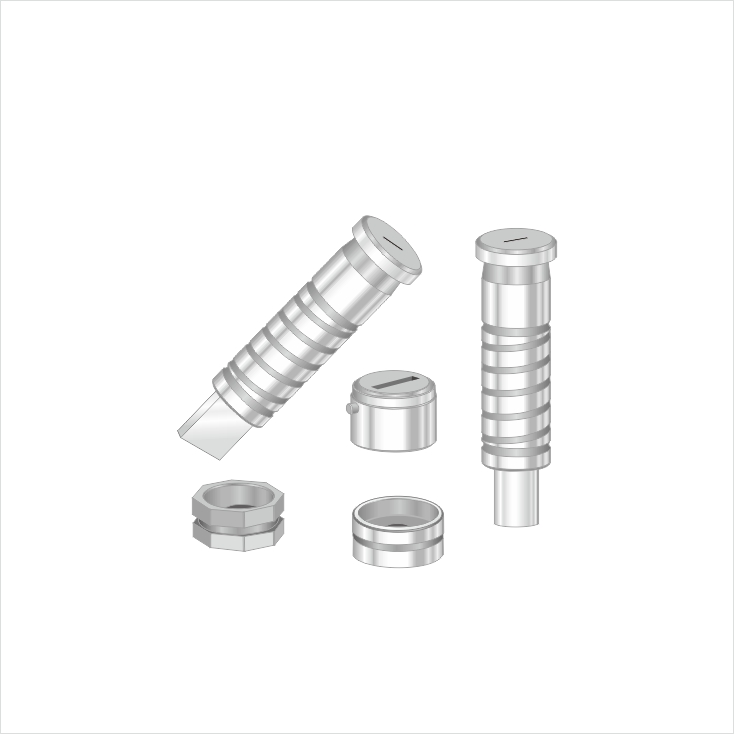
Selecting the right tooling is the first step toward maximum punching efficiency. A tool that is poorly matched to the application will create problems from the beginning, no matter how carefully it is maintained later.
Different sheet materials behave differently during punching. Mild steel, stainless steel, aluminum, galvanized sheet, copper, and other metals all place different demands on tooling. Harder materials typically require higher wear resistance and stronger edge retention, while softer or more adhesive materials may require smoother surfaces and better anti-sticking performance.
When selecting Thick Turret Tooling, manufacturers should consider the hardness, ductility, abrasiveness, and coating condition of the sheet. Using the same tooling setup for every material may seem convenient, but it often leads to lower efficiency and inconsistent quality.
For example, stainless steel generally requires tougher tooling and more careful clearance control than mild steel. Aluminum may require attention to adhesion and surface finish. Galvanized sheet can affect wear behavior and edge condition differently from untreated sheet. Matching the tool to the material improves both cutting performance and service life.
Thickness is another critical factor in tooling selection. Punch and die geometry, clearance, and tool strength should all match the thickness range being processed. A tool designed for thinner sheet may not perform well on thicker plate, while tooling optimized for thick material may not produce the best results on light-gauge sheet.
Correctly selected Thick Turret Tooling helps control punching force, reduce burr, and prevent unnecessary stress on both the tool and the machine. This is especially important in factories that process a wide range of materials and thicknesses on the same punch press.
When thickness changes significantly, manufacturers should evaluate whether a different die clearance, tool material, or punch geometry would improve efficiency. Assuming one setup will work equally well for all jobs usually leads to avoidable wear and quality issues.
Not every punching operation is the same. A simple round hole places different demands on tooling than a narrow slot, an irregular shape, a cluster pattern, or a forming feature such as embossing or louvering.
When choosing Thick Turret Tooling, manufacturers should consider:
hole shape
feature complexity
edge quality requirements
spacing between features
forming depth
risk of slug pulling
production frequency of the part
Standard tooling is often sufficient for basic punching operations. However, for special shapes or repeated batch production, custom tooling may improve both speed and consistency. In many cases, a customized punch can reduce hit count, improve feature accuracy, and lower long-term operating cost.
Tooling material has a direct effect on wear resistance, toughness, sharpening interval, and total tool life. Standard Thick Turret Tooling often uses M2 high-speed steel, which is suitable for many common punching applications. For more demanding use, upgraded materials may offer better performance.
Depending on the job, manufacturers may consider options such as:
standard M2 high-speed steel
imported high-speed steel such as AHP
powder steel
premium alloy steel
The right choice depends on the application. For normal production, standard material may be cost-effective. For abrasive materials, heavy workloads, or stricter longevity requirements, a higher-grade material may reduce downtime and replacement frequency.
Choosing based only on purchase price is a common mistake. Tooling that costs less initially may wear faster, require more maintenance, and create more scrap, making it more expensive over time.
Clearance between punch and die is one of the most important elements in tooling selection. Proper clearance supports clean shearing, acceptable burr level, manageable punching force, and good tool life. Incorrect clearance leads to poor edge quality, high stress, and rapid wear.
For maximum punching efficiency, Thick Turret Tooling should be selected with clearance suited to the specific material and thickness. Too little clearance may cause excessive friction, increased force, and premature wear. Too much clearance may result in rough edges, poor dimensional control, and heavy burr.
Clearance should never be treated as a fixed value for all applications. Factories that optimize clearance carefully often see immediate improvement in cut quality and tool longevity.
Standard tools are useful for common operations and fast replacement. They are often the best choice for simple round, square, or rectangular holes in general production. However, not every job is best handled by standard tooling.
Custom Thick Turret Tooling is often the better choice when:
the part geometry is unusual
the production volume is high
the feature repeats frequently
forming requirements are specialized
standard tools require too many hits
better edge quality or faster cycle time is needed
A custom tool may reduce handling time, improve consistency, and support better overall efficiency. When a part is produced repeatedly, the long-term gains can justify the initial customization cost very quickly.
Choosing the right tooling creates a chain of positive effects across the production process. It reduces excessive force, improves stripping stability, lowers defect rates, and supports more predictable maintenance intervals.
Well-selected Thick Turret Tooling helps manufacturers achieve:
cleaner holes and better edge finish
fewer burr-related quality issues
lower risk of slug pulling
more stable forming performance
less unexpected tool failure
fewer unplanned production stops
improved part-to-part consistency
longer time between sharpening cycles
In other words, tooling choice influences far more than just the cut itself. It affects labor efficiency, machine uptime, inspection workload, and customer satisfaction.
Even the best Thick Turret Tooling will lose efficiency if maintenance is neglected. A high-quality tool can fail early when used carelessly, stored poorly, or sharpened too late. By contrast, a good maintenance routine protects tooling investment and keeps production stable.
Maintenance should not be viewed as a reactive task performed only when problems appear. It should be part of a preventive system that keeps the tooling in workable condition before quality begins to decline.
When maintenance is ignored, manufacturers often experience small issues first: rising burrs, slightly rougher edges, more noise, greater stripping resistance, or minor inconsistencies in dimensions. If these signs are overlooked, they can become larger problems such as broken punches, damaged dies, misfeeds, sheet marking, and higher scrap rates.
A strong maintenance system does not need to be complicated, but it does need to be consistent. The following practices are essential for maintaining Thick Turret Tooling effectively.
Routine inspection is the foundation of preventive maintenance. Operators and maintenance personnel should check tooling at scheduled intervals instead of waiting for obvious failure.
Inspection should include:
punch edge condition
die wear
stripping action
internal component function
spring condition
guide wear
signs of cracking or chipping
surface adhesion or galling
abnormal wear patterns caused by misalignment
Regular inspection helps identify problems early, when they are still easy and inexpensive to correct.
An increase in burr is one of the earliest and most visible signs of tool wear. When burr becomes heavier than normal, it often means the punch edge is losing sharpness or the die condition is no longer ideal.
Experienced operators often notice tooling problems through sound before they become visually obvious. A louder hit, rougher impact, or irregular stripping sound can indicate increased friction, wear, or internal tooling issues.
Changes in hole shape, edge smoothness, dimensional accuracy, or surface marking may all point to declining tooling condition. Efficient factories connect inspection results directly to maintenance decisions.
Sharpening is one of the most important steps in maintaining Thick Turret Tooling. However, sharpening is only effective when done at the correct time and in a controlled way.
A common mistake is waiting too long. Once the edge becomes too dull, punching force rises sharply and the tool may suffer more damage than a simple sharpening can solve. Delayed sharpening also affects the die, increases burr, and places more stress on the machine.
Timely sharpening helps preserve tool geometry and extends the total usable life of the tool. Light, regular sharpening is usually better than infrequent aggressive grinding.
Sharpening should follow clear standards for edge geometry, material removal, and surface finish. Inconsistent sharpening can change tool dimensions and reduce performance.
Tracking sharpening history helps estimate tool life more accurately and allows better replacement planning. It also helps identify whether certain jobs are wearing tools unusually fast.
Metal fines, oil residue, debris, and slug fragments can build up on Thick Turret Tooling and interfere with normal operation. Cleaning tooling after use helps maintain edge quality, prevents corrosion, and reduces the risk of hidden mechanical issues.
Cleaning is especially important when switching between different materials or after processing adhesive or coated sheet. A clean tool is easier to inspect, safer to store, and more reliable in the next production run.
Tooling storage may seem like a small detail, but it has a major effect on tool longevity. Even a sharp, high-quality tool can be damaged outside the machine if it is stored carelessly.
Proper storage should protect tools from:
accidental impact
edge chipping
rust
contamination
part mixing
improper handling
Organized storage also improves production efficiency by making tool selection faster and reducing setup errors.
Lubrication strategy affects friction, heat, and wear during punching. Some applications benefit from better lubrication control to reduce galling and preserve edge quality. Surface condition matters as well. Smooth and properly coated Thick Turret Tooling can reduce sticking, improve stripping, and extend service life.
Coatings such as TiCN may help improve surface smoothness, reduce adhesion, and increase wear resistance in certain demanding applications. Choosing the right coating depends on the material being processed and the production goal.
The most efficient tooling systems are managed with records, not guesswork. Factories should track:
number of hits
material processed
sharpening intervals
defect trends
replacement dates
problem history by part type
This data helps manufacturers predict wear, schedule maintenance more accurately, and identify which applications need tooling improvement.
For long-term efficiency, tooling should be treated as a measurable production asset rather than a simple spare part.
Many factories lose efficiency through avoidable tooling mistakes. Understanding these issues is essential for improving Thick Turret Tooling performance.
This causes excessive burr, higher force, faster wear, and unstable quality.
Small quality issues often become major downtime events when ignored.
Low purchase price often leads to higher long-term operating cost.
This shortens life and reduces punching quality.
Over-sharpening, inconsistent sharpening, or sharpening too late all reduce tool effectiveness.
A damaged edge can ruin performance before the tool even reaches the machine.
Sometimes tooling problems are caused by alignment or station issues rather than the tooling itself. Tool maintenance should always be considered together with machine condition.
Maximum punching efficiency comes from a complete system, not one isolated action. A strong Thick Turret Tooling strategy should include:
correct tool selection
application-based clearance control
regular inspection
scheduled sharpening
proper cleaning and storage
tool life tracking
operator training
support from an experienced tooling supplier
Factories that build this kind of system usually achieve better consistency, fewer breakdowns, lower tooling cost per part, and more reliable delivery performance.
Choosing and maintaining Thick Turret Tooling correctly is one of the most effective ways to improve punching efficiency in sheet metal fabrication. The right tooling choice ensures compatibility with the material, thickness, and part design, while proper maintenance protects edge quality, reduces downtime, and extends service life. Manufacturers that focus on tooling strategy rather than treating tools as simple consumables can achieve cleaner cuts, more stable performance, better machine utilization, and lower total cost.
For companies seeking dependable tooling performance, AFAB offers a practical and professional solution. AFAB specializes in punching and bending tools for punch presses, press brake, and sheet metal machinery, with flexible customization based on customer samples, 2D drawings, and 3D drawings. With experienced R&D and product engineers, multiple material options including M2 and upgraded grades, advanced machining equipment, fast delivery capability, and a commitment to quality, service, and cost-effective solutions, AFAB helps customers improve punching efficiency and tooling longevity with reliable Thick Turret Tooling solutions.
You should choose Thick Turret Tooling based on material type, sheet thickness, hole or forming geometry, production volume, edge quality requirements, and tool material performance. Correct die clearance and application matching are also essential.
There is no single fixed interval. Sharpening should be based on actual wear signs such as burr increase, rougher edges, more punching force, or changing sound during operation. Light and timely sharpening usually gives the best results.
Fast wear is often caused by incorrect clearance, poor material matching, delayed sharpening, inadequate lubrication, poor storage, or machine misalignment. Tool quality alone is not the only factor.
Custom tooling is not always necessary, but it is often better for complex shapes, special forming features, repeated high-volume production, and applications where standard tools cannot achieve the desired speed or consistency.
One of the best ways is to optimize Thick Turret Tooling selection and maintenance. Correct tooling material, proper clearance, regular sharpening, better inspection, and good storage practices can significantly improve punching efficiency even on the same machine.


