


Views: 0 Author: Site Editor Publish Time: 2026-04-14 Origin: Site


Non-metallic materials are becoming increasingly important in modern manufacturing. From electrical insulation boards and composite panels to plastic sheets, fiber materials, gaskets, and decorative laminates, these materials are widely used in electronics, transportation, energy, medical equipment, communication devices, and industrial enclosures. While laser cutting, routing, and waterjet cutting are often discussed for non-metal processing, many manufacturers still ask whether thick turret punching tools can be used effectively for these materials.
The answer is yes—but success depends on choosing the right material, tooling design, clearance, punching method, and production control strategy. Non-metallic materials behave very differently from standard sheet metal. They may crack, melt, deform, delaminate, fray, chip, or rebound during punching. This means manufacturers cannot simply use a standard metal punching setup and expect stable results. Instead, they need a more targeted process that considers the mechanical properties of each non-metallic sheet.
This article explains how to process non-metallic materials using thick turret punching tools, what challenges to expect, how to select tooling and process parameters, and how to achieve clean, efficient, and repeatable results in production.
Non-metallic materials include a broad range of products, and each reacts differently under punching force. Common examples include PVC sheets, PP and PE sheets, acrylic panels, polycarbonate sheets, rubber sheets, fiber boards, insulation boards, composite laminates, Bakelite sheets, gasket materials, thin engineering plastics, and decorative or functional non-metal panels.
Some of these materials are soft and elastic, while others are rigid and brittle. Some generate heat easily, and others create dust or burr-like edge fibers. Unlike mild steel, stainless steel, or aluminum, non-metallic sheets do not always shear in a predictable way. This is why processing them with thick turret punching tools requires more than standard punch-and-die matching.
Manufacturers choose punching for non-metallic materials because it offers high efficiency, excellent repeatability, low cost in batch production, and the ability to integrate multiple hole patterns or forming features in one process. When properly configured, a thick turret punch press can process certain non-metallic materials faster and more economically than alternative methods.
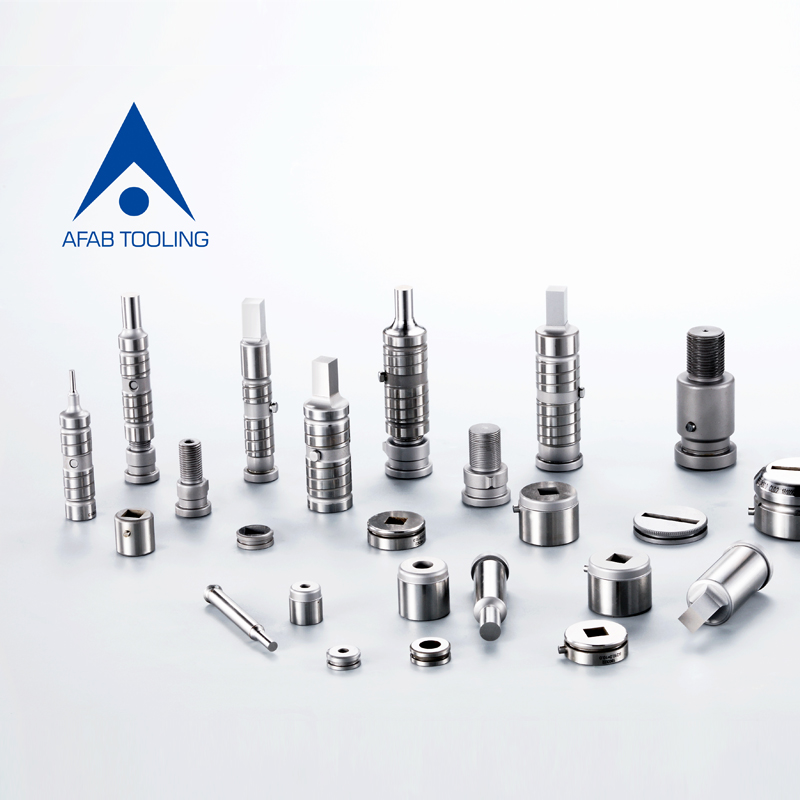
Many factories already use turret punching equipment for sheet metal fabrication. Extending this equipment to selected non-metallic materials can improve machine utilization and reduce outsourcing costs. Thick turret punching tools are especially suitable when manufacturers need repetitive hole patterns, high-volume sheet processing, consistent dimensional control, fast cycle time, lower per-part cost, tooling solutions for special shapes, and integration with existing punch press workflows.
Compared with some other cutting methods, punching does not always require long programming time for repeated standard hole patterns, and it can be highly efficient for batch jobs. In many applications, once the correct punch design is established, the process becomes stable and economical.
Another advantage is flexibility. Tooling can be customized according to product requirements, sheet samples, or 2D and 3D drawings. This is especially important when non-metallic components require unusual hole shapes, mounting slots, embossed features, ventilation patterns, or custom geometry.
Although thick turret punching tools can process non-metallic sheets, the process is not without difficulties. These materials often introduce problems that are much less common in metal fabrication.
Brittle plastics or hard laminated boards may crack near the punched edge, especially if the punch is dull or the die clearance is unsuitable. Acrylic is a typical example. Even when the hole shape is simple, the wrong setup can cause micro-cracks or visible edge fractures.
Some thermoplastics soften quickly when friction increases. If the punching speed is too high, lubrication is poor, or the tool edge is not sharp enough, the material may melt or stick to the punch surface. This reduces edge quality and shortens tool life.
Soft plastics and rubber-like materials may deform instead of shearing cleanly. This can result in stretched edges, oversized holes, or poor dimensional consistency. The material may also rebound after punching, which affects the final result.
Composite boards and layered non-metallic sheets may separate between layers during punching. This is particularly common when the punch enters too aggressively or when support under the sheet is insufficient.
Certain insulation boards, gasket materials, and fiber-based sheets do not break cleanly like metal. Instead, they may tear, fray, or leave fuzzy edges if the tooling geometry is not optimized.
Some non-metallic materials generate fine particles or chips during punching. These particles can affect machine cleanliness, interfere with tool movement, or adhere to the workpiece surface.
Because of these challenges, proper process design is the key to achieving acceptable results.
Before starting mass production, manufacturers should first determine whether a specific non-metallic material is suitable for thick turret punching tools.
Hard and brittle materials may crack if punching force is not evenly distributed. Softer materials may deform excessively. A balance is needed between material support and shearing action.
Thickness strongly affects punching behavior. Some thin plastic sheets punch cleanly, while thicker sheets may require specially designed punches, reduced stroke speed, or segmented punching strategies.
If the sheet has multiple bonded layers, punching tests should confirm whether the layers remain intact around the cut edge.
Materials that soften under friction may require sharper tools, lower punching frequency, or anti-adhesion coatings.
If the final application requires tight tolerances or visible cosmetic surfaces, trial punching is necessary to ensure the process can meet those standards.
For small quantities, alternative cutting methods may sometimes be acceptable. But for medium and large batch production, thick turret punching tools often become attractive because of productivity and consistency.
The best practice is to run sample testing using the actual material. Tooling should be adjusted based on real punching results rather than theoretical assumptions alone.
Tool design is one of the most important factors in successful punching. Standard tooling may work in some cases, but many non-metallic applications benefit from dedicated or modified thick turret punching tools.
Non-metallic sheets usually require very sharp punch and die edges. A dull edge increases compression, friction, and deformation before cutting occurs. This can cause melting, edge damage, and inaccurate holes.
Different punch face geometries affect how force is transferred into the material. For some brittle sheets, reducing sudden stress concentration helps prevent cracking. For softer materials, punch geometry can help improve shearing stability.
Die clearance is critical. Too little clearance may cause excessive compression and heat. Too much clearance may create rough edges, tearing, or oversized holes. The optimal clearance for non-metallic materials is often different from standard metal applications and must be tested carefully.
Some non-metallic materials tend to stick to the punch or lift during withdrawal. Proper stripper design helps hold the sheet flat and prevent distortion.
A smooth tool surface reduces friction and sticking. In many cases, coated tooling can improve surface smoothness and significantly extend tool service life. For example, coatings such as TiCN can help improve wear resistance and reduce adhesion during processing.
If the part requires repetitive patterns, louvers, slots, or special geometry, custom tooling can increase production efficiency while maintaining quality.
Even the best thick turret punching tools will not perform well without correct machine settings. Processing parameters must match the behavior of the material.
High speed is not always better. For heat-sensitive plastics or brittle boards, slower punching may improve edge quality and reduce damage. The correct speed depends on material type, thickness, and hole geometry.
The punch stroke should be set carefully to complete the cut without excessive penetration. Too much stroke can damage the material, increase wear, and produce unnecessary impact.
For dense hole patterns, distributing hits in a logical sequence can reduce sheet distortion and local stress buildup. This is especially important for thin non-metal sheets that may warp during processing.
A well-supported sheet improves cutting quality. Poor support allows vibration, bending, and local cracking. Vacuum tables, brush tables, or other supportive arrangements may be helpful depending on the machine and material.
Non-metallic sheets may shift more easily than metal sheets. Proper clamping and hold-down systems help prevent movement, improve accuracy, and reduce marking.
Some materials benefit from low-friction conditions, while others may react poorly to standard lubricants. The process should also include regular cleaning to remove chips, dust, or melted residue from the tooling area.
Because non-metallic sheets vary widely, the process should be adapted to the specific material group.
Plastic materials such as PVC, PP, PE, and polycarbonate are often suitable for punching when the thickness and toughness are within a workable range. Sharp thick turret punching tools, smooth tool surfaces, and controlled punching speed are essential. The main goal is to avoid edge whitening, melting, or deformation.
Acrylic and some hard laminated boards require special caution because they may crack easily. In these cases, tool sharpness, support, and gradual stress distribution matter greatly. It is usually necessary to perform sample runs before production approval.
Elastic materials can deform under load and may not separate cleanly unless the tooling is designed for them. Strong hold-down and optimized punch geometry help prevent stretching and distortion.
These materials may fray or produce dust. Clean shearing, regular cleaning, and careful support are important. Tool wear should also be monitored because abrasive materials can shorten service life.
When processing non-metallic sheets, tool quality directly influences productivity and consistency. High-quality thick turret punching tools made from reliable tool steel can better maintain edge sharpness and reduce the frequency of maintenance.
A standard solution often uses high-speed steel such as M2. For more demanding applications, imported high-speed steel or upgraded material options may be selected. In cases where wear resistance and durability are critical, powder steel or advanced alloy steel may provide further performance benefits. Material selection should match the processing volume, the abrasive nature of the non-metallic sheet, and the customer’s cost target.
The benefit of high-quality tool material is not only longer life. It also helps maintain consistent hole quality across the production batch. When a tool edge degrades slowly and predictably, the factory can schedule maintenance more effectively and reduce quality variation.
A good process does not end with the machine setup. Quality control is essential to ensure long-term success.
Manufacturers should inspect hole dimension, edge smoothness, cracking or chipping, delamination, surface marks, burr-like edge defects, positional accuracy, and flatness after punching. It is also wise to record tooling life, sharpening intervals, and defect trends by material type. This creates a database for future jobs and helps engineers optimize the process more quickly.
In many factories, the best results come from combining engineering trials with production feedback. Operators, tooling engineers, and quality inspectors should all contribute to parameter refinement.
Not every job can be solved with standard tooling. In non-metallic processing, custom tooling often becomes necessary when the material is highly specialized, edge quality requirements are strict, the part has unusual geometry, production volume is high, standard tools create repeated defects, or the customer needs better efficiency and longer tool life.
Custom tooling offers greater flexibility. It can be designed according to actual sheet samples or based on customer-provided drawings. This allows manufacturers to optimize the punch face, clearance, support behavior, and shearing performance for the target application.
In batch production, a properly designed custom tool can significantly reduce scrap rate and improve output stability. Although initial tooling development requires more effort, it often lowers the total manufacturing cost over time.
To process non-metallic materials successfully with thick turret punching tools, manufacturers should follow a structured approach.
Never assume that one setup works for all materials. Even sheets that look similar can behave differently because of composition, fillers, or manufacturing methods.
Choose standard or custom tooling based on material behavior, geometry, and quality requirements.
Optimize speed, clearance, stroke, support, and stripping rather than relying on default machine settings.
A slight decrease in sharpness may cause major quality changes in non-metallic materials.
Build a process record for each material and part type. This improves repeatability and reduces future development time.
Because non-metallic punching often requires customized solutions, technical support from a knowledgeable tooling supplier can save time and reduce risk.
Processing non-metallic materials with thick turret punching tools is entirely possible—and in many applications, highly efficient—when the tooling and process are properly matched to the material. The key is understanding that non-metallic sheets do not behave like standard metals. They require sharper tools, carefully tested clearances, suitable support, and a controlled punching strategy. When manufacturers invest in the right tool design and process optimization, they can achieve clean cuts, good dimensional accuracy, stable batch production, and lower overall cost.
For companies looking to improve productivity in non-metallic sheet processing, choosing a professional tooling partner makes a major difference. AFAB specializes in punching and bending tools for punch presses, press brake, and sheet metal machinery, offering flexible customization based on customer samples, 2D drawings, and 3D drawings. With experienced design engineers, diverse material options, reliable production equipment, and a strong focus on quality, cost control, and service, AFAB can help manufacturers find practical tooling solutions that make sheet metal work better, faster, and more efficiently.
Yes. Many non-metallic materials can be processed using thick turret punching tools, but success depends on the material type, thickness, tooling design, clearance, and punching parameters. Trial testing is strongly recommended before mass production.
Materials such as certain plastic sheets, gasket materials, insulation boards, and some fiber-based sheets can often be punched successfully. However, brittle materials like acrylic or layered composites need extra care and may require specialized tooling.
The biggest challenge is that non-metallic materials do not shear like metal. They may crack, melt, deform, fray, or delaminate. This means manufacturers must optimize tool sharpness, support, stripping, and die clearance carefully.
Not always, but custom tooling is often the best solution when edge quality is critical, geometry is complex, or production volume is high. Custom-designed thick turret punching tools can improve quality, efficiency, and tool life.
Tool life can be improved by selecting high-quality tool materials, maintaining sharp cutting edges, using suitable coatings, controlling heat and friction, and cleaning residue or dust regularly during production.


