


Views: 0 Author: Site Editor Publish Time: 2026-04-17 Origin: Site


In modern sheet metal fabrication, tooling performance directly influences production efficiency, part quality, operating cost, and machine uptime. Even with advanced punching equipment, manufacturers cannot achieve stable and cost-effective results without the right tooling strategy. This is why Thick Turret Tooling remains a critical part of high-performance punch press operations. From standard hole punching to special forming applications, the quality, design, maintenance, and application of tooling all determine how efficiently a production line can run.
For manufacturers working in industries such as electrical equipment, electronics, machinery manufacturing, transportation, communication, medical equipment, and energy systems, thick turret punch presses are widely used because of their speed, repeatability, and flexibility. However, many factories still focus heavily on machine investment while underestimating the importance of tooling optimization. In reality, even the best machine cannot deliver ideal performance if the tooling is poorly selected, improperly maintained, or mismatched to the application.
This guide explains the fundamentals of Thick Turret Tooling, how it affects punching quality and production efficiency, what factors shorten tooling life, and what manufacturers can do to optimize performance and extend service life over time.
Thick Turret Tooling refers to a tooling system used in thick turret punch presses, typically designed for high-strength, stable, and repeatable punching operations across a wide range of sheet metal applications. It includes punches, dies, strippers, guide components, springs, and related tooling assemblies that work together to cut, perforate, form, emboss, mark, or shape sheet metal.
Compared with thinner turret systems, thick turret tooling is generally known for its robust structure, broad compatibility, and suitability for demanding industrial production. It is widely favored in factories that require durability, consistent accuracy, and flexible tooling choices for different material types and part designs.
A complete thick turret tooling setup is not just a consumable accessory. It is a precision production element that directly impacts hole quality, burr level, deformation control, dimensional accuracy, tool change efficiency, and overall manufacturing reliability.
The importance of Thick Turret Tooling goes far beyond simply making holes in sheet metal. Tooling affects nearly every aspect of punching performance.
First, tooling determines cut quality. A sharp and properly matched punch-and-die combination helps produce clean edges, accurate dimensions, and minimal burr. If tooling condition declines, the quality of every punched feature may deteriorate.
Second, tooling influences machine efficiency. Well-designed tooling supports faster cycle times, smoother punching action, and fewer unplanned stoppages. In contrast, worn or poorly designed tools can lead to jamming, inconsistent stripping, excessive vibration, and increased operator intervention.
Third, tooling has a direct impact on cost. A low-cost tool that wears out quickly or causes scrap may become far more expensive than a higher-quality option that delivers stable long-term performance. Productivity losses, rework, downtime, and frequent replacement all raise the real cost of poor tooling.
Finally, tooling flexibility helps manufacturers respond to different customer needs. With the right Thick Turret Tooling, factories can handle round holes, shaped holes, slots, louvers, embossing, countersinks, special forming features, and customized part requirements more efficiently.
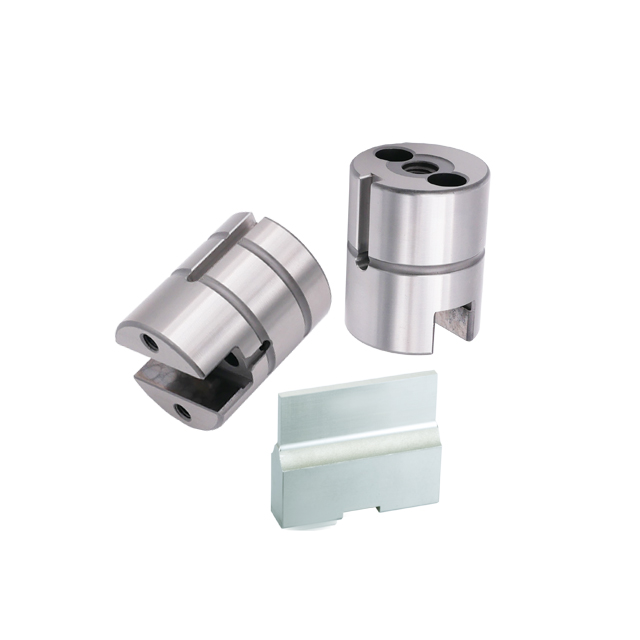
To optimize tooling performance, it is important to understand the key elements in the tooling assembly.
The punch is the working element that enters the material and performs the cutting or forming action. Its geometry, material, surface finish, and edge sharpness all play a major role in final part quality.
The die works together with the punch to complete the shearing process. Die clearance, hardness, precision, and wear condition strongly affect burr level, edge smoothness, and tool life.
The stripper helps control the sheet during punching and ensures the material releases properly from the punch after each hit. Proper stripper performance is essential for reducing distortion and maintaining process stability.
Guide systems keep the tooling aligned during operation. Poor alignment increases uneven wear, lowers accuracy, and can lead to premature failure.
Springs and supporting components affect stripping force, return action, and overall tool function. These internal elements should not be overlooked during routine maintenance.
Each component contributes to the overall performance of Thick Turret Tooling, and weakness in one area can reduce the efficiency of the entire system.
Thick Turret Tooling is used in a wide variety of fabrication tasks, especially in industries that require speed, repeatability, and economical batch production.
Round holes, square holes, rectangular holes, and slots are among the most common operations. Stable tooling ensures consistent hole size and edge condition over long production runs.
Dense hole patterns for ventilation panels, speaker grilles, filters, cabinet doors, and decorative panels are ideal applications for thick turret tooling, especially when repeatability is essential.
Certain tooling designs can create forms such as louvers, embosses, bridges, countersinks, and extrusions. These features allow manufacturers to add function without secondary processing.
Custom part designs often require non-standard tooling. One of the major strengths of Thick Turret Tooling is the ability to adapt tooling geometry to specific applications.
When manufacturers need large quantities of identical parts, thick turret punch tooling offers efficiency, stable cycle time, and lower per-part processing cost.
Many manufacturers experience tooling problems not because the tooling itself is poor, but because the full operating system is not optimized. Several factors influence tooling performance.
Tool steel selection affects hardness, toughness, wear resistance, and edge retention. Standard tooling often uses M2 high-speed steel, while higher-performance applications may require upgraded materials such as imported high-speed steel, powder steel, or advanced alloy steel.
The geometry of the punch and die must match the intended application. Poor design can cause excessive stress concentration, rough edges, slug pulling, and rapid wear.
Die clearance is one of the most important factors in punching quality. Improper clearance can lead to heavy burrs, edge tearing, excessive punching force, or shortened tool life.
Even premium Thick Turret Tooling will perform poorly if the machine is not properly aligned. Misalignment accelerates wear and increases the risk of breakage.
Different materials place different demands on tooling. Stainless steel, mild steel, aluminum, galvanized steel, and specialty materials all behave differently during punching.
High-friction conditions increase wear and may damage tooling surfaces. Proper lubrication strategy helps reduce galling, adhesion, and thermal stress during production.
Tool handling, installation, setup, and inspection routines all affect performance. Careless operation can shorten tooling life even when the tooling itself is high quality.
Improving the performance of Thick Turret Tooling requires a systematic approach rather than a single adjustment. Factories that achieve the best results usually focus on tooling selection, process control, and preventive maintenance together.
Not all tooling is suitable for all materials, thicknesses, or part geometries. Selecting the correct punch style, die design, clearance, and tool material is the first step toward high-performance production.
Harder or more abrasive materials require stronger wear resistance and sharper edge retention. Softer materials may demand better anti-sticking performance and surface finish.
Tool geometry and clearance should suit the thickness range being processed. Using a tool outside its ideal application range often reduces quality and durability.
Standard tooling works well for many common operations, but custom tooling becomes more efficient when part geometry is unique, batch size is large, or special forming features are required.
One of the simplest and most important ways to optimize Thick Turret Tooling is to maintain sharp edges. As cutting edges wear, punching force rises and part quality begins to decline.
Increased burr, rough hole edges, more noise, higher punching load, and inconsistent stripping are all warning signs that the tool edge may no longer be optimal.
Waiting too long to sharpen a tool usually causes greater damage. Light and timely sharpening helps preserve tooling geometry and extends total service life.
A controlled sharpening process ensures that tooling dimensions and working angles remain stable over repeated maintenance cycles.
Die clearance has a major influence on both cutting quality and tool longevity. Clearance that is too small may increase force, heat, and wear. Clearance that is too large may cause poor edge finish, rollover, and oversized burr.
Manufacturers should adjust clearance based on material type, hardness, thickness, and required finish quality. This is especially important when changing from mild steel to stainless steel, aluminum, or coated sheet.
For many factories, clearance optimization is one of the fastest ways to improve Thick Turret Tooling performance without major equipment changes.
Tool life depends not only on tool quality, but also on how much stress is introduced during production.
Excessive stroke depth increases impact load and wear without improving the cut. Correct punch penetration improves efficiency while protecting the tool.
When punching dense patterns or complex shapes, hit sequence can influence sheet distortion, vibration, and tool loading. A smarter punching path often leads to better results.
Slug pulling can damage both parts and tooling. Proper die design, surface finish, maintenance, and process settings help reduce this risk.
Using a tool for material or thickness beyond its intended range can rapidly shorten life and compromise safety.
Tool surface quality affects friction, wear, and material adhesion. In demanding applications, tooling with improved surface treatment or coating can significantly enhance durability.
For example, coated Thick Turret Tooling may offer better surface smoothness, lower friction, and improved wear resistance. Certain coatings can also reduce sticking and extend the service life of the punch and die, especially in high-volume or difficult-material applications.
A smooth and stable tool surface helps maintain cleaner punching action over time, which supports both part quality and maintenance efficiency.
Factories that treat tooling as a managed production asset usually outperform those that only react when problems occur. Preventive maintenance is essential for maximizing the value of Thick Turret Tooling.
Routine inspection should include edge condition, surface wear, cracking, internal function, spring condition, stripper action, and alignment-related wear patterns.
Metal dust, oil residue, slug fragments, and debris can all affect tool performance. Proper cleaning helps prevent hidden wear and mechanical problems.
Recording the number of hits, sharpening cycles, material types processed, and defect trends provides valuable data for maintenance planning and replacement decisions.
Improper storage can cause rust, accidental damage, edge chipping, and part mixing. Organized storage improves both tool life and production efficiency.
Long tool life does not happen by accident. It is the result of correct material choice, precise machining, controlled usage, and disciplined maintenance.
The foundation of long-lasting Thick Turret Tooling is high-quality raw material. M2 high-speed steel remains a common and reliable choice for standard applications. For higher wear resistance or tougher working conditions, upgraded materials such as AHP, powder steel, or premium alloy steel may offer better performance.
Coatings can increase surface hardness, reduce friction, and improve wear resistance. In many applications, suitable coating can extend service life by several times compared with uncoated tools.
Running a worn tool until failure usually damages more than just the cutting edge. Delayed maintenance can affect die condition, sheet quality, machine load, and even adjacent tooling stations.
Operators who understand setup, tool handling, sharpening intervals, and warning signs are a major factor in extending tooling life. Human practice matters just as much as technical design.
A knowledgeable supplier can recommend better tool materials, clearances, coatings, and customized solutions based on actual production conditions. This support helps reduce costly trial and error.
Standard tooling covers many common applications, but there are situations where custom Thick Turret Tooling is the better investment.
Special-shaped holes, unusual slots, and customer-specific geometry often require custom punches and dies.
If a factory repeatedly manufactures the same part, custom tooling can improve speed, stability, and overall cost efficiency.
Features such as embossing, louvering, extrusion, and countersinking often require dedicated tool design for best results.
Some materials require special clearance, geometry, or tool surface treatment to achieve stable performance.
Custom tooling allows manufacturers to optimize the process based on real part drawings, 2D and 3D files, or even physical material samples. This flexibility is one of the most practical ways to improve long-term production efficiency.
Many tooling problems come from avoidable mistakes rather than unavoidable wear.
Improper die clearance is one of the most common causes of burrs, excessive force, and rapid wear.
Minor burr increase or noise change may seem small, but they often indicate the beginning of more serious tooling issues.
Throwing tools into mixed storage or leaving them unprotected can damage edges and surfaces before they even return to production.
Tool wear may actually be a symptom of machine alignment or station condition problems rather than tooling quality alone.
Low initial price often leads to higher total cost through shorter life, lower quality, and more downtime.
When optimized correctly, Thick Turret Tooling does more than last longer. It improves the entire production system.
It reduces downtime caused by unexpected tool failure. It improves part consistency and lowers rejection rates. It helps operators maintain more stable cycle times. It reduces the frequency of sharpening and replacement. It supports better machine utilization. Most importantly, it gives manufacturers greater confidence when taking on demanding customer projects.
For competitive fabrication businesses, tooling optimization is not a small technical detail. It is a practical strategy for improving profit, quality, and delivery reliability.
The long-term performance of Thick Turret Tooling depends on far more than the tool itself. Real optimization comes from choosing the right tooling material, matching tool design to the application, controlling clearance and machine setup, maintaining sharp edges, using preventive maintenance, and working with an experienced tooling partner. Manufacturers that treat tooling as a key production asset consistently achieve better punching quality, lower operating cost, and longer service life.
For companies aiming to improve punching performance and tooling longevity, AFAB provides a reliable partner with strong technical capability and flexible customization support. AFAB specializes in punching and bending tools for punch presses, press brake, and sheet metal machinery, offering standard tooling, special tooling, and customized solutions based on customer samples, 2D drawings, and 3D drawings. With experienced design engineers, multiple tool material options, advanced processing equipment, fast delivery capability, and a commitment to excellent quality, cost control, and service, AFAB helps customers optimize sheet metal production with dependable and efficient tooling solutions.
Thick Turret Tooling is used in punch press operations for hole punching, slotting, perforating, embossing, louvering, countersinking, and other sheet metal fabrication processes. It is widely used in batch production because of its efficiency and repeatability.
You can improve tool life by selecting high-quality tool materials, maintaining sharp edges, optimizing die clearance, reducing unnecessary stress, using suitable coatings, and following a preventive maintenance routine.
Fast wear may be caused by improper clearance, poor machine alignment, delayed sharpening, unsuitable tool material, high friction, or using the tool outside its intended application range.
Yes, custom tooling is often worth it when part geometry is complex, production volume is high, or standard tooling cannot achieve the desired efficiency or quality. Custom tools can improve performance and reduce total production cost.
Common materials include M2 high-speed steel for standard applications, while upgraded options such as AHP, powder steel, and advanced alloy steel may be used for higher wear resistance and more demanding production needs.


