


Views: 0 Author: Site Editor Publish Time: 2026-04-27 Origin: Site


In sheet metal fabrication, manufacturers are under constant pressure to reduce costs without sacrificing product quality, delivery speed, or production stability. Rising labor expenses, material waste, machine downtime, tool replacement frequency, and inconsistent punching quality can all increase total manufacturing cost far more than many companies expect. As a result, more factories are re-evaluating not only their machines and workflows, but also the tooling systems they rely on every day.
One of the most practical ways to improve cost control is by upgrading to premium Thick Turret Tooling. While some buyers focus primarily on the initial purchase price of tooling, experienced manufacturers understand that tooling cost is only a small part of the total production equation. The real financial impact comes from tool life, punching consistency, downtime reduction, maintenance frequency, scrap rate, setup efficiency, and long-term operational stability.
High-quality tooling does more than punch holes. It supports smoother production, cleaner cuts, lower defect rates, more predictable maintenance, and better machine utilization. Over time, these advantages translate directly into reduced manufacturing costs. For factories producing electrical cabinets, machinery components, speaker grilles, ventilation panels, transport parts, medical equipment structures, and other sheet metal products, tooling performance can make a significant difference in profitability.
This article explains how premium Thick Turret Tooling helps reduce manufacturing costs, where the biggest savings come from, and why investing in better tooling often delivers better financial results than choosing the lowest-priced option.
Many manufacturers underestimate how much tooling influences total production cost. They may compare tooling suppliers only by unit price, assuming that one punch and die set is much like another. In real production, however, tooling quality affects nearly every major cost category.
A tooling system is not just a replaceable accessory. It directly influences hole quality, burr level, forming consistency, machine load, part accuracy, and maintenance workload. If tooling is poorly designed or wears too quickly, the result is often a chain reaction of hidden costs.
When tooling edges deteriorate quickly or alignment is unstable, punched parts may show excessive burr, rough edges, inaccurate dimensions, surface marks, or inconsistent forming results. These defects create scrap, additional inspection work, and costly rework.
When a machine is paired with low-performance tooling, operators often need to stop production more often for adjustments, sharpening, cleaning, or replacement. This reduces uptime and increases labor cost per part.
A tool that costs less upfront may appear attractive during purchasing, but if it wears out quickly, causes unstable production, or increases downtime, it may become far more expensive over time. This is why many manufacturers turn to premium Thick Turret Tooling as a long-term cost-saving strategy rather than a short-term expense increase.
Not all tooling is manufactured to the same standard. Premium tooling is defined not only by material grade, but also by design precision, machining accuracy, surface finish, coating quality, performance stability, and compatibility with real production demands.
Premium Thick Turret Tooling is usually produced using reliable and wear-resistant tool materials. Standard solutions often use M2 high-speed steel, while higher-grade applications may use imported high-speed steel such as AHP, powder steel, or advanced alloy steel depending on processing requirements.
Better material helps maintain edge sharpness, resist wear, and reduce unexpected failure. This improves consistency and reduces replacement frequency.
When tooling lasts longer and stays stable for more hits, the factory spends less on replacement, sharpening, and downtime. That creates measurable cost savings over the full production cycle.
Premium tooling is also defined by precision. Accurate punch and die geometry, reliable guide structures, stable stripper performance, and consistent assembly quality all contribute to better punching results.
High-quality surface treatment and coatings such as TiCN can improve smoothness, reduce friction, lower adhesion, and extend service life. In demanding applications, these details can significantly improve the real performance of premium Thick Turret Tooling.
The biggest advantage of premium tooling is that it reduces cost in multiple areas at the same time. The savings are not limited to tool replacement alone.
One of the most direct cost benefits comes from longer tool life. Premium Thick Turret Tooling usually lasts longer under the same working conditions because of better material quality, more accurate heat treatment, stronger wear resistance, and better overall design.
If a factory needs to replace low-cost tooling frequently, the savings from cheaper purchasing disappear quickly. A longer-lasting tool reduces the number of replacement cycles and lowers procurement frequency.
Replacing tools also takes time. Every unnecessary replacement means machine stoppage, operator attention, setup work, and lost production capacity. Premium tooling reduces this disruption.
Machine downtime is one of the most expensive hidden costs in manufacturing. A punch press only creates value when it is running. When it stops because of tooling problems, costs continue while output stops.
Premium Thick Turret Tooling helps reduce unplanned downtime by maintaining better consistency over long production runs. Stable edge condition, reliable stripping, and reduced wear-related issues help keep the machine operating more smoothly.
When tooling performance is more predictable, maintenance can be planned instead of rushed. Planned maintenance is always less costly than emergency stoppages in the middle of production.
Operators and technicians spend less time reacting to sudden tooling issues and more time on productive work.
When tooling is stable, production planning becomes more accurate, helping manufacturers avoid late deliveries and rush-related inefficiencies.
Defective parts are a major cost burden. Material waste, extra labor, delayed delivery, and repeated inspection all reduce profitability. One of the strongest advantages of premium Thick Turret Tooling is its ability to improve consistency and reduce defect rates.
Sharper and more durable tooling produces cleaner holes and better edge condition. This reduces burr, tearing, deformation, and dimensional inconsistency.
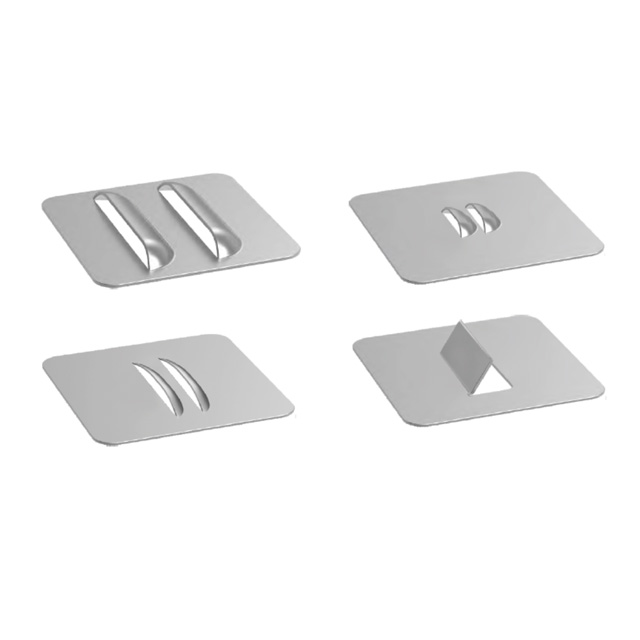
When parts require features such as louvers, embossing, extrusion, or countersinks, stable tooling becomes even more important. Premium tooling supports more repeatable forming results and lowers the risk of part rejection.
In high-volume production, even a small defect rate can create substantial cost over time. Better consistency reduces these losses.
When more parts pass inspection the first time, the factory saves on material, labor, energy, machine time, and delivery risk.
Tool maintenance is necessary in every production environment, but poor-quality tooling often requires more frequent sharpening and closer supervision. Premium Thick Turret Tooling helps reduce the maintenance burden.
Because premium tooling retains sharpness more effectively, sharpening intervals are often longer and more predictable.
Stable wear behavior makes it easier to maintain tooling before problems become severe. This helps preserve tooling geometry and improve total usable life.
Predictable maintenance avoids overuse, reduces emergency repairs, and helps factories organize maintenance labor more efficiently.
A worn or unstable tool can also damage dies, strippers, and even increase machine stress. Better tooling helps reduce these secondary maintenance costs.
Cost reduction is not only about spending less. It is also about producing more efficiently with the same resources. Premium Thick Turret Tooling helps improve cycle stability and support better punching efficiency.
Stable tooling reduces process interruptions, operator corrections, and repeated checks. This creates a smoother production rhythm.
For repeated parts and batch production, premium tooling helps maintain stable performance over a large number of hits. This makes output more predictable and reduces variation.
When tooling performance stays consistent, operators can work more efficiently and quality teams spend less time addressing recurring defects.
Stable productivity makes it easier to calculate part cost accurately and manage delivery schedules more effectively.
Labor is a major component of manufacturing cost, and tooling quality affects labor efficiency more than many companies realize.
Poor tooling often requires more operator attention for adjustment, cleaning, burr control, inspection response, or replacement. Premium Thick Turret Tooling reduces these interruptions.
When tooling produces better and more consistent parts, less labor is spent sorting defects, handling complaints, or reprocessing rejected components.
Instead of constantly reacting to tool issues, technicians and operators can focus on production improvement and throughput.
Stable tooling also creates a smoother shop-floor workflow, which reduces pressure on operators and improves overall process discipline.
Material cost is one of the largest expenses in sheet metal production. Premium tooling can help manufacturers use material more efficiently by reducing waste caused by poor punching quality.
Every rejected part wastes raw material. By improving punching accuracy and consistency, premium Thick Turret Tooling helps reduce material scrap.
Stable tool dimensions and cleaner edges help factories keep features within tolerance, reducing the risk of unusable parts.
The financial advantage of premium tooling becomes even more obvious in medium- and high-volume manufacturing.
In a short production run, a small tooling improvement may seem modest. But in repeated batch production, even minor savings in replacement time, defect rate, or sharpening frequency multiply quickly.
When factories run high hit counts and tight delivery schedules, low-quality tooling problems become more visible and more costly. Premium Thick Turret Tooling offers greater protection against this risk.
The larger the production volume, the more important it is to keep quality and output stable from the first part to the last.
In high-output environments, even short interruptions can create meaningful production loss. That is why premium tooling often delivers a stronger return on investment.
Manufacturers should not evaluate tooling based only on price per set. A better comparison is based on cost per usable part and total production stability.
When evaluating tooling options, manufacturers should compare:
tool life
sharpening intervals
downtime frequency
defect rate
replacement cost
maintenance workload
labor impact
consistency in long runs
The true value of premium Thick Turret Tooling lies in total cost of ownership. This includes not only what the tool costs to buy, but also what it costs to operate, maintain, replace, and manage throughout its service life.
This is one of the most important purchasing principles in tooling. Better tools often cost more initially, but reduce overall manufacturing expense.
A tool that supports reliable scheduling, stable quality, and fewer interruptions creates value that goes beyond simple hardware cost.
Even the best tooling performs best when supported by correct process management.
Choose tooling material, clearance, geometry, and coating according to the material type, thickness, and feature design.
Regular inspection, timely sharpening, cleaning, and correct storage help preserve the value of premium Thick Turret Tooling.
Recording hits, sharpening intervals, and defect trends helps identify which tools create the most value and where further optimization is possible.
A knowledgeable supplier can recommend the right material options, custom tooling solutions, and process improvements to maximize the return on tooling investment.
For repeated parts or special applications, custom tooling may reduce hit count, improve feature quality, and lower part cost even more.
Experienced tooling support helps factories solve problems faster and avoid expensive development mistakes.
Reducing manufacturing costs is not only about negotiating lower purchase prices. It is about building a production system that runs more efficiently, wastes less material, requires less intervention, and delivers more consistent results. Premium Thick Turret Tooling helps achieve all of these goals by extending tool life, reducing downtime, lowering scrap and rework, improving punching quality, and supporting more stable production.
For manufacturers that want to improve profitability in sheet metal processing, investing in premium tooling is often one of the smartest long-term decisions. AFAB specializes in punching and bending tools for punch presses, press brake, and sheet metal machinery, offering standard tooling, special tooling, and customized solutions based on customer samples, 2D drawings, and 3D drawings. With experienced design engineers, multiple material options including M2 and upgraded grades, advanced processing equipment, fast delivery capability, and a strong commitment to excellent quality, cost control, and service, AFAB helps customers reduce manufacturing costs with reliable and high-performance Thick Turret Tooling solutions.
Premium Thick Turret Tooling reduces costs by extending tool life, lowering downtime, reducing scrap and rework, improving punching consistency, and decreasing maintenance frequency. Over time, these benefits reduce total production cost.
In most industrial production environments, yes. Although the upfront price may be higher, premium tooling often provides better total cost of ownership through longer service life, fewer interruptions, and more stable output.
Tooling quality affects replacement cost, machine downtime, labor efficiency, scrap rate, maintenance workload, sharpening frequency, and delivery reliability.
Because small improvements multiply quickly in large production runs. Longer life, fewer stops, and lower defect rates create much larger savings when the hit count is high.
Choose the right tool for the material and application, maintain it correctly, track its performance with data, and work with an experienced tooling supplier that can provide technical support and customization when needed.


