


Views: 0 Author: Site Editor Publish Time: 2026-04-24 Origin: Site


Choosing the right tooling system is a critical decision in sheet metal fabrication. Tooling affects punching precision, machine efficiency, operating cost, maintenance frequency, and long-term production stability. Among the most commonly compared systems, Thick Turret Tooling and thin turret tooling are often discussed by manufacturers who want to improve performance or select the most suitable option for their machines and applications.
Although both systems are used in punching operations, they differ in structural design, durability, application range, maintenance demands, and long-term production value. For buyers, engineers, and factory managers, understanding these differences is essential. The right choice depends not only on machine compatibility, but also on production volume, material type, part complexity, tooling life expectations, and future business needs.
This guide explains the key differences between Thick Turret Tooling and thin turret tooling, compares their strengths and limitations, and provides practical selection advice for manufacturers.
Before comparing the two systems, it is important to understand what each one is and where it is commonly used.
Thick Turret Tooling refers to a tooling system used on thick turret punch presses. It is widely known for its strong structure, good guiding stability, and suitability for industrial sheet metal production. A typical thick turret setup includes punches, dies, strippers, guide components, springs, and supporting parts that work together during punching and forming operations.
This tooling system is commonly used in industries such as electrical equipment, machinery manufacturing, transportation, communication, medical equipment, and energy systems. It is valued for its durability, stable performance, and flexibility in handling standard tools, special tools, and customized designs.
Thin turret tooling is used on thin turret punch presses and is generally associated with a lighter tooling structure. Like thick turret systems, it is designed for punching holes and shapes in sheet metal. It can handle many common punching operations and may be suitable for certain standard production environments.
However, compared with Thick Turret Tooling, thin turret tooling is generally seen as a lighter-duty option. It may perform effectively in the proper machine setup and suitable workload conditions, but its application range and long-term robustness may differ under demanding industrial use.
Manufacturers compare thick turret and thin turret systems because tooling is not just a machine accessory. It is a production component that directly affects hole quality, cycle efficiency, burr control, tool life, maintenance workload, and cost per part.
For some factories, the question is not simply which system is compatible, but which one offers better long-term value. A lighter production environment may not require the durability of Thick Turret Tooling, while a high-output industrial operation may benefit greatly from its stability and extended service life.
The most fundamental difference between the two systems lies in their structure. This difference influences performance, durability, and maintenance over time.
In general, Thick Turret Tooling has a more robust body construction. This stronger structure helps the tooling remain stable during repeated punching and forming operations. It is especially useful in higher-frequency production and in applications where tooling is exposed to greater working stress.
Thin turret tooling usually has a lighter and more compact construction. This may be acceptable for less demanding jobs, but in many industrial applications, lighter construction may provide less resistance to long-term wear and stress.
Guiding accuracy is an important part of punching consistency. Thick turret systems are often favored because their guiding structure supports better alignment and stable operation. This helps reduce uneven wear and maintain more consistent hole quality over long runs.
Thin turret tooling can still perform well in appropriate applications, but in more demanding conditions, Thick Turret Tooling often offers stronger operational confidence because of its structural stability.
The durability of internal parts such as strippers, springs, and guide elements also influences long-term tooling performance. In many cases, thicker and more robust tooling designs can better support continuous industrial use.
When internal components wear too quickly, the entire tooling system becomes less efficient. Even if the cutting edge remains usable, unstable stripping action or worn guide elements can reduce punching quality and increase maintenance frequency.
A stronger internal structure helps maintain smoother operation, fewer sudden failures, and more predictable maintenance intervals. This is one reason why many manufacturers choose Thick Turret Tooling for demanding production lines.
The structural differences between the two systems become more obvious during actual daily operation.
One of the major advantages of Thick Turret Tooling is its stable punching performance. In high-volume production, consistency is critical. Stable tooling reduces variation in hole quality, helps control burr, and improves overall process reliability.
Thin turret tooling may be suitable for standard or lighter-duty operations, but under more intensive production conditions, stability often becomes a more decisive factor.
Tool life is a key consideration for any factory focused on uptime and cost control. Because of its stronger construction and compatibility with high-quality tool materials, Thick Turret Tooling is often preferred where longer service life is required.
Thin turret tooling can still be practical in suitable applications, but in demanding industrial use, wear may become more noticeable over time, especially when punching harder materials or running extended batch production.
When parts require more than simple punching, the difference between the two systems becomes even clearer.
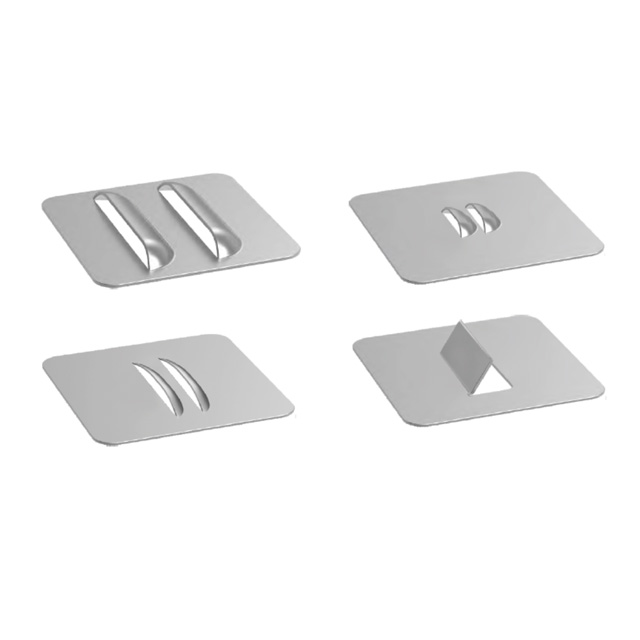
Forming operations typically place additional demands on tooling. Features such as louvers, embossing, countersinks, and extrusion require stronger and more stable tooling support.
Because of its stronger structure and broader customization flexibility, Thick Turret Tooling is often better suited for special forming applications. Manufacturers needing advanced features usually find thick turret systems more reliable in the long run.
Not every factory processes the same materials, part designs, or production volumes. That is why application range is an important factor when comparing thick turret and thin turret systems.
Thick Turret Tooling is commonly used across a wide range of sheet metal materials, including mild steel, stainless steel, aluminum, and galvanized sheet. It is often selected for factories that need a versatile and dependable tooling solution across multiple material types.
Thin turret tooling can also handle many standard materials, but under more demanding wear conditions, thick turret systems may offer better long-term value.
For simple round holes and basic slots, both systems may be workable depending on the machine. But as part geometry becomes more complex, the advantages of Thick Turret Tooling often become more obvious.
Simple punching jobs may not expose major differences immediately. However, complex parts with repeated patterns, shaped holes, or forming features require more from the tooling system.
Complex production often benefits from stronger stability, better guidance, and more flexible custom tooling options. These are areas where Thick Turret Tooling usually performs well.
Production volume is one of the most practical selection criteria. A factory producing low volumes of relatively simple parts may not need the same tooling durability as a factory running long industrial shifts.
In lighter-duty environments, thin turret tooling may be acceptable if the application demands are limited and machine compatibility supports it.
For repeated batch jobs and continuous industrial work, Thick Turret Tooling is often the stronger choice because it supports longer tool life, more stable output, and better uptime.
Initial tooling price is only one part of the real cost. Maintenance frequency, tool life, sharpening intervals, and downtime all affect total cost over time.
In many applications, Thick Turret Tooling offers better wear resistance and more manageable sharpening cycles when the tooling is made from quality materials and maintained properly. This helps reduce interruptions and supports more predictable production planning.
Thin turret tooling may require closer monitoring in more demanding applications, especially when material hardness, production intensity, or feature complexity increase.
Long-term durability affects how often tools need repair, replacement, or adjustment.
A tooling system that lasts longer and performs more consistently helps reduce machine stoppages and unplanned maintenance.
Even if a tooling option appears less expensive at the beginning, higher replacement frequency and more downtime can make it more costly over time. In many industrial scenarios, Thick Turret Tooling provides better total value.
Factories should also consider how much maintenance effort they are prepared to manage. A more robust tooling system can reduce maintenance pressure and make production planning easier, especially in busy manufacturing environments.
Selecting the right tooling system requires more than a simple price comparison. Manufacturers should evaluate the full production picture.
The first step is always machine compatibility. Tooling must fit the punch press system in use. This is the most basic and unavoidable requirement.
If the factory handles frequent jobs, long production runs, and demanding industrial workloads, Thick Turret Tooling is usually the better option. Its durability and consistency make it well suited for high-output environments.
The harder the material and the more complex the part, the more important tooling stability becomes.
If the job is relatively simple and the workload is light, thin turret tooling may be sufficient in the appropriate machine environment.
If the operation involves complex shapes, high-volume output, or tighter quality expectations, Thick Turret Tooling usually offers greater practical advantages.
Factories should not choose tooling only for today’s jobs. They should also consider future growth. If production is likely to expand into more complex parts or higher-volume work, investing in a more robust tooling strategy now may reduce cost later.
There are many situations where Thick Turret Tooling becomes the preferred solution.
Repeated production requires tooling that can maintain performance over long runs without frequent interruption.
Factories seeking lower downtime and more predictable maintenance often prefer thick turret systems.
When the job includes embossing, louvering, extrusion, countersinking, or special shapes, Thick Turret Tooling usually provides better support.
For manufacturers that need reliable consistency and long-term durability, thick turret systems are often the safer and more practical choice.
Although this comparison highlights many advantages of Thick Turret Tooling, thin turret tooling may still be suitable in some production environments.
If production is not intensive and part requirements are relatively simple, thin turret tooling may be enough for the task.
For standard punching operations without heavy forming demands or high-output schedules, the lighter system may remain workable.
In some factories, current machine configuration determines the practical tooling system. In that case, selection is guided first by compatibility, then by workload evaluation.
Both thick turret and thin turret tooling systems have their place in sheet metal fabrication, but they are not interchangeable in terms of production value. Thin turret tooling may be suitable for lighter-duty work and simpler applications, while Thick Turret Tooling is generally the better choice for manufacturers who need stronger durability, wider application flexibility, more stable punching performance, and better long-term efficiency.
For companies looking for reliable tooling solutions, AFAB provides professional support in punching and bending tools for punch presses, press brake, and sheet metal machinery. AFAB offers standard tooling, special tooling, and customized solutions based on customer samples, 2D drawings, and 3D drawings. With experienced engineers, multiple tool material options, advanced production equipment, fast delivery capability, and a strong commitment to quality, service, and cost-effective solutions, AFAB helps customers choose the right Thick Turret Tooling for stable and efficient sheet metal production.
The biggest difference is structural robustness and production suitability. Thick Turret Tooling is generally stronger, more stable, and better suited for demanding industrial production, while thin turret tooling is often more appropriate for lighter-duty applications.
Yes. In most industrial cases, Thick Turret Tooling is better suited for long production runs because it offers stronger durability, better stability, and more predictable maintenance intervals.
For complex shapes, repeated patterns, embossing, louvering, and other forming applications, Thick Turret Tooling is usually the better choice because of its structure and customization flexibility.
The initial cost may sometimes be higher, but the total long-term cost can be lower because of better durability, less downtime, and stronger production consistency.
Start with machine compatibility, then evaluate material type, production volume, part complexity, maintenance capacity, and future business growth. If your production demands stability, durability, and long-term efficiency, Thick Turret Tooling is often the better solution.


