


Views: 0 Author: Site Editor Publish Time: 2026-06-30 Origin: Site


Architectural fabrication carries incredibly high stakes on modern construction projects. Aluminum curtain wall panels demand zero-defect aesthetics. They also require exact structural tolerances to ensure seamless facade integration. Unfortunately, standard sheet metal tooling falls short here. Processing soft, sticky materials like architectural-grade aluminum presents unique hurdles for operators. Off-the-shelf equipment frequently leads to severe galling. Operators also face rough edge burrs and ultimately face rejected panels. These issues drain budgets and disrupt schedules. To protect margins, fabricators must evaluate specialized Punching Tools. We will show you how to assess surface protection capabilities accurately. You will learn to determine realistic maintenance intervals for high-volume runs. Finally, we explore methods to maximize forming versatility. This guidance helps you meet strict project deadlines without sacrificing quality.
Surface Quality is Paramount: Upgrading to specialized coatings prevents aluminum galling and eliminates costly secondary finishing.
Forming Tools Drive Efficiency: Integrating a specific louver tool or emboss tool directly into the CNC punch press eliminates secondary operations.
Clearance and Alignment Dictate Yield: Proper die clearance (specifically calculated for aluminum alloys and tempers) is the primary defense against burrs and premature tool wear
Architectural panels rely heavily on specific aluminum alloys to withstand harsh environmental conditions. You typically see 3003, 5005, or 5052 aluminum grades specified on commercial blueprints. These materials offer excellent weather resistance and structural durability. However, they present massive challenges during CNC fabrication. Aluminum feels inherently soft and sticky under extreme mechanical pressure. It easily falls victim to cold-welding during repetitive cycles. We call this destructive phenomenon galling. Under the immense friction of the piercing stroke, microscopic aluminum particles fuse directly to the punch tip. This localized material buildup destroys the precision cutting edge quickly. Operators then face severe dimension variations.
Curtain wall panels usually undergo strict secondary finishing processes. You might apply architectural anodizing treatments. Many high-profile projects require high-performance PVDF coatings to ensure color longevity. These premium finishes unforgivingly highlight every underlying surface imperfection. Micro-scratches from improper handling ruin the final visual presentation. Tool marks resulting from poor die alignment look terrible under natural sunlight. Sheet distortion caused by rough stripping operations remains entirely unacceptable in modern architecture. Clients will reject these flawed panels immediately upon site inspection.
You need to establish clear, uncompromising success criteria for any tooling investments. Your operational setup must guarantee zero sheet marking during the entire run. The automated stripping cycle should leave the delicate metal surface pristine. Operators must achieve consistently clean edge quality across thousands of consecutive cycles. Furthermore, you want to aggressively maximize hit rates to keep up with tight construction schedules. You must accomplish this speed without exceeding the defined machine tonnage limits. A carefully balanced approach ensures both rapid production speed and flawless aesthetic output.
Modern building facades require diverse, highly functional design elements to manage light and air. High-density cluster punches help you achieve this complex aesthetic efficiently. They handle rapid perforation tasks effortlessly across large sheets. You often use them for fabricating custom acoustic panels. They also work exceptionally well for intricate ventilation sections. A well-engineered cluster punch maintains strict sheet flatness despite the aggressive material removal. It prevents unacceptable warping during intense, high-speed perforation sequences. This keeps the panel structurally sound for mounting.
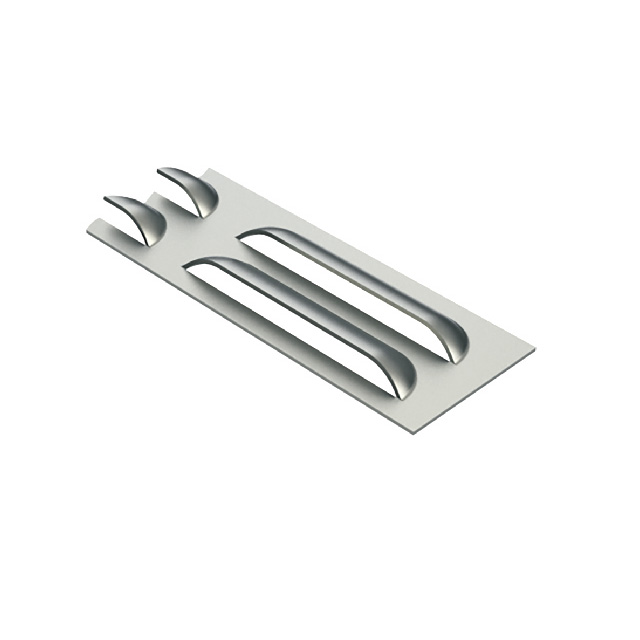
Airflow management requires specific, highly efficient fabrication approaches. You can integrate a specialized louver tool directly into the CNC punch press turret. This smart integration eliminates slow, error-prone off-machine forming operations entirely. It keeps the heavy panel on one machine from start to finish. When evaluating these options, check the mechanical design carefully. Look for assemblies featuring heavy-duty replaceable inserts. They reduce long-term replacement expenses significantly by isolating wear to small components. Adjustable lengths offer great architectural versatility for varying project scopes. You can adapt to different facade requirements quickly without buying entirely new assemblies.
Architectural designers often request complex, visually striking textures on exterior cladding. You can utilize an advanced emboss tool here to meet these demands. It adds critical structural rigidity to otherwise flat, flexible sheets. Large-span aluminum panels benefit immensely from this localized added strength. You can also create striking decorative architectural features that stand out. Assess the equipment's complex forming capability closely before integration. It must reliably shape the metal without thinning it dangerously. Fracturing the soft aluminum completely ruins the structural integrity of the part. Success requires utilizing highly polished dies to encourage smooth material flow. You also need incredibly precise stroke control to avoid over-penetration.
Selecting the right equipment requires rigorous, evidence-based evaluation of multiple technical dimensions. Metallurgy plays a massive role in determining overall operational success. You must actively avoid standard tool steels for these specific applications. They simply cannot handle soft, sticky aluminum reliably over long shifts. Look for premium powdered metals instead to ensure durability. We often refer to these as PM steels in the fabrication sector. The powder metallurgy process ensures a highly uniform carbide distribution. Combine these premium metals with specialized surface treatments. TiCN coatings work exceptionally well due to their extreme hardness. Proprietary anti-galling coatings also repel aluminum build-up effectively. They keep the cutting edge clean and razor-sharp.
Die clearance engineering directly determines the final part quality and edge condition. Assess potential vendors based on their technical recommendations and engineering depth. They should provide exact clearance calculations tailored to your material. Aluminum typically requires a clearance of 15% to 20% of material thickness. The exact numerical value depends heavily on the specific alloy and temper. For example, softer H14 tempers behave differently than harder H32 variations. Avoid suppliers relying on broad, outdated industry averages. Generic clearance numbers cause massive edge burrs very quickly.
Pay close attention to the mechanics of the stripper plate design. The rapid retraction phase causes many unexpected surface defects. Evaluate the proactive use of urethane-faced plates to cushion the impact. Highly polished, hardened stripper plates also perform beautifully on sensitive materials. They ensure absolute zero sheet marking even under high clamping pressure. The punch retracts smoothly without dragging material upward.
Tooling Material and Coating Comparison for Aluminum Processing | ||
Tooling Characteristic | Standard Tool Steel (A2/D2) | Premium Powdered Metal (PM) with Advanced Coating |
|---|---|---|
Wear Resistance | Low to Moderate; dulls quickly on thick sheets. | Exceptionally High; uniform carbide structure resists wear. |
Galling Tendency | High; highly prone to microscopic cold-welding. | Low; specialized coatings actively repel material buildup. |
Edge Quality Maintenance | Degrades rapidly, requiring frequent deburring. | Remains pristine, delivering clean burnish and break zones. |
Lubrication Dependency | Requires heavy, messy lubrication to survive. | Functions effectively with light vanishing oils. |
Introducing complex equipment into an active production environment carries inherent implementation risks. Tonnage and machine limits demand strict attention from your engineering team. You risk overloading turret presses easily if you miscalculate requirements. Large-station forming assemblies naturally draw immense mechanical power during the stroke. You must run accurate tonnage calculations based on material shear strength. Do this systematically prior to finalizing any equipment procurement. This mathematical diligence protects your expensive machinery from catastrophic hydraulic failure. It also prevents premature wear on the ram components.
Maintenance realities also shift significantly when upgrading your capabilities. You must carefully choose between standardized and frequent sharpening schedules. Running dull equipment poses a massive operational risk to your entire facility. It exponentially increases burr size, leading to downstream assembly issues. It also accelerates overall machine wear by increasing the required punching force. Preventative maintenance keeps production running smoothly and predictably. You should use proper coolant and fine-grit wheels during sharpening to prevent heat damage.
Comprehensive operator training ensures long-term success and equipment preservation. Your team needs proper guidance on specialized lubrication practices. Processing aluminum demands specific knowledge to prevent surface contamination.
Follow these critical operator guidelines to maintain efficiency:
Apply high-quality vanishing oils lightly before initiating complex forming cycles.
Avoid completely dry punching when utilizing heavy, multi-insert cluster configurations.
Inspect punch flanks for signs of micro-welding at the start of every shift.
Calibrate stroke depth carefully on the control panel to prevent material fracturing.
Clean the lower die matrix regularly to remove accumulated aluminum slugs.
These proactive steps prevent incredibly costly scrap rates. They empower your operators to handle soft alloys confidently and safely.
Sourcing the right manufacturing partner requires a highly logical, methodical approach. Start by evaluating the depth of vendor engineering support available. Shortlist suppliers offering custom test-hits on their own demonstration equipment. They should test your specific aluminum grade to prove viability. They must also match your exact sheet thickness and temper conditions. Demand these physical proofs before making a final purchase commitment. Inspect the resulting edges under a microscope to verify clean shearing. This rigorous verification eliminates expensive guesswork entirely.
Standardization protects your future operational flexibility and budget. Evaluate the underlying canister systems carefully to ensure widespread compatibility.
Common standardized systems observed in modern facilities include:
Thick Turret configurations known for robust alignment.
Trumpf style mounting setups offering rapid tool changes.
Standardized quick-change insert systems designed for high-mix environments.
Murata-Wiedemann setups utilized in specialized historical deployments.
These universal formats ensure broad compatibility across multiple machine brands. They successfully reduce proprietary lock-in, keeping you in control. You retain the freedom to source replacement parts globally without restrictions.
Finally, conduct a rigorous cost-per-hit analysis to justify the capital expenditure. You must move confidently beyond the initial quoted purchase price. Compare vendors based on proven performance longevity in actual production environments. Look at the expected total hits delivered between routine sharpenings. Calculate the ongoing expense of acquiring replacement tips. Factor in the cost of consumable inserts over a multi-year timeline. This holistic calculation reveals the true operational expense over time. It guarantees you select the most efficient option for high-volume curtain wall manufacturing.
Investing in high-precision equipment transforms architectural fabrication operations entirely from the ground up. The right technical configuration acts as a strict, automated quality assurance mechanism. It directly impacts the final profitability and delivery speed of every curtain wall project you undertake. By proactively prioritizing surface integrity, you eliminate wasteful secondary finishing stages completely. This keeps your production flowing smoothly toward the shipping dock.
Take these immediate, action-oriented steps to optimize your production line today:
Audit your current historical scrap rates to identify exact financial losses caused by galling.
Document instances of poor edge quality across different aluminum tempers used in your shop.
Initiate a physical, monitored tooling trial utilizing your heaviest, most challenging production materials.
Partner exclusively with vendors who actively engineer custom solutions specifically for architectural facades.
Establish a mandatory, scheduled maintenance routine based on hit counts rather than visual failure.
A: They utilize specific anti-friction coatings and highly polished punch flanks. These premium surface treatments stop soft aluminum particles from cold-welding to the tool steel. When paired with optimized lubricants, they ensure clean retractions and pristine panel surfaces.
A: Yes, but you must make critical adjustments. The die and cutting clearance must specifically match the given material thickness and temper. Using a single configuration for vastly different thicknesses will inevitably result in tearing or incomplete forms.
A: It eliminates work-in-progress transport entirely. It also drastically reduces manual labor requirements. Performing the action in-machine ensures perfect positional accuracy relative to the punched holes. This consolidated workflow significantly lowers the overall cost-per-part and speeds up delivery times.
A: You should rely on strict preventative maintenance rather than waiting for failure. Sharpening must occur as soon as edge radius wear becomes detectable. This is often just a fraction of a millimeter. Timely sharpening maintains clean edges for painting and maximizes total lifespan.


