


Views: 0 Author: Site Editor Publish Time: 2026-03-31 Origin: Site


With the continuous development of modern architecture, aluminum curtain walls have become an essential material in exterior building decoration. They are widely used in commercial complexes, office buildings, airports, metro stations, exhibition centers, and other large public projects. Compared with traditional decorative materials, aluminum curtain walls offer clear advantages such as light weight, corrosion resistance, flexible fabrication, and strong visual appeal. As architectural design trends move toward greater customization and sophistication, manufacturers are facing higher expectations in both product quality and processing capability.
In the production of aluminum curtain wall panels, punching is one of the most important manufacturing steps. Whether the goal is to create ventilation holes, decorative perforation patterns, mounting holes, or special forming features, the final quality of the product depends heavily on the precision and stability of the tooling system. In this context, CNC punching tools play a decisive role. They not only affect the accuracy of hole dimensions and positions, but also influence production efficiency, surface quality, and overall manufacturing cost. For companies involved in the curtain wall decoration industry, understanding the application value of CNC punching tools is increasingly important.
The aluminum curtain wall industry is not simply concerned with making metal panels; it is about combining structural function with decorative performance. Many curtain wall products require clean edges, consistent perforation layouts, and precise dimensional control to meet architectural and installation standards. Since aluminum materials are relatively soft and often have demanding surface finish requirements, the choice of punching tools directly affects whether the finished panel can meet project expectations.
CNC punching tools help manufacturers achieve repeatable, high-speed, and accurate processing. In large-scale façade projects, even a small deviation in hole position or panel shape can create difficulties during assembly and installation. High-quality tooling makes it possible to maintain consistent results across batches, which is especially important when producing panels with repeated patterns or strict dimensional tolerances. At the same time, good tooling also helps reduce burrs, minimize deformation, and improve production efficiency, making it a critical factor in modern curtain wall manufacturing.
Aluminum curtain wall panels are used not only as protective exterior cladding, but also as an important visual element in architectural design. This means they must satisfy both mechanical and aesthetic requirements. In practical production, aluminum panels may need to be punched with regular holes, dense perforation arrays, decorative patterns, or special functional openings. Some projects also require embossing, louver forming, countersinking, or other secondary features that enhance either appearance or installation performance.
Because of these requirements, the processing of aluminum curtain wall materials demands a high level of tooling precision. Aluminum sheets are easy to form, but they are also vulnerable to scratching, warping, or edge defects if the tools are not properly designed or maintained. Thin sheets in particular require stable punching conditions to avoid deformation. In decorative applications, even small surface marks or inconsistent hole edges may reduce the final value of the product. For this reason, tooling selection is not just a technical detail; it is a key factor in ensuring that the curtain wall panel performs well both structurally and visually.
Different aluminum alloys and panel thicknesses can lead to different punching results. Softer materials may be easier to process, but they can also stick to the tool surface or produce poor edge quality if the tooling geometry is not suitable. Coated or pre-finished aluminum panels require even more careful handling, because surface damage must be minimized throughout the punching process.
This is why manufacturers need tooling solutions that are matched to the specific characteristics of the material being processed. Factors such as punch clearance, tool sharpness, coating, and material hardness all influence the final outcome. In the aluminum curtain wall decoration industry, tooling performance must be evaluated not only by speed, but also by the ability to protect surface quality and maintain stable results over time.
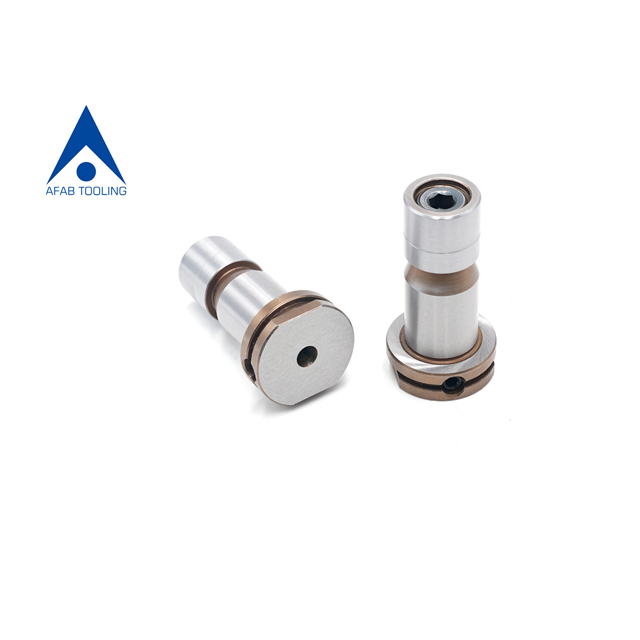
CNC punching tools are widely used in several key production stages of aluminum curtain wall manufacturing. One of the most common applications is perforation processing. Decorative curtain wall panels often feature round, square, slotted, or custom-shaped holes to achieve visual effects, reduce weight, or improve airflow and lighting performance. In these cases, CNC punching tools make it possible to create precise and consistent patterns across large panel surfaces.
Another important application is the production of installation and assembly holes. Curtain wall panels usually require accurately positioned holes for bolts, fasteners, support components, or alignment during installation. If these holes are not punched with high precision, the panels may not fit correctly on-site, resulting in delays and additional labor costs. CNC punching tools ensure that such functional holes meet strict position and size requirements, supporting smoother assembly in real construction environments.
In addition to standard punching, many curtain wall applications involve forming operations. Special tools can be used to create embossed features, louvers, extrusion shapes, and countersunk areas. These functions may improve the appearance of the panel, provide ventilation, or enhance structural performance. As architectural design becomes more diverse, the use of custom punching and forming tools is becoming more common, especially in projects that require distinctive façade patterns or project-specific panel features.
Decorative perforation is one of the most representative applications of CNC punching tools in the curtain wall industry. Architects often use perforated aluminum panels to create modern visual effects, control light transmission, or add artistic value to building exteriors. To achieve these results, manufacturers must process large numbers of holes with consistent shape, spacing, and alignment.
CNC punching tools are well suited for this kind of production because they can combine accuracy with speed. Standard tools can efficiently produce regular hole arrays, while special tools or multi-tool systems can support more complex patterns. This allows manufacturers to balance design freedom with production efficiency, which is essential in the competitive architectural metal market.
The role of CNC punching tools is not limited to making holes. In many curtain wall products, the panel must also include functional details that support installation or improve performance. Louvers, for example, can provide airflow while maintaining a clean exterior look. Embossed features may add rigidity or create visual texture. Extruded holes and countersinks can make assembly easier and more reliable.
These applications show that CNC punching tools are not just cutting tools; they are also forming tools that help transform flat aluminum sheets into value-added architectural components. As customer expectations grow, the ability to combine multiple functions into a single punching process becomes an important advantage for manufacturers.
One of the greatest advantages of CNC punching tools is their ability to improve processing precision. In curtain wall production, dimensional consistency is essential because every panel must fit accurately within a larger building system. High-quality tools help ensure stable hole size, clean edges, and correct positioning, reducing the risk of errors during downstream fabrication and installation.
Another major advantage is production efficiency. Curtain wall projects often involve large quantities of panels, and many of them share repeated designs or structural features. CNC punching tools make it possible to process these panels quickly and consistently, reducing reliance on manual operations and improving throughput. For manufacturers working under tight delivery schedules, efficient tooling is an important way to maintain competitiveness.
CNC punching tools also contribute to better surface and edge quality. Since aluminum curtain wall panels are visible architectural products, appearance matters greatly. Sharp, well-designed tools can reduce burr formation and tool marks, helping the finished panel maintain a clean and professional look. In many cases, this also reduces the need for additional finishing operations, saving both time and cost.
Customization is becoming a defining feature of the aluminum curtain wall decoration industry. Different projects often require unique hole patterns, panel geometries, or forming details based on architectural drawings. CNC punching tools, especially custom-designed ones, provide manufacturers with the flexibility needed to respond to these requirements efficiently.
This flexibility is especially valuable in project-based production, where each order may involve different specifications. Instead of relying only on standard tools, manufacturers can develop tooling solutions tailored to specific applications, improving both design realization and production control. As a result, CNC punching tools are becoming an important enabler of innovation in façade manufacturing.
Despite their many advantages, CNC punching tools also present several practical challenges in aluminum curtain wall production. One of the most common issues is tool wear. Over long production runs, punching tools gradually lose sharpness, which can lead to burrs, poor edge quality, and reduced dimensional accuracy. If maintenance is not carried out in time, the quality of the final panel may be affected.
Another challenge is deformation control, especially when processing thin aluminum sheets or panels with dense hole patterns. Improper tool clearance, excessive punching force, or unstable material handling can all cause distortion. For decorative panels, even minor deformation may affect both appearance and installation accuracy. This means that tooling performance must always be considered together with process settings and machine stability.
Surface protection is also a critical concern. Curtain wall panels often have high decorative value, and customers expect them to be free from scratches, marks, or visible defects. This places greater demands on tool quality, machine condition, and production management. In practical terms, manufacturers must balance speed, quality, and tooling cost while maintaining reliable output standards.
To achieve long-term stable performance, CNC punching tools must be supported by proper maintenance and technical management. Regular inspection, regrinding, and replacement are necessary to keep tools in good condition. In addition, engineering support is often required when developing tooling for custom panel designs or special forming needs.
This is particularly important in the aluminum curtain wall decoration industry, where design diversity and project complexity continue to increase. A capable tooling supplier should not only provide products, but also offer advice on tool selection, material matching, and application optimization. In many cases, strong technical support is just as important as the tool itself.
Selecting the right CNC punching tools for aluminum curtain wall production requires a clear understanding of material type, panel thickness, processing purpose, and surface quality standards. Standard hole punching may be handled well by conventional tools, but decorative perforation, embossing, louver forming, or special architectural patterns often require application-specific solutions.
Tool material is another important consideration. High-speed steel is commonly used for standard applications, while higher-grade materials such as powder steel or premium alloy steel may be better suited for demanding production conditions. Coatings such as TiCN can also improve tool smoothness, wear resistance, and service life, making them valuable for high-volume or high-quality production environments.
Manufacturers should also consider the supplier’s customization capability and response speed. In the curtain wall industry, project timelines can be tight, and non-standard designs are common. A tooling partner that can design according to sheet metal samples or 2D and 3D drawings offers a clear advantage. Fast delivery, technical consultation, and reliable after-sales service all contribute to better production results and stronger project performance.
When selecting tooling, the lowest purchase price is not always the most economical choice. Tools with better material quality, longer service life, and more stable performance may reduce downtime, lower maintenance frequency, and improve product consistency. Over time, this can lead to significant savings in production cost and quality management.
For aluminum curtain wall manufacturers, tooling should be evaluated as a long-term production asset rather than a simple consumable. Choosing the right CNC punching tools helps companies improve efficiency, reduce risk, and meet the increasingly complex demands of modern architectural projects.
As architectural design continues to evolve, aluminum curtain wall production is moving toward greater complexity, higher precision, and more personalized surface effects. This trend will continue to expand the role of CNC punching tools in the industry. Manufacturers will increasingly need tooling systems that can support complex patterns, stable forming performance, and efficient adaptation to project-specific requirements.
At the same time, there will be growing demand for longer-lasting tool materials, better coatings, and smarter production integration. The future of CNC punching tools is likely to involve not only improved durability and precision, but also better compatibility with automated and digital manufacturing systems. Companies that invest in advanced tooling solutions will be better positioned to respond to changing market expectations and compete in high-value architectural metal projects.
CNC punching tools have become an essential part of aluminum curtain wall manufacturing, helping producers achieve better precision, higher efficiency, cleaner perforation quality, and stronger customization capability. As architectural projects continue to demand more complex designs, lighter structures, and more refined decorative effects, the role of advanced punching tooling will only become more important in improving both production performance and final product value.
For manufacturers looking to stay competitive in the aluminum curtain wall decoration industry, choosing the right tooling partner is just as important as choosing the right machine. A professional supplier can provide not only standard and custom CNC punching tools, but also reliable material options, technical support, fast delivery, and consistent quality. At AFAB, we are committed to helping customers improve their sheet metal processing with high-quality punching and bending tooling solutions, flexible customization service, and dependable support for a wide range of architectural and industrial applications.
CNC punching tools are mainly used to process aluminum curtain wall panels by creating holes, slots, perforation patterns, mounting holes, embossed features, louvers, and other functional or decorative shapes. They are widely applied in projects that require both structural precision and architectural aesthetics.
They are important because they directly affect hole accuracy, surface quality, production efficiency, and consistency. In curtain wall applications, even small deviations can influence panel installation and overall façade appearance, so precise and reliable tooling is essential.
Commonly used tools include round punches, square punches, rectangular punches, slotted punches, embossing tools, louver tools, extrusion tools, and custom forming tools. The exact tool type depends on the panel design, material thickness, and project requirements.
The right tools should be selected based on aluminum material type, sheet thickness, hole shape, forming requirements, surface finish expectations, and production volume. Tool material, coating, durability, and supplier customization capability should also be considered when making a decision.
Yes. CNC punching tools can be customized according to specific project drawings, perforation patterns, forming needs, and panel structures. Custom tooling is especially useful for architectural projects that require unique façade designs, special-shaped holes, or high-volume repeated patterns.


