


Views: 0 Author: Site Editor Publish Time: 2026-10-16 Origin: Site


Are scratched surfaces ruining your carefully crafted sheet metal parts? Investing in high-end punching machines means very little if you operate them with the wrong stripper. This seemingly minor oversight frequently causes material warping, localized distortion, and remarkably poor surface finishes.
In the world of sheet metal fabrication, punches and dies typically steal the spotlight. The stripper, however, remains the unsung hero of the entire punching process. In this comprehensive guide, we will explore the nuances of proper tooling selection. You will learn practical shop-floor strategies tailored to help you eliminate unnecessary scrap and elevate your manufacturing quality.
Strippers Dictate Surface Quality: The correct holding component prevents sheet distortion, eliminates scratching on delicate materials, and ensures perfectly flat manufactured parts.
Standard vs. Urethane: A standard steel configuration is ideal for heavy-duty applications. A polyurethane push-on variant is absolutely essential for non-marking, scratch-free fabrication.
System Synergy: Optimal machine performance requires perfectly matching your strippers with precise punches while maintaining the correct die clearance.
ROI on Tooling: Investing in application-specific components drastically reduces scrap materials, minimizes secondary finishing processes, and significantly increases overall machine uptime.
A stripper is a fundamental tooling component designed to perform two highly critical mechanical functions. First, it holds the sheet metal completely flat against the die during the downward punch stroke. Second, it physically pulls the raw material off the punch as the tool forcefully retracts. The impact of this specific component on final part quality simply cannot be overstated.
Looking at recent industry trends, the sheet metal fabrication sector is experiencing a massive push toward high-speed automation and lights-out manufacturing. As punch presses run faster than ever before, the margin for error essentially vanishes. Modern scrap rates are increasingly linked to improper tooling setups rather than machine limitations. In this high-stakes automated environment, the stripper is no longer just an accessory. It acts as a critical stabilizer for maintaining throughput and surface integrity. By firmly clamping the material, it minimizes high-frequency vibrations that otherwise lead to premature tool wear and inaccurate hole positioning.
During the punching cycle, kinetic energy and immense pressure transfer directly into the sheet metal. Without adequate hold-down force, the material naturally attempts to bow or lift. This localized distortion compromises the dimensional accuracy of the hole while degrading the overall flatness of the sheet. High-quality tooling stands out in the industry due to its rigorous engineering standards, which ensure that hold-down pressure distributes evenly across the entire surface area.
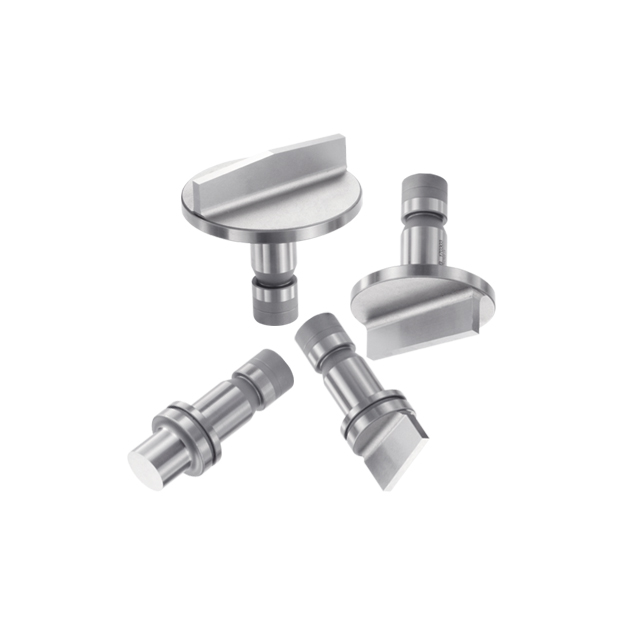
For the vast majority of structural and heavy-duty sheet metal fabrication, the standard steel configuration remains the default choice. Constructed from hardened tool steel, this rugged component is engineered specifically to withstand immense mechanical stress and repeated impact over millions of relentless punching cycles.
Specifically, the Trumpf Standard Series Stripper is designed for harsh environments where durability and rigidity are the primary operational concerns. Available in various sizes to accommodate different station requirements, it provides the unyielding clamping force necessary for thick materials. If you are running a high-volume batch of 3mm mild steel brackets or thick aluminum plates, this is exactly what you need. In high-speed applications, the hardened steel construction prevents the tool itself from deforming under rapid repetitive loads.
To better understand its practical application on the shop floor, consider these objective advantages and limitations. Hardened steel offers maximum lifespan and wear resistance. Its rigid surface, however, can unfortunately leave witness marks on softer alloys. It provides exceptional pressure to keep thick sheets flat, but its lack of flexibility means it cannot absorb minor surface irregularities. This makes it excellent for heavy-tonnage operations but highly unsuitable for polished stainless steel panels.
When fabricating cosmetic parts where surface aesthetics are just as critical as dimensional accuracy, a standard steel tool frequently falls short. This exact scenario is where the polyurethane stripper becomes an indispensable asset. Featuring a specialized urethane pad that fits securely onto the standard assembly, it acts as a protective shock-absorbing buffer between the hard steel of the machine and the delicate surface of your sheet metal.
The primary advantage of utilizing a Trumpf PU Push-On Stripper is its remarkable non-marking capability. Polyurethane is an elastomer possessing high load-bearing capacity alongside incredible elasticity. When the punch strikes, the urethane pad absorbs the kinetic impact. It distributes the hold-down force softly and evenly without scratching the material. Consequently, this makes it the ultimate solution for fabricating polished stainless steel, copper, brass, and pre-galvanized sheets.
Beyond mere aesthetics, elastomer pads offer distinct mechanical benefits. They actively prevent galling, which is the frustrating form of wear caused by adhesion between sliding surfaces. By eliminating metal-to-metal contact during the hold-down phase, material transfer is effectively halted. Operators must remember that polyurethane is a consumable material. Signs that a replacement is necessary include visible tearing, a permanent loss of elasticity known as compression set, or the sudden appearance of localized pressure marks on the sheet metal.
To simplify your tooling selection process, we have compiled a direct comparison of these two distinct stripping technologies. Reviewing these parameters will help you match the right tool to your specific production run.
Feature | Standard Steel Stripper | PU Push-On Stripper |
|---|---|---|
Material Construction | Hardened Tool Steel | High-load Polyurethane Elastomer |
Primary Application | Thick mild steel, structural aluminum | Polished stainless, pre-painted panels |
Hold-Down Force | Rigid, maximum clamping pressure | Flexible, shock-absorbing distribution |
Lifespan | Millions of cycles with proper care | Consumable requires periodic replacement |
A stripper does not operate in a vacuum. It functions as part of a highly synchronized tooling ecosystem. To achieve optimal fabrication results, the extraction tool must be perfectly paired with Trumpf Standard Series Punches and their corresponding dies. The synergy between these interconnected components dictates the cleanliness of the cut and the ultimate longevity of the setup.
The most critical factor in this mechanical synergy is clearance and sizing. The inner diameter of the stripper must closely match the size and geometry of the punch. Empirical shop-floor data shows that using a stripper with excessive clearance allows the sheet metal to draw or dimple upward during the stripping phase. This leads to localized deformation around the punched hole. In contrast, if the clearance is too tight, it creates excessive friction. You might even hear the harsh grinding sound of metal binding, which leads to rapid tool wear, overheating, and potential tool seizure.
Proper tool setup is vital for maintaining this delicate balance. Operators should routinely inspect components to ensure the punch, stripper, and alignment rings are completely free of debris. Double-checking that the inner opening provides the manufacturer-recommended clearance prevents lateral movement during operation.
Fabricators frequently encounter quality control issues that are mistakenly attributed to machine malfunction or dull cutting edges. In reality, a significant portion of these defects stems directly from improper stripper selection. Addressing these issues requires a highly analytical approach to tooling physics.
This frustrating defect occurs when there is inadequate hold-down force or when the stripper opening is significantly larger than the punch profile. During retraction, the material is violently pulled upward, causing the sheet to permanently bow. Upgrading to a properly sized component guarantees that the sheet remains perfectly flat against the die during the entire extraction phase.
Hardened steel striking soft, polished, or pre-painted materials inevitably creates impact abrasions and localized pressure indentations. The immediate solution is transitioning to a polyurethane solution. The elastomer pad absorbs the impact energy and distributes the clamping force gently, eliminating surface abrasions entirely.
As the punch retracts from the die, a temporary vacuum is created. If cutting fluids are present, this vacuum effect is amplified, causing the waste material to be pulled back up to the surface of the sheet. You can often hear a distinct popping sound when this happens, which can destroy the next punch cycle. A properly fitted stripper holds the material firmly against the die, breaking the vacuum effect and ensuring the slug falls safely into the scrap chute.
For job shop owners, purchasing tooling is a strategic investment that directly impacts bottom-line profitability. Making the right choice requires evaluating the specific variables of your daily production environment. Selecting items from a reliable Trumpf Standard Series catalog ensures you have the exact geometry needed for the job at hand.
When evaluating cost versus return on investment, it is crucial to look well beyond the initial purchase price. Saving a marginal amount on a generic or incorrectly sized stripper can cost a facility thousands of dollars in scrapped materials, rejected batches, and extensive secondary labor for deburring and polishing. Investing in application-specific tooling drastically reduces these hidden profit-killing costs.
For optimal operational readiness, a well-equipped fabrication shop should maintain a highly diversified inventory. Carrying a calculated mix of both standard steel models for heavy-duty structural jobs and urethane variants for delicate cosmetic work ensures that the shop can handle diverse client demands without suffering unnecessary machine downtime.
Even the highest quality tooling requires systematic proactive maintenance to perform reliably. Tooling degradation does not happen overnight. It is typically a gradual process that incrementally compromises your part quality if left unmonitored.
Machine operators should integrate visual and tactile inspections into their daily setup routines. For steel components, examine the high-stress areas around the inner diameter for microscopic stress fractures. Catching these early prevents complete tool failure. When processing delicate materials, inspecting your urethane pads for tearing or localized hardening is absolutely essential. If the polyurethane fails to return to its original shape after a stroke, its dampening capabilities are severely compromised.
Debris management is a non-negotiable aspect of tooling maintenance. A tool covered in metallic dust will scratch even the most durable materials. Operators should use industrial-grade degreasers to clean steel components, carefully removing any galling with a fine abrasive stone. Polyurethane requires a much gentler approach. Harsh chemicals like acetone will break down the polymer chains, causing the urethane to become brittle or sticky. Instead, wipe them down with mild detergents and a lint-free microfiber cloth.
Uncompromising part quality always begins at the tooling level. The choice between a rigid steel hold-down and a flexible urethane buffer is one of the most critical decisions a machine operator makes before initiating a production run.
Utilizing robust steel strippers for heavy structural fabrication while reserving urethane strippers for delicate cosmetic sheet metal guarantees maximum efficiency. When these are paired meticulously with premium punches and correct die clearances, the result is consistent flawless manufacturing. We highly encourage you to evaluate your current tooling inventory today to ensure your shop is equipped to handle the rigorous demands of modern sheet metal fabrication. For high-performance tooling solutions tailored to your specific machine requirements, explore the full range of professional options available at AFAB Tool.
While it is technically possible to mount a PU stripper for this application, it is highly discouraged from an engineering standpoint. Polyurethane is specifically formulated with a certain shore hardness designed for sensitive thinner materials. When subjected to the high tonnage and aggressive stripping forces required to extract a punch from thick mild steel, the urethane is pushed beyond its elastic limit. This causes the material to shear and wear out prematurely. For thick applications, hardened tool steel is the objectively superior choice.
The replacement lifecycle is not strictly defined by a set timeframe, but rather by the material being processed and the total stroke count. Hardened steel strippers, when properly maintained and lubricated, can effectively last for millions of hits and generally only require replacement if they sustain physical damage or uncorrectable galling. Urethane strippers are consumable items. Operators should proactively replace them the moment they observe physical tearing, a brittle texture, or when faint witness marks begin appearing on cosmetic parts.
Yes, maintaining a tight tolerance between the punch and the stripper is fundamental to achieving optimal part quality. The inner opening must closely match the specific size and geometric shape of the punches you are utilizing. If the clearance is too large, the sheet metal is not adequately supported adjacent to the cutting zone, allowing the material to bow or dimple upward during retraction. Investing in correctly sized components prevents this deformation.
Optimal clearance varies slightly depending on material thickness, but a standard engineering rule of thumb is maintaining a diametrical clearance of 0.15mm to 0.30mm between the punch body and the stripper opening. This precise gap ensures the punch can move freely without generating excessive friction heat, while still providing maximum hold-down support right at the edge of the cutting zone.
Sheet metal warping during the punching cycle almost always points to inadequate hold-down force or excessive stripper clearance. When the punch retracts, it drags the material upward. If the stripper opening is too wide, it fails to clamp the metal flat against the die block, resulting in a permanent upward bow around the punched hole. Upgrading to a properly sized, rigid stripper will immediately resolve this issue.
Slug pulling is a destructive issue caused primarily by the vacuum created during the rapid upward retraction of the punch. The stripper combats this by applying firm consistent downward pressure on the sheet metal, holding it tightly against the die. This rigid hold-down action prevents the sheet from lifting and flexing, which helps to break the vacuum seal. The mechanical force essentially strips the sheet off the punch while keeping the waste material firmly deposited in the die cavity.
The quality of aftermarket tooling depends entirely on the manufacturing standards of the specific supplier. High-quality aftermarket options manufactured by reputable tooling companies are often engineered to meet or strictly exceed original equipment manufacturer specifications. These premium alternatives utilize high-grade tool steels and precise CNC machining. When sourced from a reliable vendor, they offer excellent durability and a significantly better return on investment for job shops looking to optimize their operational budgets.


