


Views: 0 Author: Site Editor Publish Time: 2026-10-13 Origin: Site


Punching small diameter holes is a notorious bottleneck in sheet metal fabrication. When executed poorly, it leads to shattered tools, slug pulling, and expensive scrapped parts. The physics of piercing holes that are close to or smaller than the material thickness place immense compressive stress on the punch tip. Meanwhile, the subsequent withdrawal phase generates extreme friction.
To overcome these mechanical hurdles, the industry relies heavily on thick turret architectures. By offering unparalleled rigidity, precise die alignment, and advanced guiding systems, this setup prevents the lateral deflection that typically destroys delicate tools. Throughout this guide, we will explore the specific engineering behind A-Station punches, outline design best practices, and help you determine which tooling tier will optimize your daily output.
Precision is Non-Negotiable: Successful small diameter hole punching requires highly rigid machine structures and perfectly aligned tooling to prevent punch buckling and premature failure.
A-Station Dominance: The A-Station is the mechanical standard for micro-holes. Selecting the appropriate tier depends strictly on production volume, operational speed, and material shear strength.
The One-to-One Rule: In standard operations, the hole diameter should equal or exceed the material thickness. Ratios below this threshold demand specialized heavy-duty components and modified die clearances.
Maintenance Matters: System longevity relies on precise clearance calculations, consistent lubrication schedules, and regular sharpening to mitigate the extreme friction generated during the stripping phase.
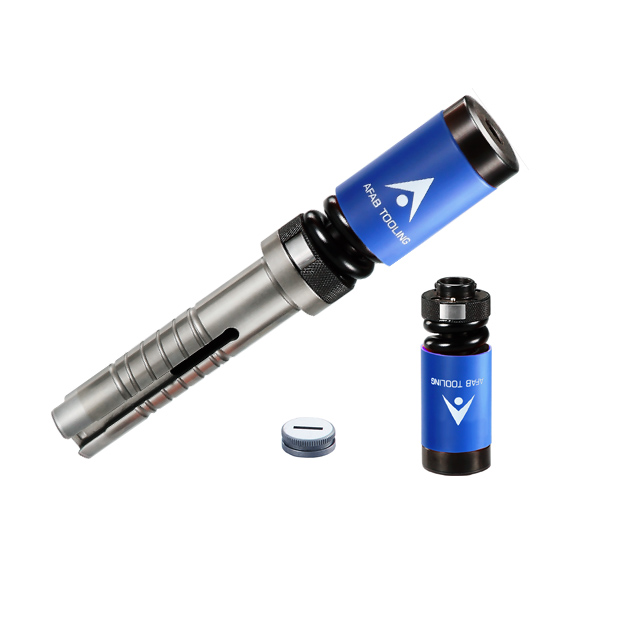
Recent industry analyses highlight a massive shift toward miniaturization. We see this daily in electronics enclosures and electric vehicle battery casing manufacturing. This trend demands higher volumes of micro-perforations in high-tensile materials. Consequently, fabrication shops are rapidly moving away from legacy thin-turret systems. Those older setups simply struggle with lateral deflection under heavy loads.
Instead, the market is shifting toward robust thick turret architectures. Manufacturing experts note that adopting premium guided tooling is no longer just a luxury reserved for aerospace contractors. It has rapidly become a baseline requirement for maintaining profitability and minimizing scrap in modern precision sheet metal fabrication.
In standard sheet metal fabrication, piercing micro-holes introduces severe mechanical stress that is completely absent in larger diameter operations. The fundamental engineering guideline is the one-to-one ratio. The hole diameter should never be less than the material thickness. For harder materials like stainless steel, a ratio of 1.2 to 1 is often recommended by tooling engineers.
When operators attempt to punch a hole smaller than the sheet thickness, the physics of the operation shift dramatically. The punch tip essentially becomes a slender column subjected to extreme compressive force. Imagine trying to push a delicate needle through a thick stack of dense cardboard. If the compressive stress required to shear the metal exceeds the yield strength of the tool steel, the punch will buckle, mushroom, or shatter instantly. Structural integrity is paramount.
The actual piercing of the metal is only half of the mechanical cycle. The withdrawal, often called stripping, is equally critical. Small diameter punches experience disproportionately high stripping friction. As the punch penetrates, the material compresses elastically. Once the slug breaks free, the sheet metal immediately rebounds and grips the punch tip tightly like a vice.
This intense friction leads to accelerated tool wear and galling. Galling is a condition where microscopic particles of the sheet metal cold-weld themselves to the punch flanks. Furthermore, inadequate stripping force can lead to slug pulling. This happens when the waste material is drawn back up through the die matrix, potentially causing catastrophic damage on the subsequent machine stroke.
When evaluating machine architecture for micro-hole applications, thick turret systems present distinct mechanical advantages over standard punch presses. The primary differentiator lies in the length of the guide assemblies. Standard presses often utilize shorter guiding mechanisms. These short guides allow for a microscopic degree of lateral movement during the stroke.
In contrast, thick turret tooling utilizes extended guide lengths. This increased surface area provides superior lateral support, ensuring the punch maintains a strict vertical trajectory. When tolerances are measured in thousandths of an inch, eliminating angular deflection is the single most effective way to prevent a tool from snapping mid-cycle.
The structural design of this system inherently promotes superior concentricity between the punch and the die. In small hole punching, die clearance is incredibly tight. Even a misalignment of a few microns can cause the punch to clip the die edge, destroying the tool instantly. By maintaining absolute alignment, thick turret systems ensure that the shear force is distributed evenly across the punch tip. This maximizes tool life and edge quality.
In the standardized thick turret configuration, tooling stations are categorized alphabetically based on their maximum diameter capacity. The A-Station is the smallest, typically accommodating tool sizes up to 12.7 millimeters. Because of its compact size, the A-Station is the natural environment for small diameter hole punching. The internal components are specifically engineered to handle the mass and acceleration profiles required for smaller operations without overpowering the material.
For fabrication shops managing low-to-medium volume runs or processing softer materials like aluminum and thin mild steel, entry-level tooling provides a highly cost-effective solution. The Thick Turret Basic Type A Station Punch is engineered utilizing standard high-quality tool steels such as M2 or SKH51.
This basic configuration includes standard stripping mechanisms that are perfectly adequate for everyday tolerances. While it lacks the advanced metallurgical coatings found in premium tiers, this setup offers reliable performance for prototyping and short-run production. It allows job shops to maintain operational flexibility without over-investing in heavy-duty components for lightweight applications.
As production volumes increase, or when a shop transitions from processing soft aluminum to tougher materials like standard gauge mild steel, entry-level tooling may begin to show accelerated wear. This is the optimal time to upgrade to Thick Turret FAB Type A Station Tooling. This intermediate tier is designed specifically for continuous production environments where machine downtime directly impacts the bottom line.
The defining characteristic of the FAB tier is the implementation of fully guided punch systems. In a fully guided system, the stripper plate acts as a rigid guide that supports the punch tip as close to the sheet metal as physically possible. This structural support drastically reduces the probability of the punch tip snapping when subjected to high compressive loads.
Additionally, this tooling incorporates improved spring packs. These engineered springs deliver stronger and more consistent stripping force. They ensure the material is held completely flat during withdrawal. This virtually eliminates the risk of sheet distortion and significantly reduces friction-induced heat buildup on the cutting edge.
For industrial environments operating lights-out manufacturing, high-speed automated punching, or processing notoriously difficult materials like 304 stainless steel, standard tooling is simply insufficient. The mechanical demands of punching thousands of micro-holes in high-tensile materials require the highest tier of engineering.
Representing the apex of current technology, the Thick Turret FAB2 Type A Station Tooling utilizes premium powdered metallurgy tool steel. Powdered metal steel offers a highly uniform carbide distribution. This results in exceptional wear resistance and toughness that actively prevents micro-chipping at the cutting edge.
Furthermore, FAB2 components utilize specialized surface treatments. Coatings such as Titanium Carbonitride are applied to the punch tip. These treatments increase surface hardness and dramatically lower the coefficient of friction, effectively preventing galling and slug pulling. Coupled with rapid-adjust canister designs for fast length adjustments after sharpening, this tier maximizes return on investment by minimizing machine downtime under extreme operational stress.
Successful small hole punching actually begins in the CAD department. Engineers must account for the physical limitations of the material when designing hole patterns. The distance between two punched holes, or between a hole and the edge of the part, is known as the web margin.
If small holes are placed too closely together, the shear stress from the second punch will deform the web. This leads to material distortion, web tearing, or a complete loss of dimensional accuracy. As a standard engineering practice, the minimum web thickness should be at least two times the material thickness. For highly perforated designs, utilizing specialized cluster tooling may be necessary to maintain sheet integrity.
Die clearance must be calculated meticulously. Standard clearance calculations often do not apply linearly to micro-holes.
Material Type |
Standard Hole Die Clearance |
Small Hole Die Clearance |
|---|---|---|
Aluminum |
15% - 20% |
20% - 25% |
Mild Steel |
20% - 25% |
25% - 30% |
Stainless Steel |
25% - 30% |
30% - 35% |
For small holes, increasing the die clearance slightly above standard recommendations is often required. A larger clearance reduces the required punching force, minimizes the stripping friction, and ensures a clean fracture plane. This prevents the slug from packing tightly into the die matrix.
Even with high-quality equipment, processing small diameters pushes the physical limits of metal fabrication. Operators frequently encounter specific mechanical failures during these operations. Understanding the root causes and implementing systematic corrective actions is essential for maintaining efficiency.
Punch snapping is the most catastrophic failure on the shop floor. It halts production immediately, risks damaging the machine, and results in scrapped parts. In small diameter applications, snapping is rarely caused by compressive failure alone. It is almost always the result of lateral deflection.
For a half-inch punch, a microscopic bend might go unnoticed. However, for a delicate 3-millimeter tool, that same lateral movement exceeds the tensile limits of the steel. The tip shatters instantly. To prevent this, operators must ensure perfect concentricity. Regularly verify the alignment of your turret press, as worn turret bores lead to angular deviation. Inspect the station keyways for wear, because rotational play creates uneven cutting clearance. Most importantly, upgrade to fully guided systems that encapsulate the punch tip entirely.
Two other pervasive issues are slug pulling and galling. Both severely degrade part quality.
Slug pulling occurs when the punched material sticks to the face of the punch and is pulled back up out of the die. This often happens because cutting fluids create a vacuum seal. To mitigate this, install urethane ejector pins inside the punch tip. These pins compress during the stroke and expand upon retraction, physically pushing the slug down into the die and breaking the vacuum.
Galling is the localized cold-welding of sheet material to the flanks of the punch. As galling builds up, the punch diameter effectively increases, tightening the die clearance until the tool jams. To resolve this, ensure consistent application of high-quality sheet lubrication. Furthermore, utilizing tools with Titanium Carbonitride coatings creates a thermal barrier that prevents material adhesion.
Once you have diagnosed and resolved immediate mechanical issues on the shop floor, the next logical step is evaluating your current tooling tier. Over-investing in premium tools for short prototype runs ties up capital. Conversely, under-investing in basic tools for high-volume production results in costly downtime.
To optimize your fabrication process, categorize your tooling choices based on specific manufacturing scenarios.
If your operations consist of low-volume batches, custom prototypes, or softer materials, exploring the Basic Type series is the most logical starting point. It provides accuracy without the premium price tag.
For continuous daily operations processing mild steel and standard galvanized sheets, the FAB Type tier is required. The fully guided system and enhanced springs provide the necessary reliability for standard manufacturing tolerances.
If you are punching stainless steel, running automated shifts, or dealing with highly repetitive micro-hole patterns, investing in the FAB2 tier is mandatory. The powdered metallurgy steel and specialized coatings are critical for survival in these harsh environments.
Procurement managers often hesitate to authorize the purchase of premium tooling due to the higher initial acquisition cost. However, the true metric of value is the cost per hit, not the purchase price.
Consider a scenario where a standard punch breaks after ten thousand hits in stainless steel. A premium FAB2 punch might cost more upfront but lasts for forty thousand hits due to its advanced construction. If your machine burden rate is high, every minute the machine sits idle costs money. Changing a broken standard tool takes valuable time and halts production. The total cost of running the standard tool balloons quickly when factoring in downtime and replacement parts. The premium tool achieves the same output for a single upfront cost with zero mid-run interruptions.
Punching small diameter holes does not have to be an operational bottleneck. By understanding the physics of the punch cycle and utilizing the correct thick turret tooling, fabrication shops can eliminate tool breakage and slug pulling. Matching your tooling tier to your specific material hardness and production volume is the secret to flawless manufacturing.
Ready to eliminate tool breakage and boost your punching efficiency? Evaluate your current turret setup today. Visit AFAB Tooling to explore our comprehensive range of A-Station punches and find the perfect match for your production demands. Upgrade your machinery and keep your shop running at peak performance.
As a general rule of thumb in metal fabrication, the minimum hole diameter should be equal to or greater than the material thickness. For example, if you are punching 2-millimeter mild steel, the hole should be at least 2 millimeters in diameter. With premium fully guided tooling and specific softer materials, you can sometimes achieve a 0.75 to 1 ratio. Be aware that pushing below the one-to-one ratio significantly increases compressive stress on the punch tip.
These classifications represent different performance tiers designed for specific manufacturing needs. The Basic Type is an entry-level tool made from standard high-speed steel, ideal for short runs. The FAB Type is a mid-tier upgrade that offers fully guided tip support and stronger stripping springs. The FAB2 Type is the premium tier featuring advanced powdered metallurgy tool steel and superior anti-galling coatings designed for harsh environments.
Punch snapping is rarely caused by the downward punching force alone. It is usually the result of lateral deflection. When the punch tip shifts sideways even slightly during the stroke, the lateral stress snaps the delicate tip. This deflection is often caused by improper die clearance, dull cutting edges, or worn turret bores. Upgrading to a fully guided system provides the physical tip support needed to prevent this lateral movement.
The A-Station is specifically designed and engineered for small diameter hole punching. Typically accommodating tool sizes up to 12.7 millimeters, the A-Station ensures that the physical mass of the tool and the tension of the stripping springs are perfectly calibrated. Using larger stations for micro-punching can result in excessive stripping force that distorts thin materials.
While special coatings are not strictly mandatory for punching standard mild steel, they are highly recommended when processing challenging materials. When punching small holes in stainless steel or aluminum, the friction generated is immense. Specialty coatings such as Titanium Carbonitride significantly reduce the coefficient of friction. This prevents galling and keeps the punch cooler.
When processing micro-holes, running your punch press at maximum speed is a recipe for disaster. High-velocity impacts generate excessive shock waves that can shatter thin punch tips. Tooling engineers generally recommend reducing the hit rate by 20 to 30 percent compared to standard operations. This slower speed reduces heat buildup and allows the stripper springs enough time to cleanly extract the punch from the material.
Never wait for a loud popping sound or visible burrs on your parts. Small diameter tools require proactive maintenance. You should monitor the edge radius closely. As soon as the cutting edge feels slightly dulled to the touch, it is time for a grind. Frequent light sharpenings, removing just 0.1 to 0.2 millimeters, will extend the overall life of your tool much longer than waiting for severe wear to occur.


