


Views: 0 Author: Site Editor Publish Time: 2026-08-25 Origin: Site


High-volume CNC punch press operations live or die by tool longevity and part consistency. Even minor deviations in tool alignment or premature wear destroy production margins. Fabricators frequently struggle with excessive downtime for tool changes, punch breakage on small-diameter holes, and rapid die wear. These issues lead to unacceptable burrs and rejected parts that require expensive rework. Upgrading to trumpf style tooling addresses these mechanical bottlenecks directly on the shop floor. The system utilizes specific design geometries, advanced metallurgy, lightweight components, and integrated alignment mechanisms to stabilize the punching process. We will examine how these engineered components eliminate lateral deflection, extend grind life, and keep the machine ram moving efficiently through complex nesting layouts.
Precision Alignment: 360-degree tool rotation and fully guided punch designs minimize lateral deflection, directly improving hole accuracy and edge quality.
Extended Longevity: Advanced tooling configurations (such as 2-4-1 designs) double the available grind life, significantly reducing replacement frequency and consumable costs.
Tool Consolidation: Continuous rotation allows fabricators to cover a broad range of processing steps with just a few tools, minimizing inventory and cartridge clutter.
Capacity Expansion: Integrating a Trumpf Multi Tool expands processing capabilities and reduces cycle times without requiring additional machine setups.
ROI Justification: Upgrading requires evaluating higher initial tooling costs against verifiable long-term gains in machine uptime, reduced scrap rates, and lower maintenance overhead.
Success in high-volume punching requires strict adherence to tight tolerances. You must quantify acceptable limits for hole accuracy, edge quality, and overall part flatness before optimizing the process. A successful run produces parts with minimal burr heights, preventing secondary deburring operations. Edge quality directly reflects the condition of the punch and die. When tools degrade, micro-fractures appear along the sheared edge. This compromises the structural integrity of the final component, especially in load-bearing applications.
Establishing baseline metrics reveals the true impact of tool wear. You need to track the exact downtime required for sharpening and tool replacement. Operator intervention during a run disrupts the rhythm of production and introduces opportunities for error. Scrap material generated from dull punches or misaligned dies represents a direct hit to profitability. By measuring these specific factors, you create a clear picture of how mechanical bottlenecks limit your current capacity.
Part flatness is another metric you cannot ignore. Excessive punching force, often caused by dull tooling or improper stripping, warps the sheet metal. This warping complicates downstream processes like press brake bending or robotic welding. Maintaining a perfectly flat sheet requires sharp tools, correct die clearances, and uniform stripping pressure across the entire nesting layout. If your die clearance is set at 20 percent of material thickness, any deviation in tool sharpness will immediately cause the material to dish or bow.
Standard planed tooling often fails under the stress of high-speed applications. Alignment degradation is a primary issue. Traditional keyway systems wear down over time, allowing the punch to twist slightly during the stroke. This angular deflection alters the punch-to-die clearance. A skewed clearance causes rapid edge dulling on one side of the tool while increasing the risk of galling on the other.
Rapid edge dulling forces operators to stop the machine frequently. Every minute spent pulling a tool, grinding it, and resetting the height is a minute of lost production. Legacy systems lack the advanced metallurgy required to withstand the abrasive nature of materials like 304 stainless steel or fiberglass. The resulting wear accelerates exponentially once the initial edge breaks down, leading to catastrophic tool failure if left unchecked.
The time penalty of frequent changeovers creates a massive bottleneck. Legacy tooling setups often require manual adjustment and calibration. Operators must physically swap tools to achieve different angles or punch profiles. This manual intervention increases the likelihood of seating errors. A poorly seated tool will inevitably cause punch breakage or severe damage to the machine ram, resulting in days of unplanned downtime.
Continuous rotation fundamentally changes how a punch press operates. The machine's ram physically rotates the tool cartridge to any required angle. This eliminates the need to stock redundant tools for different orientations. A single rectangular punch can cut at zero degrees, forty-five degrees, or any custom angle dictated by the nesting software. This mechanical capability drastically reduces the number of tools required in the active inventory.
Reducing the tool count directly minimizes indexing errors. Fewer tools mean fewer manual loads and unloads. Continuous rotation ensures consistent punch-to-die clearance across highly complex nesting layouts. When the machine controls the rotation, the alignment remains absolute. You avoid the mechanical slop associated with manually keyed stations that rely on operator precision.
Tool consolidation streamlines the entire programming process. Programmers can utilize a broad range of processing steps with just a few standard shapes. A single parting tool, combined with 360-degree rotation, can contour complex exterior profiles that would otherwise require dedicated custom dies. This flexibility keeps the machine running steadily without pausing for manual cartridge swaps, maximizing your daily sheet output.
Seamless tool loading relies on integrated auto-clamp systems. When an operator inserts the tool into the cartridge, the auto-clamp mechanism secures it instantly and accurately. This yields faster, more consistent results for shops that demand frequent changeovers. The clamping force is uniform, eliminating the variability of manual tightening. Proper seating is guaranteed every time, regardless of which operator is running the shift.
Lightweight cartridge and tool components play a vital role in machine longevity. Heavy tools increase the mechanical stress on the machine's ram and indexing mechanisms. By utilizing advanced aluminum alloys and optimized geometries, lightweight components reduce rotational inertia. This allows the machine to index faster and punch at higher hit rates without accelerating wear on the internal drive systems.
Standardized cartridge loading mitigates operator setup mistakes. The design forces the tool into the correct orientation. You cannot load it backward or misalign the stripper plate. This foolproof approach ensures repeatable tool seating across multiple shifts. When operators trust the loading mechanism, they work faster and with greater confidence, directly improving overall throughput and reducing scrap rates caused by setup errors.
Reducing lateral punch deflection is mandatory, particularly on small-diameter holes and thick materials. When the punch diameter is equal to or less than the material thickness, the physics of the stroke change. The lateral forces push the punch tip off-center. A fully guided system uses the stripper plate as a rigid support mechanism. The punch tip remains fully enclosed and supported until the exact moment it contacts the sheet metal.
Fully guided systems utilizing standard dies maintain strict punch-to-die concentricity. This concentricity prevents the punch from clipping the edge of the die. When the clearance is perfectly maintained around the entire perimeter of the hole, the resulting piece part remains significantly flatter. The stripping force is applied evenly, preventing the material from bowing upward during retraction, which is a common issue when punching 11-gauge or thicker materials.
This guided approach results in a drastic reduction in punch breakage. Unsupported small punches snap easily under lateral load. By guiding the tip, the stress is distributed vertically up the shank of the tool. You can confidently punch high-tensile materials with small diameters without constantly replacing broken tips. This reliability is mandatory for unattended, lights-out manufacturing where operator intervention is not possible.
Verifying alignment before full production runs prevents expensive scrap. Utilizing trial strokes allows the operator to confirm measurement and depth accurately. The machine cycles at a reduced speed, gently pressing the tool into the material without completing a full punch. This verifies the Z-axis calibration and ensures the forming or punching depth is exact before committing to a full sheet.
Integrating measurement protocols during this verification step minimizes initial setup mistakes. Operators can measure the trial indentation to confirm the tool matches the program requirements. If a discrepancy exists, it is caught before a single part is ruined. This process is essential when running expensive materials like aerospace-grade aluminum or polished stainless steel where material costs are exceptionally high.
A reliable, repeatable punching process for large-volume runs depends on this verification. Once the trial stroke confirms the setup, the machine can run at full speed. The operator knows the alignment is perfect. This eliminates the need to constantly pause the machine to check hole dimensions, thereby maximizing the active punching time and keeping the production schedule on track.
High-speed, premium tool steel construction directly impacts edge retention. Standard steel degrades quickly under the immense friction and heat generated during punching. Premium powdered metallurgy steels offer a more uniform carbide distribution. This structure resists micro-chipping and maintains a razor-sharp cutting edge significantly longer than conventional alloys. Better edge retention translates directly to fewer sharpening intervals and more parts per tool.
Specialized surface coatings further enhance overall durability. Coatings like Titanium Nitride or specialized proprietary blends reduce surface friction. Lower friction means less heat buildup during the stroke. Heat is the primary enemy of tool temper. By keeping the tool cool, the structural integrity of the steel remains intact over hundreds of thousands of hits, even in demanding high-speed applications.
These coatings are particularly necessary for preventing material adhesion. When punching 6061 aluminum or galvanized steel, the soft metal tends to cold-weld to the side of the punch. This is known as galling. Galling increases the required stripping force and destroys the hole quality. A high-quality coating acts as a barrier, resisting galling and ensuring a clean extraction from the sheet every single time.
The engineering behind 2-4-1 punch designs focuses on maximizing the usable length of the tool. Traditional punches have a limited grind life before they become too short to reach through the stripper plate. A 2-4-1 system utilizes adjustable punch heads and specialized shims. As the tool is sharpened, the operator adjusts the head to compensate for the lost length, effectively providing twice the standard grind life.
Ease of assembly and disassembly is inherent in 2-4-1 systems. Operators do not need specialized presses or complex fixtures to adjust the tool height. The design streamlines the maintenance workflow. A quick adjustment on the bench gets the tool back into the machine faster. This simplicity encourages operators to sharpen tools more frequently, which actually prolongs the ultimate life of the punch by preventing severe edge degradation.
The financial impact of utilizing Grind Life dies designed specifically for these machines is substantial. These dies offer a deeper land, allowing for more material removal during sharpening before the die must be discarded. Maximizing the time between tool replacements lowers the overall consumable budget. You buy fewer tools annually while maintaining superior part quality across all your production runs.
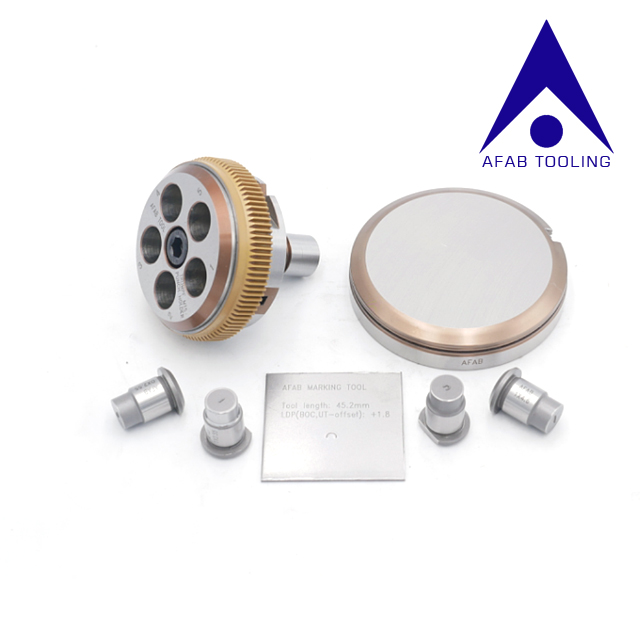
The Trumpf Multi Tool fundamentally changes machine capacity. It consolidates multiple punch profiles into a single machine station. Instead of one tool occupying a cartridge space, you can load 4, 6, or even 10 distinct tools into a single indexable unit. The machine's ram selects the specific internal tool required for the current hit, bypassing the need for external tool changes.
This consolidation is necessary for processing complex nests with varying hole sizes. A single sheet might require a 3mm hole, a 5mm hole, and a small square cutout. Without a multi-tool, the machine must physically swap cartridges three times. With the multi-tool, the machine simply indexes the internal station in a fraction of a second. You never stop the machine to change tools, keeping the ram moving continuously.
Expanding processing capabilities without adding external tool racks saves floor space and mechanical complexity. The multi-tool acts as a mini-turret within the main cartridge system. It allows older machines to compete with newer, high-capacity models by artificially expanding the available tool stations. This is a highly effective way to scale production output without purchasing a new punch press.
Reducing physical tool changeovers saves a massive amount of time. A standard cartridge swap might take 10 to 15 seconds. If a nest requires fifty tool changes, you lose significant production time just waiting for the machine to load tools. An internal index on a multi-tool takes less than a second. Calculating this time savings across a week of production reveals hours of recovered machine uptime.
Maximizing cartridge capacity directly increases overall equipment effectiveness. When the machine spends more time punching and less time swapping tools, the efficiency metric climbs. High efficiency indicates a highly profitable operation. The multi-tool ensures the ram is constantly moving, driving down the cost-per-part and increasing your competitive advantage in the bidding process.
Faster cycle times also improve downstream workflow. When the punch press finishes nests faster, the press brakes and welding stations receive a steady flow of parts. You eliminate the feast-or-famine cycle that plagues many fabrication shops. Consistent output from the punch press stabilizes the entire production floor and keeps your assembly teams working without interruption.
Analyzing the higher initial acquisition cost of premium tooling requires a long-term perspective. Standard tools are cheaper to buy but expensive to own. They wear out faster, cause more machine downtime, and generate more scrap. Premium tooling requires a larger upfront capital expenditure. However, this cost is offset by a measurable reduction in long-term consumable spend.
You must calculate return on investment based on reduced sharpening intervals. If a premium tool lasts three times longer between grinds, you save two-thirds of the labor cost associated with maintenance. Increased machine uptime is another factor. Every hour the machine runs instead of waiting for a tool change generates revenue. Calculate your shop's hourly machine rate and multiply it by the hours saved to see the true financial impact.
Lower scrap rates provide an immediate return on investment. Rejecting a complex nested sheet due to a single dull punch destroys the profit margin for that entire job. Premium tools maintain their edge, ensuring every part on the sheet meets quality standards. Factoring in the cost of raw materials, labor, and machine time lost to scrap makes the upgrade decision mathematically obvious.
Track the exact number of hits a standard punch achieves before edge degradation occurs.
Record the total downtime minutes spent swapping and sharpening that specific tool over a one-month period.
Multiply the downtime minutes by your shop's standard hourly machine rate to find the hidden maintenance cost.
Compare this hidden cost against the purchase price of a premium 2-4-1 punch designed for extended grind life.
Tooling System Performance Comparison
Performance Metric | Legacy Planed Tooling | Premium Tooling Architecture |
|---|---|---|
Angular Alignment | Prone to keyway wear and drift | Maintained via 360-degree rotation |
Tool Change Speed | Slower, manual seating required | Rapid, integrated auto-clamp mechanism |
Grind Life (Longevity) | Standard length limits sharpening | Extended via 2-4-1 adjustable designs |
Small Hole Deflection | High risk of tip snap and bowing | Minimized via fully guided Size 0-A systems |
Cartridge Capacity | One profile per station | Multiple profiles via internal indexing |
Assessing the feasibility of standardizing across a mixed-machine shop floor is a practical step. Many shops run a combination of different punch press brands. Standardizing on a single tooling style simplifies inventory management. Adapters and specialized cartridges allow these dies to be used in various machine architectures. This reduces the need to stock duplicate tools for different machines.
The tooling ecosystem must support both standard and special forming applications. You need standard punches for basic holes and perimeters. However, you also need specialized tools for louvers, extrusions, and countersinks. A robust tooling ecosystem provides off-the-shelf solutions for these complex forming tasks. Ensuring compatibility across all required operations prevents bottlenecks during specialized production runs.
Standardization also improves operator flexibility. When all machines utilize the same loading protocols and auto-clamp mechanisms, operators can move seamlessly between work centers. You do not need to train personnel on five different tooling systems. This cross-training capability ensures production continues even if a key operator is absent.
Mishandling precision auto-clamp tooling leads to premature wear and alignment issues. If an operator forces a tool into a cartridge with debris in the seat, the auto-clamp will engage unevenly. This throws the punch off-center. Running a misaligned tool will instantly destroy the die and potentially damage the machine ram. Precision tools require careful handling at all times.
Establish strict standard operating procedures for tool loading. Operators must clean the cartridge and the tool shank before every insertion. Implement a visual inspection protocol to check for metal shavings or heavy oil buildup. The assembly of 2-4-1 punches must follow exact guidelines to ensure the shims are seated perfectly flat against the punch head.
Proper storage is equally important. Tossing premium tools into a metal drawer damages the cutting edges. Utilize dedicated, urethane-lined tool racks. Store punches and dies in matched sets to prevent accidental mismatching during setup. A clean, organized tooling library is the first line of defense against handling damage and lost components.
Improper grinding techniques easily destroy the temper of premium steel punches. Grinding generates intense localized heat. If the operator removes too much material in a single pass without adequate coolant, the edge of the tool will turn blue. This indicates the temper is gone. A softened edge will dull immediately upon returning to the punch press.
Implement standardized sharpening schedules based on hit counts, not visual degradation. Waiting until a tool looks dull means you have already waited too long. Utilize appropriate coolant and grinding wheel combinations. A soft, porous wheel with heavy flood coolant is required for powdered metallurgy steels. This prevents heat buildup and ensures a clean surface finish.
Adhere strictly to OEM grind life specifications. Do not attempt to shim a tool beyond its engineered limits. When a die reaches its minimum thickness, discard it. Pushing tools past their safe operating limits risks catastrophic failure inside the machine. Proper maintenance guarantees you extract the maximum possible value from the tooling investment.
Audit your current tool replacement schedules to identify the three highest-wear punch profiles on your shop floor.
Calculate the exact hourly cost of machine downtime caused by physical tool changeovers over a 30-day production cycle.
Conduct a controlled trial run with premium fully guided tooling on your most problematic small-hole nesting layout to measure deflection reduction.
Implement strict standard operating procedures for cartridge cleaning and auto-clamp loading to protect your tooling investment from debris damage.
A: The primary advantage is continuous 360-degree tool rotation and integrated alignment. This eliminates the need for redundant tools at different angles, ensures consistent punch-to-die clearance, and significantly reduces cartridge clutter. The design also supports seamless auto-clamping for faster, more reliable setups.
A: Because the machine ram can rotate a single tool to any required angle, you do not need to purchase and store duplicate tools for different orientations. One rectangular punch can cut at zero, forty-five, or ninety degrees, drastically cutting down the number of tools required in stock.
A: It consolidates multiple punch profiles into a single machine station. The machine indexes internally to select different tools, eliminating the need to physically swap cartridges. This reduces tool change times from seconds to fractions of a second, significantly increasing overall equipment effectiveness.
A: A 2-4-1 punch features an adjustable head and shim system. As the cutting edge is ground down during maintenance, the operator adjusts the head to compensate for the lost length. This design allows you to grind away twice as much material over the life of the tool compared to standard punches.
A: Fully guided systems use the stripper plate to rigidly support the punch tip until it contacts the material. This prevents lateral deflection when punching small holes in thick metal. Strict concentricity is maintained, which evenly distributes stripping force and prevents the sheet metal from warping.
A: Lightweight aluminum cartridges and optimized tool geometries reduce rotational inertia. This lower mass decreases the mechanical stress on the machine's ram and indexing drives. Consequently, the machine can index faster and punch at higher hit rates without accelerating wear on internal components.


