


Views: 0 Author: Site Editor Publish Time: 2026-10-20 Origin: Site


Does poor tooling slow down your CNC punch press? Even the most advanced machinery will inevitably underperform without the correct tools in the turret. As an engineer who has spent years troubleshooting sheet metal fabrication lines, I can tell you that the punch and die are where the actual money is made. In this comprehensive guide, we will explore the critical nuances of station sizes. We will also cover essential selection basics to help buyers make data-driven purchasing decisions.
Station Sizes Dictate Capability: Understanding standard A through F station sizes is crucial for matching hole diameters and preventing machine overload during high-speed operations.
Series Specifics Matter: Different operational needs demand different setups. Tooling series range from standard sheet fabrication to heavy-duty, high-tonnage punching.
Holders Ensure Precision: High-quality punch holders are essential for maintaining strict alignment, reducing tool wear, and ensuring rapid, error-free changeovers.
Clearance is King: Proper die clearance, calculated accurately based on material type and thickness, remains the most critical factor in tooling selection and long-term durability.
The sheet metal fabrication industry is rapidly moving toward fully automated, lights-out manufacturing. With robotic part sorting and automated sheet loaders working overnight, the tolerance for tooling failure has dropped to zero. Modern CNC presses are delivering higher hit rates and faster ram speeds than ever before. This trend means that thermal resistance and edge retention in tooling are no longer optional upgrades. They are absolute necessities.
If a tool galls or a slug pulls at two in the morning, the entire production cell halts. Therefore, selecting the precise station size and engineering the exact die clearance has shifted from a simple maintenance task to a core strategy for risk management. Fabricators are now prioritizing tooling systems that offer quick-adjust mechanisms and superior steel alloys to keep pace with these high-speed automated environments.
The operational efficiency of a turret press relies entirely on the synergy between the driving mechanism and the tooling installed in its turret. Precision tooling acts as the exact contact point where mechanical force meets raw metal. Investing in premium tooling directly influences your return on investment by minimizing secondary operations like manual deburring and drastically reducing unplanned machine downtime.
Inferior or worn tooling introduces micro-misalignments during the punching cycle. Over thousands of hits, these minor deviations lead to accelerated wear on the turret bores, increased galling on the punch flanks, and eventual machine jams. By utilizing original equipment manufacturer specifications or premium aftermarket tools, fabrication facilities maintain the strict tolerances required by modern machinery. This proactive approach ensures that the punching force is distributed evenly, protecting the machine's hydraulic or servo-electric drive systems from unnecessary structural strain.
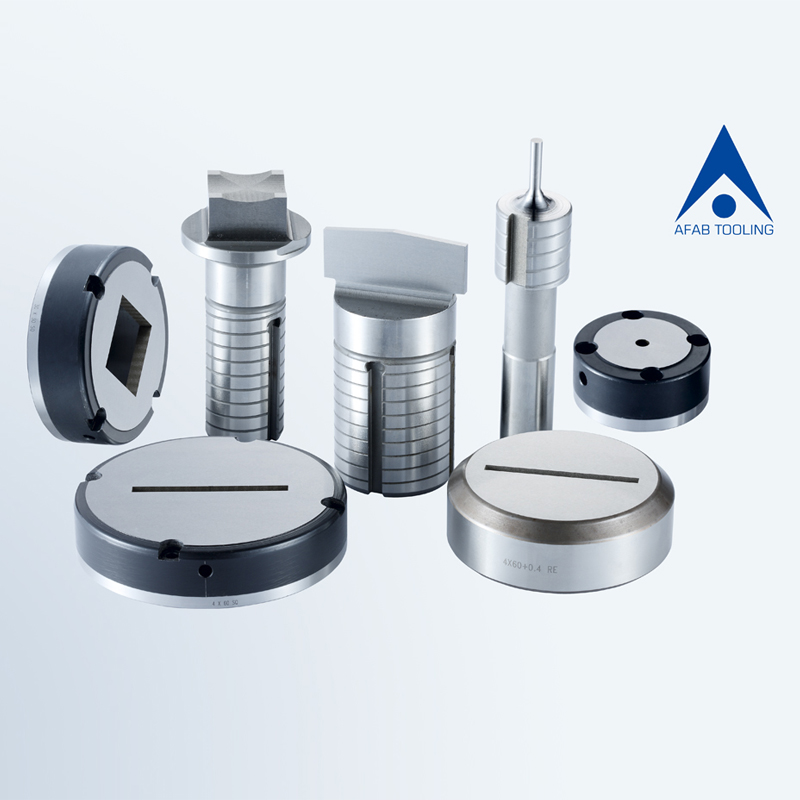
Turret punch presses utilize a standardized station sizing system. Specifically, the station size dictates the maximum physical dimension—namely the diagonal measurement—of the punch that can be safely housed and operated within that specific turret slot. Selecting the correct station size prevents mechanical interference and guarantees the punching force remains within safe operational limits.
Below is a technical reference table outlining the standard station sizes, their maximum diagonal dimensions, and typical real-world applications.
Station Size | Max Diagonal Dimension in Inches | Max Diagonal Dimension in mm | Typical Fabrication Applications |
|---|---|---|---|
A Station | 0.500" | 12.7 mm | Small round holes, micro-louvers, high-speed nibbling. |
B Station | 1.250" | 31.7 mm | Standard fastening holes, small square or rectangular cutouts. |
C Station | 2.000" | 50.8 mm | Medium cutouts, standard forming tools, electrical knockouts. |
D Station | 3.500" | 88.9 mm | Large cutouts, complex clusters, significant forming operations. |
E Station | 4.500" | 114.3 mm | Massive panel cutouts, heavy-duty louvers, large custom shapes. |
F Station | 6.000" | 152.4 mm | Specialized large-scale blanking requiring strict tonnage checks. |
A and B stations act as the undisputed workhorses of standard sheet metal fabrication. A stations typically accommodate punches with a maximum diagonal of half an inch, while B stations can handle up to one and a quarter inches. In practice, these smaller stations are strategically utilized for high-hit-rate operations. Think of standard rivet holes, pilot holes, and rapid nibbling sequences. Because the surface area of the punch is small, the required punching force remains generally low. This allows the machine to operate at maximum strokes per minute without risking hydraulic fatigue.
Moving up the scale, C and D stations provide the versatility required for larger geometric cutouts and standard forming operations. With maximum diagonals of two inches and three and a half inches respectively, these stations bridge the gap between standard hole punching and complex part profiling. Operators frequently utilize medium stations for electrical knockouts and extruded tapped holes. When utilizing D stations, you must begin monitoring the material thickness closely. The increased perimeter of the punch naturally demands significantly higher machine tonnage.
E and F stations are engineered for massive cutouts, accommodating tools with diagonals of four and a half inches, six inches, or occasionally larger. These are essential for HVAC panel manufacturing and multi-tool cluster punching. However, operating tools of this magnitude introduces significant tonnage risks. Imagine attempting a full six-inch blank in heavy-gauge steel without checking the limits—the result could be catastrophic. Fabrication managers must calculate the precise punching force required before initiating a cycle. Exceeding the tonnage capacity can result in severe structural frame deflection or complete turret damage.
When speed and versatility are the primary goals, specific tooling series come into play. Standard setups represent a cornerstone in daily turret press operations, offering a delicate balance of precision and ease of maintenance.
For instance, the Murata 114 Series Punch Tooling is engineered with a focus on rapid deployment in high-volume environments. The design typically features a highly rigid tool body combined with an intuitive push-button or easy-twist adjustment mechanism. This allows operators to quickly adjust the punch length right at the machine after sharpening, ensuring that the tool penetrates the die at the exact depth required for clean slug ejection. Manufactured from high-grade high-speed steel, it utilizes specialized heat treatments to resist edge wear and micro-chipping during repetitive cycles. This series excels in environments where versatility is paramount, making it the optimal choice for processing mild steel, aluminum, and thinner gauges of stainless steel.
While standard setups are sufficient for light-gauge materials, demanding applications require specialized engineering. When fabrication requirements move beyond standard sheet metal processing and enter the realm of heavy-duty manufacturing, selecting a more robust tooling series becomes a critical operational decision.
In contrast to standard designs, the Murata Vulcan Series Tooling is explicitly engineered to withstand the extreme forces generated during high-tonnage punching operations. This series features a highly robust construction utilizing premium M2 tool steel designed to minimize tool deflection under heavy loads. One of the primary advantages of this design is its enhanced stripping capability. When punching thick or high-tensile materials, the metal tends to grip the punch tightly during the return stroke. The Vulcan series utilizes heavy-duty urethane stripping springs and optimized stripper plate designs to ensure a clean, reliable extraction every time. Furthermore, precise keying systems ensure that shaped punches remain perfectly aligned with the die throughout the entire production run, drastically reducing the risk of edge chipping.
Even the highest quality punch is rendered completely ineffective if it is not secured properly within the turret. The holder acts as the critical interface between the machine's ram and the cutting tool itself. Understanding the function of these components is vital for maintaining machine health.
The primary function of a punch holder is to maintain absolute concentricity between the punch and the die. In a CNC turret punch press, tolerances are measured in mere thousandths of an inch. If a holder is worn, warped, or manufactured to substandard tolerances, the punch will not enter the exact center of the die. This misalignment leads to uneven die clearance. On one side, the clearance will be too tight, causing severe friction, galling, and rapid tool wear. On the opposite side, the clearance will be too loose, resulting in large burrs and poor edge quality on the fabricated part.
Investing in high-quality Murata Wiedemann Punch Holders ensures that original equipment specifications for alignment are strictly maintained. Premium holders are precision-ground and feature hardened guides to resist the repetitive impact forces of the punching cycle. Quick-change holder variations are highly recommended for facilities running high-mix production schedules, slashing setup times by allowing rapid punch swaps without removing the entire assembly.
Purchasing tooling should never be a guessing game. To achieve optimal performance, reduce burrs, and protect the CNC punch press from overload, buyers must follow a systematic approach to tool selection. Below is a practical field guide to making data-driven tooling decisions.
The first variable in tooling selection is the material being processed. Different metals possess varying shear strengths and behavioral characteristics when subjected to intense punching forces.
Aluminum: Being a softer material, aluminum requires sharper cutting edges but is highly prone to galling—a condition where material actually welds to the punch flank. Tooling with specialized coatings or highly polished flanks is absolutely necessary.
Mild Steel: The industry standard. Standard high-speed steel tooling is generally sufficient for most cold-rolled mild steel applications.
Stainless Steel: Known for its high shear strength and tendency to work-harden. Punching stainless steel requires premium tool steel, such as powdered metallurgy steel, which offers superior toughness and thermal resistance.
Die clearance is arguably the most critical factor in punching mechanics. It is defined as the total space between the punch and the die. Incorrect clearance is responsible for the vast majority of tooling failures and part quality issues. If the clearance is too tight, the secondary shear fractures will not meet. This forces the machine to push the slug through the die, generating extreme heat and premature wear. Conversely, if the clearance is too loose, the material will bend before it shears, resulting in excessive burrs.
As a general engineering rule, die clearance is calculated as a specific percentage of the material thickness.
Material Type | Recommended Total Die Clearance based on Material Thickness |
|---|---|
Aluminum | 10% to 15% |
Mild Steel | 15% to 20% |
Stainless Steel | 20% to 25% |
For example, if you are punching 0.125-inch mild steel, the recommended clearance would be twenty percent of 0.125, which equals a 0.025-inch total die clearance.
Every CNC turret punch press has a maximum tonnage capacity, and individual turret stations also have specific force limits. Before selecting a large tool or processing thick materials, you must calculate the required punching force to ensure it does not exceed the machine's capabilities. If the calculated tonnage exceeds the station's limit, the operator must either select a smaller tool and nibble the profile or utilize a tool with shear to drastically reduce the required force.
The geometry of the punch tip significantly impacts both the machine and the acoustic environment of the shop floor. Standard flat punches contact the material all at once. They are excellent for thin materials but require maximum tonnage. In contrast, tools designed with a shear angle—such as rooftop, single-valley, or whisper shear—feature angled cutting edges. This allows the punch to enter the material gradually, much like a pair of scissors.
Adding shear to a punch can reduce the required punching tonnage by up to fifty percent. Furthermore, shear significantly reduces the shock transmitted to the machine's hydraulic systems and dramatically lowers the noise levels generated during the punching cycle.
Precision tooling is a significant capital investment. Treating punches and dies as disposable consumables is an expensive mistake. By implementing strict maintenance protocols, fabrication shops can drastically extend tool life and improve part consistency.
The golden rule of punch press tooling on the shop floor is to sharpen frequently and grind lightly. Many operators wait until a tool is completely dull or visibly chipped before sharpening it. This practice requires grinding away a significant amount of tool steel to restore the edge, effectively shortening the tool's overall lifespan.
Instead, tools should be sharpened as soon as a 0.004-inch to 0.006-inch radius appears on the cutting edge. By sharpening early, operators only need to remove a minimal amount of material to restore a razor-sharp edge. Regular maintenance prevents micro-cracking in the tool steel from propagating into catastrophic fractures. Always ensure that the grinding wheel is dressed properly and that adequate coolant is used to prevent thermal damage.
Friction is the ultimate enemy of tooling longevity. Implementing an automated sheet lubrication system on your punch press is one of the most effective ways to reduce tool wear. A light coating of vanishing oil or synthetic stamping lubricant reduces friction between the punch flank and the material, preventing galling.
When not in the machine, tooling must be stored correctly. Tools should never be left loose on workbenches or tossed into metal drawers where their precision edges can clash. Wipe the punch flanks clean of residual stamping fluid, apply a light coat of rust-preventative oil, and place them in dedicated non-metallic urethane cradles to protect the steel from ambient humidity and physical damage.
Selecting proper station sizes is crucial to preventing machine overload and ensuring clean cuts. Matching the right series to the specific fabrication job guarantees that you have the necessary structural rigidity and speed. Ultimately, precision tooling protects your machine's internal components while dramatically improving overall product quality.
Selecting the right supplier is just as important as selecting the right tool. When sourcing components for your CNC turret press, look for manufacturers that adhere to strict original equipment specifications and utilize premium tool steels. A reliable supplier provides technical engineering support to help you calculate die clearances, select the appropriate shear, and troubleshoot complex punching issues.
Take the time to audit your current tooling inventory today. If you are experiencing frequent tool wear, alignment issues, or need to upgrade to heavy-duty setups, explore the comprehensive, precision-engineered solutions available at AFabTool. By partnering with reputable manufacturers and matching your specific machine requirements to the right product lines on https://www.afabtool.com, you secure the durability required to keep your machinery running at peak efficiency day in and day out.
Standard series tooling is designed as a highly versatile system ideal for high-speed punching and nibbling across a wide range of common material thicknesses. It focuses on quick adjustments and rapid tool changes. In contrast, the Vulcan Series is engineered specifically for heavy-duty applications. It features enhanced structural rigidity, heavy-duty stripping springs, and robust keying systems, making it the superior choice for punching thick materials, high-tensile steels, and executing complex forming operations without deflection.
Station sizes in CNC turret presses are categorized by letters and are determined by the maximum diagonal dimension of the shape being punched. To find the right size, measure the longest distance across the profile of your required hole. For example, a standard A station typically accommodates punches with a maximum diagonal of half an inch, while a B station holds up to one and a quarter inches. Always select a station size that comfortably exceeds the diagonal measurement of your punch.
Yes, aftermarket punch holders can be used safely and effectively, provided they are manufactured to exact original equipment specifications. The critical factors are the quality of the steel and the precision of the grinding process. High-quality aftermarket holders will maintain the strict concentricity required between the punch and the die. However, utilizing poorly manufactured, low-cost holders can lead to severe misalignment, rapid tool wear, and potential damage to your machine's turret.
Tool sharpening frequency depends heavily on the material being punched and the hit count. However, the visual indicator is universal: tools should be sharpened as soon as a slight rounding appears on the cutting edge. Adhering to a routine schedule removes micro-cracks before they cause major chipping, ultimately extending the overall life of the tool.
Using a die clearance that is too tight causes excessive friction, leading to rapid tool wear, severe galling, and higher required punching tonnage. Conversely, if the clearance is too loose, the material will bend rather than shear cleanly. This results in large, unacceptable burrs, poor part quality, and an increased risk of machine crashes.
Slug pulling occurs when the punched scrap is pulled back out of the die and onto the surface of the sheet during the punch's return stroke. This dangerous condition is typically caused by incorrect die clearance, dull tool edges, a lack of lubrication, or the absence of proper slug-retention features engineered into the die itself.
To calculate punching tonnage, you must multiply the total perimeter of the hole by the material thickness, and then multiply that result by the material's specific shear strength. Finally, divide that number by a constant to convert the force into tons. Always verify this calculated number against the specific maximum force limits of your machine's individual turret stations before beginning operation.


