


Views: 0 Author: Site Editor Publish Time: 2026-06-28 Origin: Site


Modern aluminum curtain walls require complex fabrications, zero cosmetic defects, and strict dimensional tolerances. These architectural marvels leave no room for subpar machinery setups. While laser cutting remains highly popular, modern high-mix fabrication relies heavily on CNC turret punch presses. They deliver unmatched efficiency when creating forming details, louvers, and repetitive hole patterns. The line separating a highly successful curtain wall project from a high-scrap disaster frequently comes down to one critical factor. You must prioritize the precise selection and management of your Turret Punch Tooling. This guide offers a practical breakdown of specialized punching dynamics. We will explore how exact system selection directly impacts production margins, quality control, and operational flexibility across architectural aluminum processing.
Quality & Consistency: High-grade turret punch tooling minimizes edge distortion and secondary finishing, essential for cosmetic architectural panels.
System Selection: Thick turret tooling systems offer superior alignment and stability compared to alternatives, directly impacting the longevity of tools in high-volume aluminum processing.
Risk Mitigation: Proper tooling selection mitigates aluminum-specific risks like galling, sheet scratching, and thermal distortion.
Vendor Evaluation: Choosing a tooling setup requires assessing realistic tool changeover speeds, coating durability, and the availability of custom cluster or forming tools.
Curtain wall projects rarely follow standardized templates. Architects design unique elevations for every modern skyscraper. Each building elevation demands custom bracket mounting holes. They require specific corner notches and specialized weeping channels. Fabrication floors face immense pressure to adapt quickly. You must seamlessly shift from producing large spandrel panels to complex mullion inserts. Standardized approaches fail in this high-mix environment. You need highly adaptable mechanical solutions to keep assembly lines moving.
Poor punch configurations generate significant hidden losses. Dull or misaligned punches create severe edge burrs on aluminum sheets. These burrs force operators into manual deburring processes. Manual deburring acts as a massive drain on labor resources. It slows down overall throughput drastically. Furthermore, imperfect edges risk panel rejection during anodizing or powder-coating stages. Coatings peel away from sharp, burred edges. This causes catastrophic finish failures on the final architectural piece.
You can define a successful punch press operation through three strict metrics. First, measure machine uptime during complex shift changes. Second, track your first-pass yield on custom architectural panels. Finally, measure the reduction of secondary material handling. Excellent punch setups eliminate manual edge grinding. They allow parts to flow directly from the punch bed to the press brake. Hitting these metrics secures tighter project margins. It ensures every panel meets strict façade engineering standards.
Precise tool alignment guarantees flawless job-site assembly. Installation crews rely on perfectly placed bracket and mullion mounting holes. Even a single millimeter of deviation causes severe installation delays. High-quality punch components maintain exact centerlines across thousands of hits. This accuracy prevents misalignments when workers secure heavy panels to the building frame. It ensures weather-stripping channels line up perfectly across multiple panel joints.
Maintaining tight tolerances across massive aluminum sheets requires rigid guide assemblies. Architectural panels frequently exceed three meters in length. Managing such large formats stresses the punching mechanism. Rigid guides stop the punch tip from wandering upon impact. They keep the cutting clearance concentric around the entire perimeter. You achieve perfectly round, distortion-free holes every single time.
Maximizing throughput requires abandoning outdated operational habits. Many shops still rely on "nibbling" to create large cutouts. Nibbling uses a small round punch to take hundreds of overlapping hits. This method wastes massive amounts of machine time. It also leaves a jagged edge requiring extensive sanding. Dedicated custom-shaped punches solve this bottleneck immediately. A single hit from a custom rectangular punch replaces hundreds of nibbling strokes. You drastically reduce cycle times and achieve a perfectly smooth edge.
Cluster tools further accelerate repetitive manufacturing tasks. Façade engineering often demands extensive ventilation arrays or drainage grids. Punching these features one hole at a time destroys production schedules. Cluster tools punch multiple holes simultaneously in a single press stroke. They transform hours of tedious machine operation into minutes. This approach drastically minimizes sheet movement. Less sheet movement means fewer chances for positioning errors.
Modern production schedules change without warning. You must handle varied panel geometries continuously. A single shift might require processing solid panels, louvered vents, and perforated screens. Halting the line for extended machine changeovers ruins daily output quotas. You must rely on rapid tool swap systems.
Achieving true high-mix flexibility relies on specific operational principles:
Pre-staging tool canisters offline while the machine runs.
Utilizing drop-in tool designs to minimize manual alignment.
Standardizing common punch shapes across multiple turret stations.
Integrating quick-release die holders for immediate size swaps.
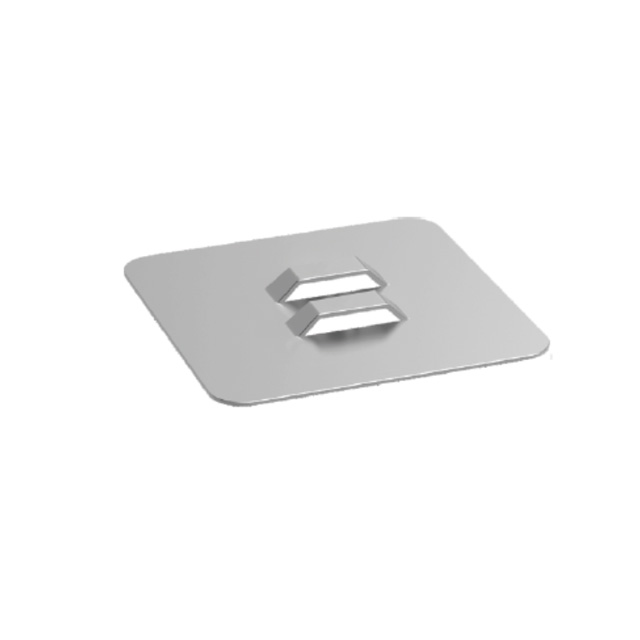
Understanding turret configurations is vital for architectural manufacturing. Turret architectures generally divide into thick and thin designs. The structural differences dictate the machine's absolute capability. Thin turrets feature a shorter guiding distance for the punch. This limits their effectiveness on demanding materials. Conversely, thick turrets provide an extended guide body. This extended body supports the tool over a much longer vertical axis.
This extended guide length provides unparalleled stability and alignment. Thick turret tooling prevents severe punch deflection during the piercing stroke. Deflection ruins part accuracy and destroys die edges. You absolutely need this rigid stability when punching thicker architectural aluminum. Processing 3mm to 4mm panels in 3000 or 5000 series aluminum demands immense force. The superior alignment of thick systems handles this resistance effortlessly. It ensures the punch enters the center of the die perfectly straight.
The robust nature of thick turrets significantly boosts tool longevity. Aluminum punching requires heavy-duty stripping springs. The metal tends to grip the punch tip tightly after piercing. Thick turrets distribute these intense stripping forces evenly across the tool body. This even distribution drastically reduces internal friction and wear. You minimize the frequency of routine tool sharpening. Operators spend less time maintaining components and more time running panels.
Thick turrets easily accommodate complex, heavy-duty forming applications. Architectural facades require more than just flat holes. They demand extruded holes for self-tapping screws. They require deep countersinks for flush rivet mounting. They frequently feature intricate louver vents for air intake. Thick configurations offer the stroke depth and structural rigidity to handle these forming operations. You consolidate multiple manufacturing steps into one machine setup.
Feature | Thick Turret Architecture | Thin Turret Architecture |
|---|---|---|
Guide Length | Extended, providing maximum vertical support. | Short, limiting heavy-duty stability. |
Deflection Resistance | Extremely high. Ideal for 3mm-4mm aluminum. | Moderate. Better suited for lighter gauges. |
Forming Capability | Excellent. Handles louvers and deep extrusions easily. | Limited. Restricted by shorter stroke parameters. |
Stripping Force | Distributed evenly, reducing wear. | Concentrated, potentially causing faster fatigue. |
Aluminum acts like a notoriously sticky material under pressure. During the punching stroke, intense heat and friction develop at the cutting edge. This environment causes aluminum galling. Galling occurs when microscopic aluminum particles weld themselves directly to the punch tip. As these particles accumulate, they change the physical dimension of the punch. The tool becomes oversized. It begins to tear the sheet rather than cutting it. It pulls the panel violently upward during the stripping phase.
Managing this galling phenomenon requires specialized interventions. You must implement specific tool coatings to create a barrier. TiCN (Titanium Carbonitride) provides exceptional surface hardness. Proprietary slip coatings reduce the friction coefficient dramatically. These coatings stop aluminum molecules from bonding to the steel. Additionally, you must apply appropriate micro-lubrication. A light mist of specialized aluminum cutting fluid manages heat buildup perfectly. It keeps the punch tip cool and clean throughout long production runs.
Curtain wall panels serve primarily cosmetic functions. A single deep scratch renders a finished panel entirely useless. Preventing surface scratches demands rigorous machine setup protocols. You must install urethane stripping plates to prevent hard steel from impacting the soft aluminum surface. Incorporate high-density brush tables instead of standard ball-transfer tables. Brush tables support heavy sheets gently without digging into the cladding. Furthermore, utilize scratch-free die designs featuring polished, radiused edges. These small upgrades protect the material flawlessly prior to final anodizing.
Die clearance calculations remain entirely unforgiving when processing aluminum. If you set the clearance too tight, the punch experiences massive resistance. This causes premature tool wear and extreme heat generation. If you set the clearance too loose, the material bends before it breaks. This causes severe, dangerous burring on the bottom edge. Calculating the perfect baseline metric depends on sheet thickness and material temper. You must follow strict engineering guidelines to achieve a flawless fracture plane.
Aluminum Thickness (mm) | Material Temper / Series | Recommended Clearance (% of thickness) | Total Die Clearance (mm) |
|---|---|---|---|
2.0 mm | 3003-H14 (Soft/Medium) | 15% | 0.30 mm |
2.0 mm | 5052-H32 (Harder) | 20% | 0.40 mm |
3.0 mm | 3003-H14 (Soft/Medium) | 15% | 0.45 mm |
3.0 mm | 5052-H32 (Harder) | 20% | 0.60 mm |
4.0 mm | 5052-H32 (Harder) | 20% | 0.80 mm |
Selecting a hardware partner dictates the future efficiency of your fabrication floor. You cannot treat these components as generic commodities. Excellent engineering support stands out as the most critical evaluation metric. Does the vendor provide direct technical assistance? You need engineers who help calculate exact tonnages for specialized operations. They must guide you on precise die clearances for specific architectural aluminum grades. A true partner analyzes your specific part drawings before recommending a hardware setup.
Customization capabilities define a supplier's true value. Façade engineering frequently introduces proprietary mullion bracket designs. These unique shapes require specialized, non-standard punches. You must evaluate the speed of delivering these custom-shaped punches. Waiting several weeks for a specialized tool halts your entire production schedule. The ideal partner manufactures and ships custom geometries rapidly. They keep your project timelines completely intact.
Moving beyond initial specifications requires evaluating long-term operational metrics. You must thoroughly analyze the tool lifespan under rigorous daily use. Investigate the specific regrind allowances designed into the punch body. High-quality systems allow operators to sharpen the tool multiple times before disposal. This significantly extends the active lifecycle of the equipment. Furthermore, scrutinize the availability of replacement components. Your supplier must maintain a robust inventory of springs, guides, and retention clips. Immediate part availability prevents devastating machine downtime.
Taking immediate, calculated action improves your manufacturing baseline. We recommend executing a comprehensive tooling audit immediately. Document every active component currently sitting in your turrets. Analyze your historical scrap rates over the past three months. Identify exactly how many panels failed due to edge distortion or severe scratching. This raw data highlights your exact vulnerabilities. It provides a clear roadmap before you commit to a brand-new mechanical ecosystem.
We must reiterate one undeniable truth about architectural fabrication. High-performance mechanical punching setups are never generic consumables. They function as a foundational strategic asset. This equipment directly dictates the ultimate profitability of your curtain wall manufacturing. Upgrading your systems transforms unpredictable assembly lines into highly efficient, repeatable operations. You gain total control over quality, throughput, and final assembly fit.
Balancing initial premium implementations against long-term operational gains requires a clear vision. Investing in high-grade, coated, heavy-duty punch systems creates compounding advantages. You drastically reduce raw material scrap rates. You effectively eliminate hidden labor hours tied to secondary deburring operations. These daily efficiency gains quickly outweigh the upfront effort required to upgrade your machinery.
Operations managers must take decisive steps to optimize their floors today. Audit your current mechanical setup thoroughly. Calculate the exact labor hours your team wastes on manual deburring and edge finishing. Document these inefficiencies clearly. Finally, consult directly with a specialized tooling engineer. They will help you implement targeted solutions to secure your future façade projects.
A: The ideal clearance typically ranges between 15% to 20% of the material's total thickness. However, this exact metric varies based on material hardness, temper, and your desired edge quality. Softer aluminum requires tighter clearances, while harder tempers like 5052-H32 demand looser settings to prevent rapid tool degradation.
A: Thicker turrets feature a significantly longer guide body for the punch. This structural design results in superior vertical alignment and drastically less tool deflection. It provides the necessary heavy-duty stability to handle thick architectural aluminum and aggressive forming operations without damaging the machine.
A: While lasers excel at cutting complex organic curves, punch presses remain vastly superior for high-volume architectural components. They are significantly faster and more efficient for processing repetitive geometries, executing deep louvers, and creating stamped features that laser cutters simply cannot produce.
A: You manage galling by utilizing specific treatments like TiCN coatings. Applying micro-lubrication systems prevents intense heat buildup during the stroke. Finally, ensuring sharp cutting edges and utilizing correct die clearances minimizes the friction that causes aluminum molecules to weld onto the steel.


