


Views: 0 Author: Site Editor Publish Time: 2026-10-06 Origin: Site


Precision and efficiency keep CNC punch press operations alive and profitable. Selecting the wrong punch and die sets wastes money. It also creates massive bottlenecks on the shop floor. Today, station sizes confuse many procurement teams who struggle to balance machine capacity with strict budget constraints. This comprehensive guide breaks down these critical dimensions. By explaining thick turret tooling clearly, we help you maximize your return on investment and maintain a competitive edge in modern sheet metal fabrication.
Thick turret systems use standardized station sizes, typically A through E. Each is defined by its maximum hole-punching diameter and diagonal dimension.
Smaller stations handle high-speed micro-perforations perfectly. Larger stations tackle massive perimeter blanking and heavy-duty forming.
Integrating Auto-Index capabilities and Multi-Tool holders exponentially increases the flexibility of an existing turret layout.
Procurement decisions must rely on tool steel metallurgy, machine tonnage limits, and specific material applications.
Correct installation, precise alignment, and routine maintenance prevent premature tool wear and catastrophic machine damage.
Before diving into specific dimensions, we must look at where sheet metal fabrication is heading. Recent market shifts show a massive surge in automation and lights-out manufacturing. Fabrication shops are increasingly processing high-tensile materials, especially for the electric vehicle and renewable energy sectors. What does this mean for buyers? Tooling can no longer be viewed as a cheap consumable. The industry demands ultra-durable steels, advanced coatings, and precise station utilization to minimize human intervention during unstaffed shifts.
To make informed purchasing decisions, buyers must first grasp the fundamental engineering behind the thick turret design. Unlike older thin turret configurations, a thick turret system utilizes a significantly longer guide assembly. This extended guide delivers superior tool alignment, heightened lateral stability, and robust resistance to deflection during intense punching cycles. Consequently, fabrication shops can comfortably process thicker sheet metals while maintaining razor-thin tolerances.
Turret presses are organized into specific stations. These are precision-machined bores in the upper and lower turret disks designed to secure specific tool sizes. For shop managers, understanding these sizes is absolutely critical. The physical dimensions of the station dictate the maximum diagonal reach of the punch. If you select a tool exceeding the station capacity, it simply will not fit. Conversely, tying up large stations for continuous small-hole punching wastes valuable turret real estate.
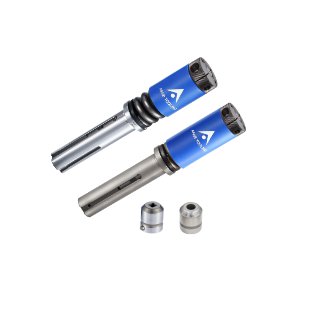
The core of optimizing a CNC punch press lies in understanding the capabilities and limitations of each station size. The maximum dimension always refers to the longest diagonal measurement across the face of the punch.
Station Type | Max Diagonal Dimension | Optimal Applications | Recommended Steel Grade |
|---|---|---|---|
A Station | 12.7 mm / 0.500 inches | Micro-perforations, high-speed nibbling | Premium M2 HSS or PM Steel |
B Station | 31.7 mm / 1.250 inches | Standard mounting holes, small louvers | Standard HSS |
C Station | 50.8 mm / 2.000 inches | Medium cutouts, auto-index geometries | PM Steel for high-cycle runs |
D Station | 88.9 mm / 3.500 inches | Large access panels, Multi-Tool holders | High-Toughness Tool Steel |
E Station | 114.3 mm / 4.500 inches | Massive perimeter blanking, custom shapes | Shock-Resistant PM Steel |
Max Dimension: 0.500 inches or 12.7 millimeters
Use Cases: Small holes, nibbling, and micro-perforations.
For high-frequency hits, Thick Turret A Station Tooling is your frontline workhorse. It represents the smallest standard footprint in the turret. Operators run these tools for continuous nibbling or punching hundreds of ventilation holes per minute. This rapid cycling generates immense heat and friction, leading to faster wear rates. Buyers should demand premium M2 high-speed steel or Powdered Metallurgy grades to combat friction and extend the lifespan between grinds.
Max Dimension: 1.250 inches or 31.7 millimeters
Use Cases: Standard mounting holes, medium knockouts, and small louvers.
B stations handle the bulk of standard shop floor tasks. They accommodate the most common hardware mounting holes and standard structural cutouts. Because they bridge the gap between tiny perforations and large cutouts, a typical turret layout relies heavily on B stations. Keeping a robust inventory of standard round, square, and obround shapes minimizes machine downtime during job changeovers.
Max Dimension: 2.000 inches or 50.8 millimeters
Use Cases: Medium-to-large cutouts, electrical knockouts, and smaller forming tools.
Specifically, Thick Turret C Station Tooling serves as the sweet spot for turret versatility. With a 50.8-millimeter maximum dimension, these tools remove significant material per stroke. This drastically cuts down on inefficient nibbling. Furthermore, C stations are perfect candidates for auto-index applications. Investing in high-precision OEM-tolerance C-station punches allows operators to execute complex geometries flawlessly.
Max Dimension: 3.500 inches or 88.9 millimeters
Use Cases: Large cutouts, specialized forming tools, and multi-tool holders.
D stations step into heavy-duty territory. They easily create large access panels or house specialized forming tools that require a larger footprint. More importantly, D stations frequently serve as the host for Multi-Tool units. You can drop an 8-station Multi-Tool into a single D bore, instantly multiplying your machine capacity without a costly physical turret upgrade.
Max Dimension: 4.500 inches or 114.3 millimeters
Use Cases: Massive perimeter blanking, large custom shapes, and heavy-duty forming operations.
For massive perimeter blanking, Thick Turret E Station Tooling delivers unmatched material removal. Boasting a 114.3-millimeter diagonal limit, these tools require strict engineering oversight. Punching a hole this large in thick mild steel demands massive hydraulic force. Always verify your specific CNC press tonnage limits before deploying E-station punches to prevent catastrophic stripping failures or pressing overloads.
When configuring a machine or purchasing replacement tools, distinguishing between standard fixed stations and auto-index stations directly impacts production efficiency.
A standard station holds the tool at a fixed, stationary angle dictated by the alignment key. If a part design requires a rectangular cutout at a 45-degree angle, a standard station setup forces the operator to load a dedicated tool keyed specifically for that angle. In contrast, auto-index stations are driven by the machine CNC control and servo motors. They rotate the punch and die simultaneously a full 360 degrees, stopping precisely at any fraction of a degree.
From a production standpoint, auto-indexing eliminates the need to purchase duplicate tools set at different angles. This saves valuable turret space and reduces overall tooling inventory costs. A single rectangular punch in an auto-index station can cut out complex angled perimeters that would otherwise require multiple hits. The decision to invest in auto-index tooling involves weighing higher initial capital expenditure against long-term operational efficiency. The return on investment hits fast through slashed setup times and the ability to accept more complex, higher-margin fabrication jobs.
Modern fabrication demands maximum efficiency from existing equipment. You do not always need to purchase a new punch press to increase capacity. Strategic tooling investments can multiply machine capabilities.
Turret space is a finite resource. A standard turret may only have 20 to 30 stations. If a job requires numerous small hole sizes, the turret quickly reaches capacity. This forces operators to stop the machine and swap tools manually. To solve this bottleneck, buyers can invest in Multi-Tools. An 8-station Multi-Tool placed in a D station allows the machine to access eight different A-station or B-station punches within a single turret bore. This effectively turns a 20-station turret into a high-capacity powerhouse.
Relying solely on standard round and square punches for complex shapes leads to excessive nibbling. Nibbling creates poor edge quality, known as scalloping, and puts unnecessary wear on the machine hydraulic system. Evaluating the cost-effectiveness of custom shapes allows operators to finish a profile in a single hit. Specialized forming tools can also perform countersinking, hinge forming, and wheel ribbing directly on the punch press. This completely eliminates the need for secondary operations on a press brake.
Purchasing CNC punch press tooling is a strategic investment in shop productivity. The focus has decisively shifted from the lowest initial cost to the highest overall equipment effectiveness. To align with modern engineering demands, buyers must evaluate tooling based on strict, actionable standards.
Rule 1: Match Metallurgy to the Material
The foundation of any high-performance punch is its steel quality. Standard tooling is typically manufactured from High-Speed Steel, such as M2 grade. While excellent for punching soft materials like aluminum, it fails quickly in high-cycle environments. For abrasive materials like stainless steel, buyers must prioritize Powdered Metallurgy tool steel. PM steel ensures a uniform carbide distribution, resulting in significantly higher toughness and two to three times the tool life.
Rule 2: Calculate and Verify Tonnage
Every CNC punch press operates within a maximum tonnage capacity, usually ranging from 20 to 50 tons. You must ensure the tooling will not exceed safe operating limits. Use the standard tonnage formula: Perimeter of the cut multiplied by Material Thickness multiplied by Material Shear Strength. If a heavy-duty application exceeds machine capacity, consult your tooling manufacturer to incorporate shear angles onto the punch face. Adding rooftop shear significantly reduces the required punching force.
Rule 3: Demand OEM Tolerances
While thick turret tooling is a standardized system, minor dimensional variations between machine brands can cause alignment issues. Verify that the manufacturer produces components to strict Original Equipment Manufacturer tolerances. The guide assemblies, canisters, and keyways must perfectly match your specific machine model. Poorly machined keyways lead to tool rotation during operation, resulting in brutal die crashes.
Rule 4: Utilize Advanced Coatings for High-Friction Jobs
Friction is the primary enemy of punch life. When punching galvanized steel, microscopic particles weld themselves to the flanks of the punch. This phenomenon is known as galling. Investing in advanced surface coatings like Titanium Nitride or proprietary Zirconium Nitride provides a highly lubricious barrier. This prevents material adhesion and stops slug pulling.
Even the most premium tooling will fail prematurely if installed incorrectly or poorly maintained. Establishing strict Standard Operating Procedures for tooling setup preserves both the tools and the press.
Installing larger C, D, and E station tools requires precision. Cleanliness is paramount. Before inserting any tool, thoroughly clean the turret bore and the tool guide. Even a thin layer of metallic dust can offset tool alignment by a few thousandths of an inch. Ensure the key on the tool guide perfectly engages with the keyway in the turret. Never force a tool into the station.
A proactive maintenance schedule is the most effective way to reduce tooling costs. Waiting until a punch is visibly dull is a costly mistake. The golden rule of sharpening dictates that frequent, light sharpening is vastly superior to infrequent, heavy grinding. Tools should be sharpened as soon as the cutting edge develops a slight radius. Grinding away just 0.1 to 0.2 millimeters of material regularly keeps the tool in peak condition. When a die is sharpened, its overall height decreases. Operators must use precision die shims to maintain the correct penetration depth.
Additionally, adequate lubrication reduces friction and heat. Ensure your automatic tool lubrication system is functioning correctly. Utilize the machine Air Blow System to inject a blast of pressurized oil and air down the center of the punch. This lubricates the cutting edge while actively blowing the slug downward through the die.
Selecting a tooling partner is a long-term operational decision. The right manufacturer acts as an extension of your engineering department. When auditing potential tooling suppliers, demand transparency. Premium suppliers grind punches to tolerances of plus or minus 0.0005 inches to guarantee perfect concentricity. Ensure they provide material certifications for their tool steel so you have absolute assurance you are receiving genuine PM steel.
Buying CNC tooling means procuring engineering expertise. A reputable manufacturer will have application engineers available to review complex part drawings. If your shop struggles with a high hit count on a large cutout, a vendor engineer might suggest a custom-engineered multi-tool. This level of consultative support directly impacts your bottom line.
Choosing the correct turret station sizes is foundational to maximizing production efficiency and preventing costly machine wear. By meticulously matching your punch size to the appropriate turret bore and investing in premium tool steel, you drastically reduce daily setup times. Evaluate your suppliers on the quality of their metallurgy and the strength of their technical support. For shops looking to upgrade their fabrication capabilities with precision-engineered solutions, partnering with industry leaders like AFAB Tooling ensures you get the exact specifications required for your most demanding jobs. Audit your current turret layout today and discover new avenues for operational optimization.
Thick turrets utilize a significantly longer guide assembly compared to thin turrets. This extended guide provides superior tool alignment and rigidity during the punching stroke. The robust design allows thick turret machines to process thicker sheet metal, maintain tighter tolerances, and operate at higher speeds with drastically reduced tool wear.
Yes, operators can easily use smaller tools in larger stations by utilizing precision station adapters. A D-to-B adapter allows a B-station tool to function perfectly within a D-station bore. This highly cost-effective strategy maximizes turret flexibility and reduces the need for constant manual tool changeovers.
To determine the required punching force, multiply the total perimeter of the punch shape by the material thickness, and then multiply that result by the shear strength of the specific material. If the calculated tonnage exceeds your machine limits, you must use a tool with added shear angles to reduce the pressing force.
Absolutely. Thick turret presses excel at forming operations. By installing specialized forming dies in larger C or D stations, operators can create louvers, extrusions, countersinks, and electrical knockouts directly on the punch press. This eliminates the need to move parts to a secondary press brake operation.
Slug pulling is prevented by utilizing dies engineered with specialized slug-free geometry. These dies feature slight constrictions to trap waste material beneath the cutting edge. Operators must also maintain proper die clearance based on exact material thickness, ensure tools are sharp, and consistently apply adequate lubrication via an Air Blow System.
Punches should be sharpened as soon as the cutting edge begins to round off. Implementing a routine of frequent, light grinding—removing only a fraction of a millimeter of material—extends the overall lifespan of the tool significantly more than waiting until the punch edge is heavily degraded.


