


Views: 0 Author: Site Editor Publish Time: 2026-09-22 Origin: Site


Efficient sheet metal production depends on more than the speed of the punch press. Tool selection, alignment, clearance, maintenance, setup time, and forming capability all influence part quality and cost per component.
Thick Turret Tooling provides a flexible punching platform for modern CNC turret punch presses. When matched correctly to material thickness, geometry, production volume, and machine requirements, it can improve productivity while supporting consistent holes, contours, forms, and complex sheet metal components.
This guide explains how thick turret tooling supports efficient sheet metal processing, how different tooling configurations affect production, and what manufacturers should consider when selecting and maintaining sheet metal fabrication tooling.
Thick Turret Tooling is a punch-and-die system designed for CNC turret punch presses. The tooling is installed in different turret stations so the machine can automatically select the required punch during a programmed production cycle.
A typical assembly includes a punch, guide, stripper, spring or punch-head components, and a matching die. During operation, the punch moves through the sheet and into the die opening, removing material or creating a formed feature according to the selected tool geometry.
The system can support round holes, squares, rectangles, slots, custom shapes, clusters, countersinks, embossing, ribs, louvers, bridges, and other punching or forming operations. This makes one turret press capable of producing many features without transferring the sheet between several machines.
AFAB TOOL provides a dedicated Thick Turret Tooling range covering Standard Series, Multi-Tool, Forming Tool, Special Applications, and related accessories.
The term refers to the tooling architecture used in a thick turret punch press rather than simply meaning that the sheet itself must always be thick.
Compared with thin turret systems, thick turret tooling uses a more substantial tooling assembly and guide structure. This supports high punching forces, accurate alignment, and a broad range of standard and special-purpose operations.
Different station sizes are used according to the maximum punch dimensions and required application. Small stations handle compact holes and shapes efficiently, while larger stations support larger geometries and forming tools.
This modular station system allows manufacturers to build the turret configuration around their actual part mix.
Efficient sheet metal processing requires more than increasing strokes per minute. The complete process must minimize setup time, scrap, tool changes, secondary operations, and unplanned downtime.
Thick turret systems can support these goals because multiple tools remain available inside the punch press during production. CNC programming selects the correct station automatically as the sheet moves through the machine.
One of the biggest productivity advantages is the ability to perform several punching operations within a single setup.
A part may require round holes, slots, rectangular openings, ventilation patterns, knockouts, countersinks, embosses, or other features. With suitable tooling loaded in the turret, many of these operations can be completed before the sheet leaves the punch press.
Reducing transfers between machines can decrease handling and improve dimensional consistency between features.
Forming tools can extend this capability further by producing three-dimensional sheet features that might otherwise require a separate press operation.
Production efficiency can be lost when operators spend too much time setting punch length, replacing components, or adjusting tooling after grinding.
Quick-adjust tooling systems are designed to simplify these tasks.
For example, AFAB's Thick Turret FAB Type uses a quick-adjusting design intended to simplify punch and stripper adjustment. Reducing setup steps can be particularly valuable in factories processing many short batches.
The benefit becomes larger when a plant changes materials and part programs frequently throughout the day.
A punch press can only produce repeatable parts when the tooling remains accurately aligned and dimensionally stable.
Excessive punch movement, worn guides, damaged dies, or incorrect clearance can create burrs, inconsistent holes, edge deformation, and premature tool failure.
Quality tooling helps maintain the relationship between punch and die during the stroke. This supports more predictable results across long production runs.
For high-volume fabrication, consistency can be as important as maximum machine speed because defective parts directly increase material and labor costs.
Tip: Measure efficiency by acceptable parts per hour rather than machine strokes per hour. Higher punching speed provides little value if burrs, tool damage, or scrap increase.
The correct sheet metal fabrication tooling should match the material, thickness, feature geometry, machine, and production quantity.
Using the wrong tool configuration can create poor edge quality even when the punch press itself is operating correctly.
Die clearance is the space between the punch cutting edge and die cutting edge.
Correct clearance allows the sheet to fracture in a controlled way during punching. The ideal value depends on material type and thickness.
If clearance is too small, punching force and tool wear may increase. Excessively large clearance can create larger burrs, distorted holes, or poor edge quality.
Mild steel, stainless steel, aluminum, and other materials can require different clearance strategies because their strength and ductility differ.
For repeat production, recording successful punch-die-clearance combinations can help operators reproduce stable results later.
Round and standard rectangular holes are relatively straightforward, but other shapes require more careful tooling selection.
Long narrow slots, closely spaced perforations, acute corners, and irregular profiles can create higher stresses around punch edges.
In these cases, punch design, corner radii, tool guidance, and processing sequence become important.
Special-purpose tooling can sometimes produce the required geometry more efficiently than repeated nibbling with a standard punch.
This can improve both edge appearance and cycle time.
Using the correct turret station is also important.
Smaller tools are efficient for small holes, while larger stations allow manufacturers to punch larger shapes or use specialized forming assemblies.
Trying to force a demanding application into an undersized tooling configuration can reduce tool life and production reliability.
The station should be selected according to feature dimensions, required tonnage, material thickness, and machine limitations.
AFAB's Thick Turret system includes multiple station formats and product families for different processing requirements.
A productive turret press normally uses a combination of standard tools and specialized tools.
Standard punches cover common geometry efficiently, while forming, multi-tool, and special-application tooling can reduce secondary processes or increase turret capacity.

Standard tooling handles the majority of everyday punching operations.
AFAB TOOL's Thick Turret Standard Series includes:
Basic Type
FAB Type
FAB 2 Type
FAB 90 Type
FAB Ultra Type
The Basic Type provides a conventional tooling format for routine punching requirements, while other systems introduce different adjustment, guidance, maintenance, or production features.
For example, the Thick Turret FAB2 Type A Station uses a push-button adjustment concept designed to simplify punch-height changes.
The correct series should reflect production volume, operator workflow, maintenance strategy, and expected tooling utilization rather than simply choosing the most complex design.
Turret capacity can become a limitation when a part family needs many different punch shapes.
A multi-tool places multiple punches within one turret station, increasing the number of available tools without consuming an individual station for every geometry.
This can be particularly useful when production involves numerous small holes or repeat patterns.
AFAB's Thick Turret Multi Tool provides another option for increasing tooling flexibility within turret punching systems.
Multi-tool selection should still consider tool size, machine compatibility, feature spacing, material, and program strategy.
Modern punch presses can do more than create holes.
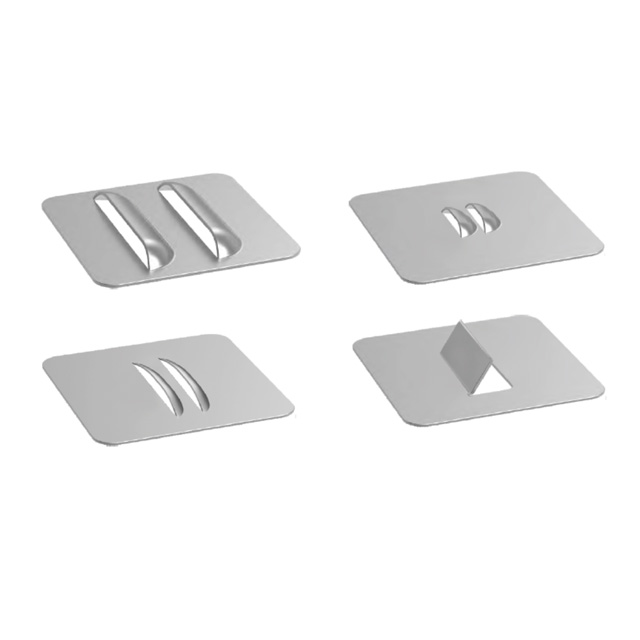
Forming tooling can produce features such as embosses, louvers, countersinks, ribs, knockouts, bridge forms, and other three-dimensional shapes directly on the sheet.
Completing these features in the turret press can reduce the need for separate stamping or manual operations.
However, forming changes the way the sheet moves and must be handled. Form height, die height, sheet clearance, part orientation, and possible interference with clamps or machine components need to be considered during programming.
Special tooling therefore works best when tool design and process planning are considered together.
Even premium tooling gradually wears during punching.
Cutting edges become rounded, clearances change, and friction can increase. If tools continue running beyond the appropriate maintenance point, part quality can deteriorate and punching loads may rise.
A planned maintenance system can therefore improve both tooling life and sheet metal processing consistency.
A sharp cutting edge produces a more controlled shearing action.
As the edge becomes dull, more force is required to penetrate the material. Burrs may increase, heat can build up, and stress on the punch press and tooling can rise.
Waiting until a tool produces unacceptable parts is usually less efficient than sharpening it at a controlled wear interval.
Small, regular grinding operations can also remove less tool material than infrequent heavy regrinding.
AFAB offers an Auto Punch Die Grinder for punch-and-die maintenance in production environments.
Grinding alone does not solve every tooling problem.
Operators should also inspect guides, strippers, springs, punch bodies, dies, retainers, and other components for wear or damage.
Uneven tool wear can indicate an alignment issue, incorrect clearance, poor lubrication, or unsuitable punching conditions.
Finding the cause early can prevent repeated damage to replacement components.
Maintenance records can also help factories identify tools that experience unusually high wear.
Metal particles, oil contamination, and handling damage can affect tooling performance.
Tools should be cleaned and stored in a way that protects cutting edges and precision surfaces.
Dedicated tooling cabinets can help operators keep complete punch-and-die sets together while reducing accidental damage during storage.
Clear identification also improves setup efficiency because operators spend less time searching for the required station or shape.
Note: Tool maintenance should follow the tooling and machine manufacturer's specifications. Excessive grinding or incorrect assembly can change working dimensions and affect punch performance.
The right tooling system depends on the work a factory produces every day.
A job shop processing many low-volume orders has different priorities from a factory punching hundreds of thousands of similar parts.

Job shops often need rapid changeovers and broad tooling flexibility.
Quick-adjust tools, standard geometry libraries, multi-tools, and easily replaceable components can reduce setup time between different orders.
The tooling system should also support a wide range of materials and sheet thicknesses because work can change significantly from one customer to another.
In this environment, flexibility may be more valuable than optimizing one punch for extremely high-volume production.
High-volume manufacturing places greater emphasis on tool life, repeatability, sharpening intervals, fast adjustment, and process stability.
Even a small reduction in downtime can have a significant impact when the same feature is punched thousands of times.
Fully guided or higher-performance tooling may provide additional value where punching frequency, side loads, or precision requirements are high.
Factories should also monitor wear systematically rather than relying entirely on operator judgment.
Complex parts may require standard punches, forming tools, special shapes, and multi-tool systems within the same program.
Here, tool selection should begin during process planning rather than after the CNC program is completed.
Designers and fabrication engineers can sometimes modify hole geometry or feature placement to reduce tool changes and simplify punching.
This cooperation between part design and tooling strategy can lower total manufacturing cost without affecting product function.
Thick turret punching is used across many industries because sheet metal components appear in a wide range of manufactured products.
Typical applications include:
Industry | Typical Sheet Metal Components | Tooling Requirements |
|---|---|---|
Electrical Equipment | Enclosures, panels, cabinets | Holes, slots, knockouts, ventilation |
Electronics | Chassis and housings | Precision holes and small features |
Machinery | Guards, covers, brackets | Mixed geometry and heavier materials |
Communication Equipment | Cabinets and racks | Repetitive perforations and forms |
Medical Equipment | Housings and panels | Precision and surface quality |
Transportation | Brackets and structural panels | Durable tooling and varied geometry |
Energy Equipment | Cabinets, control panels | High repeatability and multiple forms |
These applications demonstrate why tooling flexibility matters.
One factory may process mild steel electrical cabinets in the morning and stainless equipment panels later in the same shift. Tooling must accommodate changes in material properties, feature size, and production volume while maintaining reliable results.
AFAB TOOL states that its punching and bending tooling solutions are used across electronics and electrical appliances, machinery manufacturing, communications and medical, transportation, and energy applications.
B2B buyers should provide detailed production information rather than requesting only a punch size.
Important specifications include:
Punch press manufacturer and model
Turret type
Station size
Required punch shape
Hole dimensions
Material type
Material thickness
Tensile strength where relevant
Required die clearance
Forming requirements
Production quantity
Tooling style
Surface requirements
Special coatings if required
Regrinding expectations
Existing tooling compatibility
This information allows a tooling supplier to recommend a more appropriate configuration.
For specialized forms, drawings or sample parts may also be required. Dimensions alone may not fully describe forming height, orientation, corner radii, sheet deformation, or clearance requirements.
AFAB TOOL Co., Ltd. supplies punching and bending tooling for punch presses and sheet metal machinery. Buyers can review its complete product categories, Thick Turret Tooling range, or tooling downloads when developing tooling specifications.
Tip: The most useful tooling inquiry includes the machine model, material, thickness, feature drawing, expected quantity, and current production problem.
Thick Turret Tooling plays a central role in efficient modern sheet metal processing because it allows CNC turret punch presses to complete a wide range of punching and forming operations within one production system.
The right tooling can help reduce setup time, support consistent hole quality, improve forming flexibility, and reduce secondary operations. However, performance depends on correct punch-and-die clearance, suitable station selection, tool alignment, sharpening, maintenance, and compatibility with the actual material being processed.
Standard punches remain the foundation of most turret systems, while Multi-Tool, Forming Tool, and Special Application solutions can expand production capability when parts become more complex.
AFAB TOOL Co., Ltd. specializes in punching and bending tools for punch presses, press brakes, and sheet metal machinery. Its Thick Turret Tooling portfolio includes standard tooling, special applications, multi-tools, forming tools, and accessories for different sheet metal fabrication requirements.
For manufacturers evaluating sheet metal fabrication tooling, the best approach is to consider tooling as part of the complete production process rather than as an isolated consumable. Machine condition, material, part design, programming, maintenance, and tooling quality must work together to achieve reliable productivity.
A: Thick Turret Tooling is a punch-and-die tooling system used in CNC turret punch presses to create holes, contours, forms, and other features in sheet metal.
A: It supports multiple punching and forming operations within one CNC machine, helping reduce handling, setup time, secondary processes, and unnecessary production interruptions.
A: Punch-die clearance, tool sharpness, alignment, material thickness, material strength, stripping, lubrication, and machine condition can all affect punching quality.
A: Standard tooling primarily cuts holes and shapes, while forming tooling produces three-dimensional sheet features such as embosses, ribs, countersinks, bridges, or louvers.
A: A Thick Turret Multi-Tool places several punches within one turret station, increasing available tool capacity and supporting efficient production of parts containing multiple small features.
A: There is no universal interval. Sharpening frequency depends on material, thickness, punch geometry, hit count, clearance, and required edge quality. Tools should generally be sharpened before excessive edge wear develops.
A: Provide the punch press model, station, material, thickness, feature dimensions or drawings, production quantity, clearance requirements, and any forming or special application requirements.


